





A TikTok activist is embarrassing supermarkets with videos of store bins filled with in-date food. What’s going on, and what needs to change?
Supermarkets enjoy telling us how many meals they donate to food banks – so it is a major embarrassment when supermarket bins are shown inexplicably full of in-date food that still looks perfectly good to eat.
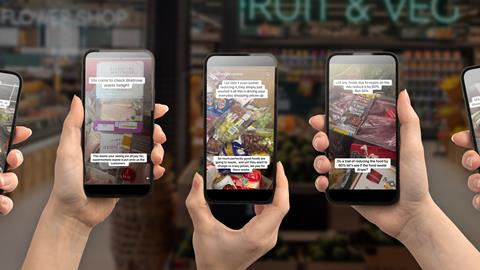
That’s what happened to M&S, Lidl and Waitrose last week, as videos posted on Instagram and TikTok by a bin-raiding vigilante became headline news. M&S bins were shown filled with in-date sliced meat, whole chicken, potatoes and bakery items. Waitrose’s were packed with in-date and apparently undamaged tinned food and more sliced meat. And Lidl’s contained in-date steaks, ambient snacks, and fruit that still looked good to eat.
The ‘Food_waste_inspector_’ has documented thrown-away food at nine M&S stores, five Lidls and at least two Waitrose shops, and says some have started putting locks on bins to hide their shame.
The anonymous activist behind the account has also gathered over 9,000 signatures in a petition for “legislation that mandates supermarkets to redirect edible surplus to charities”.
So, what’s going on? And is mandated redistribution the answer?
@wasteinspector #its time to act @Keir Starmer supermarkets wasting perfectly good foods #laws need to be changed, food on this scale shouldn’t be going in bins #fyp #shopping late nights at M&S #the ♬ original sound - FOOD WASTE INVESTIGATOR
All three retailers have said they are investigating the cases highlighted, adding they do not reflect their procedures for ensuring unsold edible food goes to those in need, while underlining the millions of meals a year they donate through charity partners such as FareShare and Neighbourly.
Certainly, stringent procedures do not appear to have been applied in these instances.
A retail source says reasons for in-date food to be binned can include customers leaving chilled product out of fridges, though it would seem a stretch to explain the piles of sliced meat in the videos. Fridges can break, though this would hardly explain the tinned beans.
Read more:
-
M&S invites vigilante food waste inspector for coffee after shocking social media exposé
-
Lidl launches investigation after food waste exposé
-
Waitrose becomes third retailer to respond to food waste exposé
Steve Butterworth, CEO of redistribution platform Neighbourly – which works with M&S and Lidl among other retailers – says: “We recognise the concern caused by images of potentially edible food and items like flowers being discarded, particularly during a cost-of-living crisis. Any instance of avoidable waste is a frustration shared by Neighbourly and the retail partners we support.
“Redistributing fresh produce at a national scale is a complex, time-critical operation. When issues occur, they are typically the result of unforeseen logistical challenges or strict food safety constraints rather than a lack of commitment. Ensuring the health and safety of both collectors and recipients remains our highest priority.”
However, Megan Blake, a senior lecturer and expert in food security and food justice at the University of Sheffield, says it may also come down to “commitment from managers, or staff who are pressed for time”.
“It’s easier to throw food away than move it on, so maybe more leadership and incentivising from above is needed.
“Of course this is a two-sided equation. They may be struggling to get people to come and pick the food up at the times it’s available,” she adds.
Food_waste_inspector_ has not dissimilar theories of his own. “I asked a Waitrose staff member to explain,” he says. “They said a few tins had got a bit wet – and so a whole bunch had gone in the bin.”
@dumpsterdiving_uk DODGING SECURITY TO EXPOSE MARKS AND SPENCERS CHRISTMAS CRIMINAL FOOD WASTE DUMPED DUMPSTER DIVING UK JACKPOTS, #DUMPSTER DIVING #DUMPSTER DIVER #RECYCLING #CHARITY #FRUGAL #FOODWASTE #REUSE #RUBBISH #WASTE #SKIP #DUMPSTER #DIVER #FREE #FIND #FOUND #SCRAP #CURBSIDE #climate #climate change #environment
♬ original sound - DUMPSTER.DIVING.UK
His petition gives France and Italy as models for legislation needed in the UK, saying their laws “have proven successful, ensuring supermarkets donate unsold food instead”.
But only France compels supermarkets to donate surplus food, thanks to legislation introduced in 2016. Stores of more than 4,300 sq ft destroying edible surplus can lead to fines of up to 0.1% of annual turnover.
While food donations in France are said to have increased as a result, alongside falling food waste, there have been questions over the quality of surplus received by charities.
Read more:
-
M&S’s ‘bingate’ backlash shows double-edged sword of social media
-
There is an alternative to the UK’s ‘broken’ food system
In 2022, French MP Christelle D’Intorni told the National Assembly a short remaining shelf life meant a large proportion of donations were no longer edible by the time redistribution was complete. In its response, France’s department of Agriculture and Food Sovereignty said a surge in donations after the legislation came in had been followed by a slowdown as the redistributors implemented food waste prevention strategies of their own.
“There is a consistent body of anecdotal evidence from French food aid organisations that large volumes of very short-dated surplus were pushed into charities without equivalent investment in storage, transport or disposal, increasing handling costs and secondary waste within the redistribution system rather than eliminating it,” says Mark Game, founder of food redistribution charity The Bread & Butter Thing.
Incentivising redistribution
Game believes incentives for retailers would be more effective in the UK, in the form of a subsidy payable by government for redistributed food.
“A great number of people within government are recognising they want to eradicate food banks, recognising the value of feeding people and making food affordable. It’s something we’re lobbying for, to make affordability front and centre in the government’s food strategy.”
The system would be closer to Italy’s, where since 2016 companies have received tax rebates for redistributing surplus food.
“Italy’s system is built around a local authority business waste tax, which the UK doesn’t really have an equivalent to,” says Game. “The lesson for the UK isn’t to copy either system wholesale. France shows the risk of mandating redistribution without supporting capacity, while Italy shows the value of aligning incentives so that redistribution becomes cheaper and easier than disposal.
“In a UK context, that likely points towards mandatory food waste reporting combined with incentives or contractual requirements that favour earlier redistribution over routes like anaerobic digestion.”
In 2024, Daniel Zeichner, then shadow Defra secretary, demanded in a parliamentary debate: “Will the minister finally deliver on requiring food waste to be monitored and reported through the supply chain?”
Major retailers and food charities are as one on the need for the Labour government to do so.
@wasteinspector #lidl all this is perfectly good to donate, tears in a box is not a good enough reason to bin food, that’s still sealed inside with no damage. Tuna tins dated 2030 #tou know they are ashamed otherwise he wouldn’t feel the need to lie to me saying g it’s not food in there only plastic#fyp #food at Lidl #good ♬ original sound - FOOD WASTE INVESTIGATOR
The three exposed retailers all publicly report food waste figures but not within directly comparable parameters. Only Lidl GB reports volume food waste as a percentage of all food handled (it dropped from 2.09% to 1.39% between 2016 and 2024).
Wrap says retailers reduced food waste “by 26% per kg per capita between 2007 and 2021”, while volume donations to charities increased by 15% between 2022 and 2023.
“While many are already reporting their waste through [Wrap’s] UK Food & Drink Pact Food Waste Reduction Roadmap, we believe mandatory reporting is key to addressing this issue,” says BRC director of food & sustainability Andrew Opie.
“This would enable greater investment in food redistribution infrastructure and help retailers understand their waste hotspots and where surplus food can be redistributed, as well as enable greater transparency across the supply chain.”
Neighbourly’s Butterworth says: “While the industry is committed to progress, a collaborative, government-backed approach - supported by clear legislation - will help remove friction and ensure the social and environmental benefits of surplus are felt more consistently across the country.”
Andrew Forsey, national director of food club charity Feeding Britain, says: “There is growing momentum behind the idea of introducing the mandatory reporting of food waste in larger businesses. My view is that this act of transparency would focus people’s minds on the urgent task of preventing good food from being wasted, and I very much hope the government will move quickly to embrace the idea.”
Defra was approached for comment.
Game says: “The transparency just isn’t there at the moment and this, I think, is why you get people like Food_waste_inspector_ doing what they’re doing.”





No comments yet