
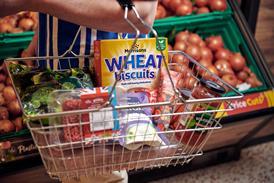




The result of this week’s big vote is in… and Southern Co-op members have backed the merger by a landslide, effectively voting in favour of a new leader – though who that will be is anyone’s guess, with Co-op Group currently still without a CEO. The second and final vote on 21 May will formalise the deal, but that now looks like little more than a box-ticking exercise.
If only the rest of the UK’s elections were so straightforward. Instead uncertainty is hanging in the air, with final results for Scotland and Wales still unclear – although the direction of travel is clear: Keir Starmer’s government is struggling to win over voters. Labour MPs are openly warning of bond market chaos if Chancellor Rachel Reeves – who has squandered much of the goodwill she built with business – is ousted alongside the PM, arguing she must stay put to reassure the markets. It shows just how muddled the government’s position has become.
In this week’s issue, chief reporter Ian Quinn sets out just how thin government support for the food and drink industry has been, and what is being asked for. As he reveals, the government’s response is clouded in confusion, with little clarity inside Whitehall on whether the Treasury or Defra is in charge. Even the detail of BICS support for foundational businesses has not been clarified.
Aginflation, meanwhile, is running at more than double the headline rate, a pressure that is being felt across the supply chain, with fruit growers warning output will fall without higher prices and fishermen already tying up boats as fuel costs make trips unviable.
Elsewhere, we turn to the government’s push for “dynamic” alignment with the EU. The UK’s reset with the EU takes another big step next week when the EU Alignment Bill is expected to be included in the King’s Speech. The negotiations are apparently turning out to be “harder than Brexit” itself. As international trade editor Kevin White explains, the deal on the table will see the UK lose out on £700m, with little to no sign that it will make it easier for food and drink importers. Not, on the face of it, a particularly convincing negotiation then.
The Gold standard
In brighter news, the shortlist for The Grocer Gold Awards 2026 is out. Tesco leads the pack with seven nominations, followed by Lidl on five. But the strength in depth is just as telling, with brands and businesses including Bio&Me, Dash, Little Dish, Morrisons, Ocado and Trip all picking up three apiece. It’s a snapshot of a market that’s still innovating hard, investing smartly and raising the bar.
UK grocery remains fiercely competitive and in far ruder health than some more recent headlines might otherwise suggest.
That makes Amazon’s performance in this week’s special online Grocer 33 all the more eye-catching. It delivered the lowest-priced basket, driven by discounts on two-thirds of the items, prompting data editor Elinor Zuke to dig deeper and uncover a significant new round of price cutting in a direct challenge to the traditional supermarkets.
It comes in the same week that technology editor George Nott reported on Amazon opening up its global freight, distribution and fulfilment network to third parties – a sharp reminder, as editor-in-chief Adam Leyland argues in his leader, that Amazon is never a player to be underestimated in grocery, least of all now. In contrast, Deliveroo’s decision to quietly drop its on-time delivery promise for Plus Gold members shows that even the disruptors are having to make changes as their belts tighten.
Elsewhere, Asda is still grappling with the fallout from its turbulent IT overhaul, as we reveal fresh efforts to repair strained supplier relations. And in features this week, following on from the news that Lidl has overhauled its loyalty offer, deputy news editor Steve Farrell speaks to Lidl’s chief customer officer Louise Weise on the changes and why a loyalty app “can do nothing” on its own because “real loyalty is about doing the basics really well”.
Own label’s innovation surge
That fierce competitiveness is also showing in innovation. New data from Mintel’s GNPD, which monitors product innovation and new product activity, found that 53% of new products launched in 2025 were own label, up from 50% in 2024. The balance has been slowly shifting since 2000, when just 18% of innovation came from own label.
Jonny Forsyth, principal strategist at Mintel Food & Drink, predicted that own label could account for up to 60% of innovation over the next few years. “We are past the tipping point now,” he said.
We had a clear sign of this with news from M&S that it is adding 80 new lines to its own-label and branded booze offer. The refresh places a greater emphasis on lower-strength beers, as well as agave-based spirits and larger formats. The growing popularity of low and no was also seen in an acquisition this week, with Days Brewing snapped up by Sunrise Beverages.
Fruit lager is another bright spot in an otherwise gloomy BWS landscape, reports our drinks editor James Beeson, with Heineken, Asahi and Molson Coors launching new fruity brews. Sales climbed by nearly 50% year on year in the past 12 weeks amid growing retailer focus and the arrival of warmer weather. “It looks like fruit lager might be the shining saviour of the beer industry as we approach the summer months,” says Dave Knowles, managing director of Alpine Online.
And despite own label’s innovation success, there were still plenty of branded new product launches. Kenco joins the likes of Oatly, Biotiful and Alpro in jumping on the matcha trend. There were also launches from Ella’s Kitchen, which is expanding beyond weaning for the first time, Pizza Express bringing its Pizzanaise sauce to retail and Oscar Mayer launching a ready meal trio crafted by elite women’s rugby players.
Regulation and rights take centre stage
On the fresh food desk, we covered how animal rights group Animal Equality is appealing Defra’s decision to allow the Scottish salmon farming industry to drop ‘farmed’ from its Protected Geographical Indication (PGI). And in more salmon news, the Competition Appeal Tribunal unanimously ruled against Waterside Class Limited’s £382m claim on behalf of an estimated 35 to 44 million British consumers, concluding that the eligibility condition was not satisfied. The tribunal’s central concern revolved around the high legal and funding costs of the claim versus the payouts from which consumers would benefit.
Our category report this week focused on healthy snacking, analysing how social media trends are influencing shoppers’ habits. Top of the list is fibremaxxing, with #fibre attached to more than 83,000 TikTok posts – mostly recipe videos. It’s a trend that retailers and suppliers are taking seriously, despite the fact that the number of snack servings chosen for containing fibre and vitamins has increased by just 1.1% year on year. The report also covers frozen fruit, cottage cheese and nuts.
And yes, we know it’s only May, but as our previous reporting has shown, retailers and suppliers have already been thinking about Christmas 2026 for months. With a major survey revealing that younger consumers are significantly more open to alternative proteins, blended cultural menus and non-alcoholic drinks on their Christmas dinner tables (not to mention the sacrilege that is ordering a pizza or kebab on Christmas Day), features editor Dene Mullen looked into how and why the Big Day is changing – and the resulting opportunities for supermarkets, suppliers and marketers.
And as ever, we’d love to hear what you think. Drop us a line at jacqui.parr@thegrocer.co.uk or sarah.vizard@thegrocer.co.uk to get in touch – and have a great weekend.



No comments yet