


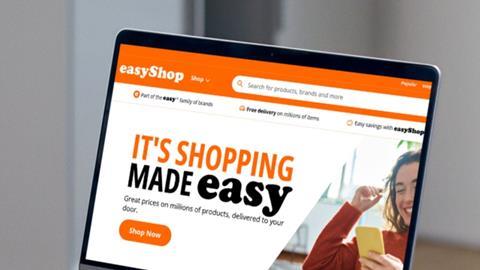
An orange star has been born. Launched by EasyJet founder Stelios Haji-Ioannou, EasyShop is a new marketplace he believes can rival Amazon by offering retailers a platform that doesn’t compete against them. It is an ambitious pitch, built on the idea that both consumers and sellers deserve more choice.
Branding aside, EasyShop still feels very much like the EasyJet that we all know and reluctantly love: strip out the frills, cut the costs and challenge the market. The problem is that grocery has already spent much of the past two decades stripping out costs, and there is very little fat left to trim.
Amazon knows just how difficult grocery can be. After shuttering all 19 of its UK Amazon Fresh stores, the e-commerce giant pivoted to rapid delivery service Amazon Now, showing that even a business with unrivalled logistics, cutting-edge technology and seemingly limitless financial resources has struggled to find the right grocery formula.
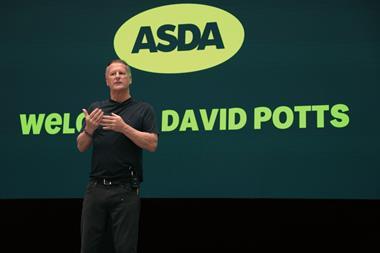
It’s a challenge being felt across the sector, where fierce competition means offering value is no longer enough. Years of investment in pricing mean that Asda typically wins the cheapest Grocer 33 basket, but low prices on their own have not been enough. Its much-celebrated return to growth has already proved fleeting, with this week’s market share figures showing sales are back in decline.
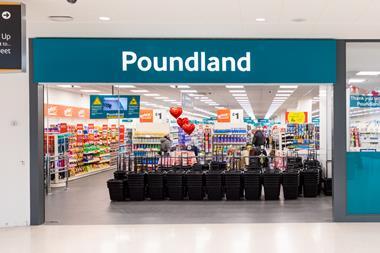
This week has also seen Poundland seemingly locked in a battle for survival. But shoppers have more ways than ever to save money and Aldi and Lidl have transformed expectations of value retailing. If being cheapest is no longer a proposition in itself, Poundland needs a new reason for shoppers to walk through the door.
EasyShop’s arrival is a reminder that neither Amazon’s scale, Asda’s price investment nor Poundland’s bargain credentials guarantee success in grocery, already a fiercely competitive, low-margin business. Which is why many retailers are nervously eyeing next week’s budget, calling on ministers to recognise just how unforgiving the market has become, and think carefully before adding further cost pressures.
When even Poundland is fighting for its future, there is little sense in piling further employment and property costs on to a sector already operating with vanishingly little room for error.
My picks this week:
- The “front doors” to the control systems of more than 800 UK retailer fridges can be reached by ”anyone on the internet who knows where to look”, according to UK Cyber Defence. The chilling news comes after hackers commandeered the fridge and freezer systems at hundreds of French supermarkets last weekend, remotely raising their temperature. It remains unclear what the hackers were hoping to achieve beyond simply causing disruption for the sake of it. Should this sort of large-scale fridge hacking – which led to tonnes of spoilt food and even fires – be the UK’s latest cyber concern?
- Fans of Dorset Cereals have been hit with a double whammy of reformualtion and shrinkflation, after the brand replaced its Simply muesli range with a trio of new mueslis that are smaller and more expensive than their previous iterations. The move has resulted in a swathe of one-star reviews on Trustpilot, with some loyal shoppers vowing never to buy Dorset Cereals again. But when faced with soaring ingredient prices, what’s a brand to do?
- Defra officials faced strong criticism in front of the Commons Public Accounts committee this week, over the department’s record on food supply resilience. After facing stinging criticism in a National Audit Office report in September, Defra permanent secretary Paul Kissack was accused of being “deluded” by claiming the department was “getting an enormous number of things right” on supply chain resilience by Restore Britain MP Rupert Lowe, who claimed its oversight of food supply was “broken”.
- Did somebody say… nothing at all? In a bold move for a brand with a universally recognised earworm/sonic tagline, Just Eat has launched a new global brand platform – ‘Stay Just Where You Are’. The new look will also save the brand some serious cash as it does away with expensive celebrity superstars such as Snoop Dogg, Katy Perry, Christina Aguilera and, in the UK, Craig David. According to the company’s global chief marketing officer Ralph Rijks, the overhaul “moves the brand into a more meaningful and emotional space, one rooted in the moments people value”.
- It’s bad news for French fancies and chocolate hobnobs. All top five biscuit brands and four of the top five cake brands have lost volumes in the past year, according to NIQ data. You guessed it, weight-loss drugs are to blame. Kishen Parekh, analyst at Worldpanel by Numerator, says the jabs have “undoubtedly had a significant impact”, as users are snacking less, with ”smaller appetites and a lower sugar intake”. Don’t let them eat cake, I guess.
Thanks for reading. We’re always keen to hear your thoughts, so please do email with any questions, comments or feedback on jacqui.parr@thegrocer.co.uk.




No comments yet