


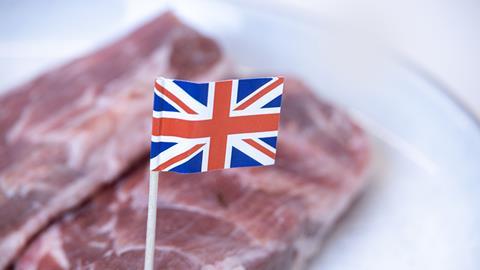
This week, the government set out the next phase of its food strategy: Food Nation 2040, a “framework of action” on health, resilience and growth to be overseen by IGD and built around a coalition of industry, government and NGOs identifying priorities that can be “actioned at pace”.
To many, this will sound all too familiar. This is not the first, nor even the second, time the industry has been asked to come to the table in recent years. In 2021, Henry Dimbleby and a panel of big hitters produced the National Food Strategy – the first food review in 75 years, with recommendations that ministers largely ignored. Then, in late 2024, then Defra secretary Steve Reed called for a “collaboration of the willing” to tackle obesity, resilience and nature. But the food white paper that would have given it teeth was never published, the minister was axed in a reshuffle and the whole thing disappeared into the long grass.
What will be different this time around? For starters, the strategy is now being led by the IGD – the closest thing the industry has to an umbrella body. Dimbleby himself says it is “the only organisation that can” lead it and that it can, at least in theory, move faster than government, whose pace is glacial – just look at the new nutrient profiling model, which was designed eight years ago and still isn’t in force.
The big question is what, exactly, we are moving faster towards? It is, of course, useful for the industry to agree on the key interventions. As Sainsbury’s CEO Simon Roberts said at The Grocer Health Summit, the sector needs to show up to government with a clear, unified view of what’s needed rather than 50 different lobbying positions. But consensus has never been the missing ingredient. What’s been lacking is a government willing to act on it through regulation – not, as one source told The Grocer, by continuing to “duck the big decisions”.
That is the crux of the issue. The problem with the food strategy is not about who is in the room, but on whether the government is willing to make the tough decisions when the consensus runs out or when what the industry wants diverges from what public health, sustainability and food resilience requires. Mandatory health reporting, planning reform for farmers, interventions on food poverty: none of this needs to wait for a plan dated 2040.
Food Nation 2040 may yet be different. But what actually needs resolving isn’t who is leading the conversation, but who is prepared to end it with a decision.
My picks this week:
- Crosta Mollica’s sale was anticipated, but the form it took – as a merger with Nestlé spin-out European Pizza Group – not so much. Not yet three years into its ownership of Crosta Mollica, private equity owner Perwyn must see dollar signs in the €1bn combination.
- KFC has partnered with cereal brand Surreal to launch ‘KFCereal’, a savoury Kentucky Fried Chicken flavoured cereal. Inspired by the fast food chain’s 11 herbs and spices, the cereal is intended to be served with KFC gravy instead of milk. We can’t wait to try it…
- In June, The Grocer revealed the results of the first part of Advantage Group’s annual survey, in which grocery retailers scored their relationships with suppliers. Three months later, the boot is on the other foot. So, what do suppliers really think of their relationships with retailers? Warning: this might make uncomfortable reading for some.
- Susan Allen and Tara Chandra are on a mission to take the shame out of period care with Here We Flo. We sat down with the founder duo to discuss friendship, confidence and their “funny, feminist and fierce” approach to marketing.
- Andy Burnham visited the UN general assembly this week hopeful of smoothing out several stumbling blocks linked to the EU reset. However, he also has work to do at home in selling the benefits of the stuttering SPS deal with the bloc, with Fresh Produce Consortium boss Nigel Jenney damning about the government’s response to his sector’s concerns it will bring more, not less, red tape to rest of the world food importers.
- Four-legged content creators – or ‘petfluencers’ – are more trusted than their human counterparts, says a recent study published in the Journal of Advertising Research. It’s no wonder, then, that leading petcare brands are recruiting them to drive sales of their goods.
- Co-op Group has axed its standalone On The Go operation to focus on expanding the concept within its existing convenience estate. The society first launched the micro-store concept last year, marking a departure from its traditional convenience store format as it sought to take on the foodservice sector. While it has closed the standalone stores, it is continuing to operate the concept as the integrated format within its existing convenience stores.
- Sainsbury’s has opened applications for its Future Brands programme, running two category-specific recruitment campaigns focused on mindful drinking and ‘feel-good convenience’ for the first time. Sainsbury’s said these areas have been chosen to reflect long-term customer trends where challenger brands can “play an important role in bringing fresh thinking, exciting innovation and broader choice to fast-evolving categories.”
As ever, if you have any thoughts, comments or feedback on our coverage, please do email at sarah.vizard@thegrocer.co.uk.

No comments yet