






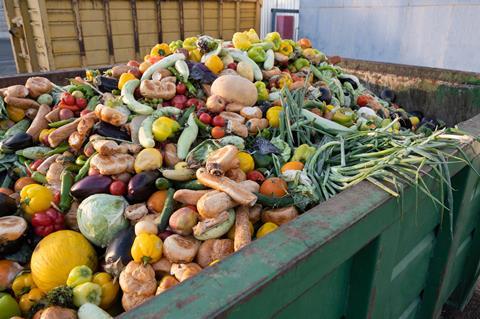
The amount of waste humans generate every year – 2.1 billion tonnes – is hard to picture. So imagine it this way: if we piled it on to a line of aircraft carriers starting in San Francisco, they would stretch all the way across the Pacific Ocean to Tokyo.
Of this troubling heap, one element is particularly urgent: food. Globally, it comprises almost 40% of municipal solid waste, which is everyday rubbish from people’s homes, offices, shops, schools and hospitals.
Today, International Day of Awareness of Food Loss and Waste, is a reminder that this enormous problem is also a solvable one. This year’s focus on the transformative potential of reducing food waste should be a prompt to move beyond awareness and toward action.
This is well within our grasp. Most of the food that is lost and wasted is edible and nutritious. Instead of sending good food to landfills, we can get it to people, which is critical in a world where 645 million people face chronic hunger.
There’s also the environmental impact. When food rots in a landfill, it produces methane, a powerful greenhouse gas. Roughly 1 billion metric tons of food is lost or wasted every year, accounting for up to 10% of global greenhouse gas emissions.
Reducing food waste – and its environmental impact – is possible. The first step is to prevent food from being lost and wasted in the first place, which can be done by creating efficiencies in the supply chain, supporting policies that encourage business to reduce waste, and raising awareness among consumers.
There are also many promising circular economy solutions to cut food loss and waste, from converting it for composting and animal feed to using it for biofuels. If we cannot prevent the waste, the next best thing is to redirect surplus food to people. The US Environmental Protection Agency and European Commission say keeping surplus food in the human supply chain has the greatest social and environmental benefits. This is where food banks and other food recovery organisations come in.
Food banks are already doing this work in more than 80 countries. In 2025, members of The Global FoodBanking Network, which spans more than 50 countries, kept 534 million kilograms of food out of landfills (equivalent to about 1.4 billion meals), while delivering it to more than 40 million people facing food insecurity.
In the Philippines, for example, a food bank set up a warehouse at a major agricultural trading post, exchanging farmers’ surplus produce for dry goods. In Guatemala, food bank trucks are regularly docked at retail stores to collect good food nearing its expiration date and get it to people.
This is an efficient and time-tested solution, but we need to encourage more governments and businesses to prioritise it to help turn this community-based approach into global change.
The government’s role in reducing food waste
National governments can play a significant role in reducing food waste. In 2022, Japan became the first country to reduce national food waste by 50%, and South Korea is on track to reduce it by 50% by 2030. Both countries employ a variety of policies, including redistributing surplus food and charging consumers and companies for food they send to landfills.
Meanwhile, the EU recently enacted its Waste Framework Directive, requiring food companies to establish an agreement with a food recovery organisation or food bank. In countries like Ecuador and South Africa, food banks have access to climate finance to support their food redistribution efforts.
All this demonstrates how an encouraging political landscape and effective governance can help tackle this issue. Still, the vast majority of countries do not have concrete plans to address their food waste. As of today, just 28 countries have committed to reducing food loss and/or waste in their national climate plans. This is a highly undlargely untapped opportunity to do more.
This year, as leaders gather at COP31 in Turkey, we could see a turning point in how the world tackles waste. The Turkish government has made food security and reducing waste – including food waste – a top priority, helping to push the issue higher up the global agenda. Governments and businesses have a powerful opportunity to tackle two urgent challenges at once: reducing emissions and addressing global hunger.
One billion tonnes of wasted food every year is a problem that can be solved. With the right vision and commitment to action, we can create a healthy planet where everyone is well fed.
Gonzalo Muñoz is UN climate change high-level champion from the COP25 presidency and Lisa Moon is president and CEO of The Global FoodBanking Network









No comments yet