






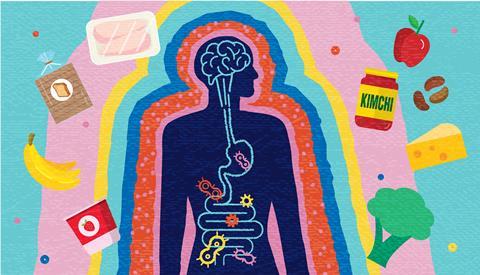
Can you tell your bifidobacterium from your bacillus subtilis? No? Well, you may want to brush up because Brits are boning up on biotics, and if fmcg doesn’t catch up fast, it risks missing out on a £466.4m gut health gold rush.
Shoppers aren’t just “aware” of gut health anymore – they’re swotting up. Consumers are becoming comfortable with common bacterial strains like lactobacillus plantarum, comparing FOS with GOS fibre, and discussing whether inulin agrees with them.
But what about the grocery sector? It’s barely scratched the surface. Clinical research is uncovering a plethora of inspiring microbiome-modulating bioactives just waiting to play their role in the next big gut-friendly NPD.
The next big biotic
The UK digestive health supplements market generated a revenue of $466.4m in 2024 and is expected to reach $846.3m by 2033 (Grand View Research), with probiotics the largest revenue-generating product type in 2024.
But postbiotics are quietly positioning themselves as the one to watch. Referring to either heat-killed bacteria or the beneficial byproducts formed in the gut, postbiotics promise benefits like immune support, better sleep, improved mood and even exercise gains… without the formulation headaches of keeping bacteria alive.
But can brands label postbiotic on pack? Probably not. There’s a lot of work to be done to improve consumer familiarity with this family of biotics.
Plants: the prebiotics shoppers already trust
If “postbiotic” is a linguistic hard sell, plants are arguably the easy win. Polyphenol-heavy botanicals, such as berries, offer prebiotic punch and a wellness halo that consumers already understand. Elsewhere in the plant kingdom, research suggests mushrooms offer superior prebiotic activity and boast synergistic health benefits when multiple fungi are mixed together.
This should be an easy wagon for consumers to jump aboard. Medicinal mushrooms are everywhere, including coffees that promise a “calmer buzz”. So tomorrow, it could be mushroom-powered gut health yoghurts, bars, breads and more.
Elsewhere, carotenoids, the natural yellow, orange, and red pigments in plants and algae, might already be familiar to formulators thanks to their antioxidant and natural colourant benefits – but they’ve also recently been found to act as microbiome modulators. These are an ideal addition to products such as smoothies, where vibrant colours are expected and enhance taste and health perceptions.
And speaking of natural colourants, curcumin (the bioactive in turmeric) provides antioxidant properties beneficial for gut health and is supportive of ‘gut barrier integrity’, meaning it can reduce common irritable bowel symptoms.
Newcomers to the gut party
Elsewhere, collagen’s crossover moment is well underway. Once the preserve of beauty junkies, it’s now drifting into mainstream grocery, and digestive health might be what pushes it over the edge. Premium supplement players are already formulating with gut‑targeted collagen peptides and touting this ingredient’s ability to strengthen the gut lining and aid digestive health.
Sea moss has gone viral (1.5 billion TikTok views) thanks to its mega nutrient profile and prebiotic fibre – and its formats (gels, powders, drinks) fit neatly into grocery innovation pipelines.
Sugar kelp is a quieter but more clinical contender. Already used in food preparations for its umami flavour and multiple nutrients, the health powerhouse also contains fucoidans, which enrich beneficial bacteria with less gas production than conventional prebiotics.
Precision‑fermented binding proteins – fragments of immunoglobulins that mop up toxins without disturbing good bacteria – are also being touted as “the missing piece” in gut resilience. High stability, low dosage, easy formulation: in supplement terms they’re the Tesla of gut health. And grocery won’t ignore them for long.
So yes, shoppers are already nerding out on gut health. They’re ahead of brands, ahead of the fixture and certainly ahead of the average NPD cycle. From mushrooms to seaweed to postbiotics, the next wave of gut‑friendly ingredients is already here and consumers are ready for them.
Fmcg just needs to catch up.









No comments yet