






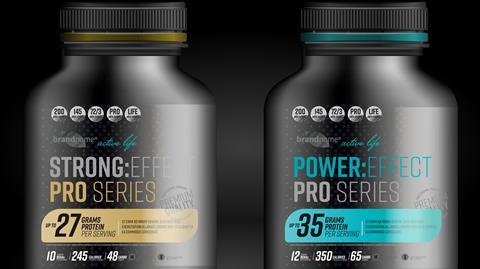
For decades, the health food industry has been shaped by a quiet but powerful gender divide. Products marketed to women have tended to focus on calorie restriction, weight loss and aesthetics, while those aimed at men have been framed around protein, muscle gain and performance.
That split has always been limiting – but it now looks increasingly out of step with how people actually think about health. The mainstreaming of GLP-1 medications has accelerated that shift. As retailers from Ocado to Morrisons launch ranges aimed at GLP-1 users, the health food category is being forced to reckon with a consumer who views food less through the lens of guilt or gym culture, and more through the lens of function, satiety, metabolic health and overall wellbeing.
This is not a niche issue. The global sports nutrition market is forecast to exceed $138bn (£102bn) by 2033, while GLP-1 use is increasingly shaping conversations about appetite and nutrition. Brands still designing around outdated gender codes risk narrowing their own market.
So, what does fixing it actually look like?
Design for needs, not stereotypes
Moving from gendered segmentation to functional neutrality means positioning products around needs such as energy, recovery, strength, metabolic health and longevity rather than defaulting to tired “for him” or “for her” logic.
The old codes are easy to spot. Health food for men is often sold through the language of performance and winning. Protein bars and tubs of whey still reach for the visual vernacular of racing and gym culture: black, shiny packs, lacquered finishes, exaggerated typography and photographs of sweaty men lifting weights. It is a very narrow idea of who the customer is.
The problem is that this puts off a much wider audience. Walk into Holland & Barrett and you’ll often see entire sections of protein and performance products that many shoppers simply skip over. A woman in her 50s looking for more protein to support muscle retention may feel these products are simply not for her. Equally, plenty of men are not drawn to them either. The packaging asks the customer to buy into an identity that is not theirs.
That disconnect becomes even more pronounced in the context of GLP-1 use. When appetite and food cues change, consumers are less drawn to old signals of performance or restriction – and more interested in what food actually does for them.
When we worked on the Nutrient Dense range for M&S, the aim was not to build a male or a female offer, but a range focused on the food and its function. The design was deliberately light-touch, with a level of transparency that allows the product to be clearly seen rather than relying on heavy branding cues or category tropes. That sounds simple, but health food has been oddly slow to embrace it.
The shift is already visible in other markets. Many gym brands have moved away from overtly masculine cues – Barry’s, for instance, has shifted from its “bootcamp-style” branding towards something more inclusive, reflecting a broader approach to health and, in turn, widening its appeal.
Put science at the centre
As people become more aware of the connections between appetite, gut health, metabolic health and long-term wellbeing, brands need to match that sophistication. That shift challenges the old gender divide, because the functional needs it addresses are shared by both men and women.
A scientific approach does not mean turning every pack into a white paper. It means building propositions on substantiated claims and credible thinking. Too much of the category still relies on a loaded promise or an implied transformation, when consumers are increasingly looking for trustworthy advice.
Beauty and skincare brands have already become far more sophisticated in how they talk about ingredients and their use, while creating environments that feel accessible and well-designed for all genders. Men’s skincare brand Horace, for example, shows it is possible to create something considered and appealing without relying on outdated tropes. Its minimal, considered packaging supports a more informed conversation about skincare. Some of the most successful brands in the category, such as CeraVe and Cetaphil, are gender neutral, emphasising scientific credibility and trust rather than lifestyle aspiration.
The branding for what we put on our bodies has been elevated, but that sophistication is still largely missing when it comes to what we put in them.
Be radically transparent
There is a real opportunity now to be more honest about what is being sold. Brands do not need to ramp up claims or overplay a single ingredient to make a product sound convincing. If it is a genuinely good product designed for a clear set of needs, that should be enough. Honesty, in fact, can be the basis of a much stronger relationship between brand and consumer.
Good Sh*t soda, which is based in New Zealand, shows how this can work in practice. A low-sugar drink designed to support gut health, its brand combines clear functional benefits with an irreverent tone. The stripped-back black-and-white packaging and handwritten typography signal both simplicity and personality, demonstrating that health-led products can be credible without taking themselves too seriously.
As GLP-1 use reshapes how people respond to food cues, there is less reliance on impulse and more scrutiny of what products genuinely offer. Consumers are becoming less responsive to old forms of temptation, so building brand trust is now more important.
Replace seduction with honesty
For years, food branding has leaned heavily on gloss and seduction. In health food, that has meant either the seduction of losing weight or the hyper-masculine aspiration of better performance.
Honesty does not mean making everything austere or dull. It allows brands to show food in a more open and natural way. Some of the best recent food photography has moved away from heavy retouching and artificial perfection towards something clearer and more believable.
Athletic Greens reflects this shift. Its branding centres on clarity and credibility, using restrained visual language and inclusive lifestyle imagery to position the product as part of an everyday approach to health rather than an elite or gendered one.
That approach carries through into typography and messaging too. Good copywriting does not need to promise the world. It can be witty and full of character, while staying within the boundaries of what the product genuinely is.
In many ways, that is liberating. You are not forcing the brand into category cues – you are building creatively from something real.
The category now has a chance to do more than make incremental changes. Consumers are more sophisticated than many brands assume, and their understanding of health is becoming broader, more nuanced and less tied to old binaries. That gives brands the opportunity to think again.
In a market shaped for too long by outdated assumptions, the brands that will grow are the ones that design for people rather than stereotypes. Get that right and health food can become not only more relevant and more inclusive, but more interesting too.
Paul Blackburn is the founder of Studio Blackburn









No comments yet