


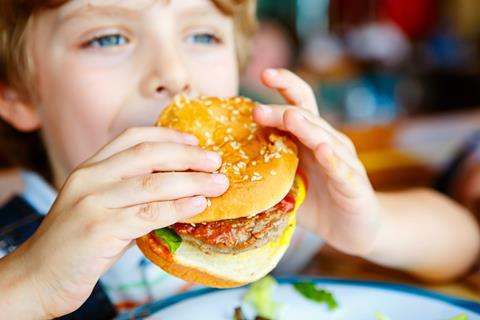
There is no denying the UK’s obesity crisis – nor can its scale be overlooked. Our latest report, Obesity Crisis, sets out the scale, trajectory and inequality of the problem across the UK. Since the 1990s, obesity in England has doubled from 15% to 30%, while France has seen rates fall to below 10% – the lowest in Europe.
Most concerning is how early obesity begins. More than one in five children are obese by the end of primary school, and the inequalities are stark: children in the most deprived communities are more than twice as likely to experience obesity as those in the least deprived areas, with 29% leaving primary school obese.
Fewer than 1% of the population currently meet the Eatwell Guide, the national dietary guidance in place since 2016. Research shows that shifting the population towards it would deliver 17.9 million additional healthy life years, a 30% cut in greenhouse gas emissions and £211bn in savings to UK society, easing pressure on the NHS and supporting business with a healthier workforce.
But it isn’t straightforward. We partnered with Frontier Economics to model how retailer profitability would change if consumption aligned fully with the Eatwell Guide. Meeting it would require major dietary shifts: much higher consumption of fruit, vegetables and starchy carbohydrates, and lower consumption of discretionary foods, protein and dairy.
Shifting people to healthier diets
That shift poses a profit challenge for retailers. Higher profits from the former would not offset losses from the latter. If healthier, more sustainable diets are to become the default, the food system must make them commercially viable and ultimately advantageous for business.
Fruit and vegetables would need to grow in volume by a third to meet Eatwell Guide targets. This means strengthening UK horticulture is crucial – not only to meet demand, but to reduce reliance on imports and improve resilience, with nearly half of UK fruit and vegetable imports projected to face climate threats by 2050.
Awareness alone will not increase demand. The 5-a-Day campaign has 90% recognition, yet fewer than one in five adults meet the recommendation. Driving change will require reshaping food environments in retail and out of home to make higher fruit and vegetable intake the cultural default.
Margins on meat are thin, but the volume and average price per unit make protein a major profit pool for retailers. It also drives footfall, with meat central to most weekly shops. Reducing protein consumption by the 40% implied by the Eatwell Guide would therefore threaten not only profits, but the core economics of supermarkets. The Eatwell Guide does not specify which protein categories should rise or fall, leaving the transition path unclear for industry and consumers. A stepped shift – from processed red meat to red meat, as an example – offers a more practical route with scope to cut emissions through production methods.
Discretionary foods would need to fall by two-thirds to align with the Eatwell Guide, but high revenues and margins make a shift of that scale commercially difficult. Reformulation has delivered some of the most effective health gains to date. Premiumisation, innovation, pack size and portfolio diversification also offer routes to reshape the category while improving public health. GLP-1 trends may reinforce this shift – our latest research shows 8% of the population now use them.
Building a healthier food system
Our Eatwell Economics research shows how difficult it is to shift the population fully to the Eatwell Guide while maintaining commercial stability. It is a call for industry and partner organisations to identify the most effective steps to improve public health, while building a commercially viable path to change.
That is why so many organisations have welcomed the government’s proposals for healthier sales reporting. Done well, this can give business leaders the confidence to compete, innovate and use their consumer insight to drive meaningful change, while maintaining a level playing field across the market.
Progress happens fastest when industry, government, academia and health organisations work together. Not because consensus is always easy, but because the scale of the challenge demands shared ambition and coordinated action at pace.
This cannot become a debate of industry versus public health. The opportunity is to build a food system that is healthier, more sustainable and commercially stronger.
Hannah Daley is head of health & sustainable diets at IGD
The Grocer Health Summit 2026 is helping the industry turn healthy eating insight into action. Covering everything from regulation to reformulation and science to strategy, the one-day conference will be taking place on Tuesday 15 September 2026 at the QEII Centre in London.
Visit thegrocerhealthsummit.co.uk to book your tickets and find out more.









No comments yet