





Drive past a pub and you’ll often see a sign outside saying “quality food”. I’ve always thought that was a slightly ridiculous thing to say because it doesn’t actually tell me anything.
Tell me the food is cooked fresh on site using real ingredients and suddenly I’ve got something: a reason to believe you.
I think some food brands have a similar problem. We’ve become incredibly good at finding ways to make products sound healthier, more natural or more virtuous. Put protein prominently on the front. Talk about goodness. Use ingredient photography, botanical illustrations, kraft paper, muted colours, clean typography and plenty of white space. None of those things is necessarily dishonest, but together they can create a very particular impression before anyone has even turned the pack over.
But people are starting to turn the pack over.
Recent NIQ research found 31% of UK shoppers are checking labels and avoiding specific additives, while 37% say they’re eating more natural snacks. Products positioned as “all natural” across impulse categories grew 9.4% in the four weeks to 5 September, compared with 5.4% growth across impulse overall. That’s commercially interesting, obviously. But there’s a bigger question behind it: have food brands, marketers and designers spent years teaching consumers not to take what we say at face value?
It’s no wonder people are sceptical.
But it does raise an uncomfortable question for those of us doing the designing: when does making something compelling become making it sound better than it really is?
The rules around nutrition
The rules around nutrition and health claims are actually quite prescriptive. In Great Britain, only authorised claims may be used, and there are specific conditions governing when and how they can be made. The legislation also recognises that a claim can be something that states, suggests or implies particular characteristics.
But I don’t think this is only a regulatory issue. There’s a judgement call too. Trading Standards used to be much more visible to food businesses as an advisory presence, helping brands and marketers understand where the lines were before packaging or advertising went into the market. Years of pressure on local authority resources have reduced that capacity considerably in many areas.
I’ve refused work in the past because, although something might have been perfectly legal to sell, I didn’t feel comfortable promoting it. That’s an extreme example, but most decisions aren’t that black and white. They sit in a big, blurry grey area.
Food businesses have commercial realities: ingredient costs, harvests, availability, shelf life, distribution and, crucially, price. Sometimes manufacturers need to change an ingredient because the one they’d prefer to use has become commercially unviable. I’m not suggesting every product needs to be completely natural or beyond reproach. Good-quality food often costs more, and pretending otherwise ignores the realities faced by manufacturers and consumers.
A product doesn’t have to be perfect for us to market it well. I just don’t think we should make it something it isn’t.
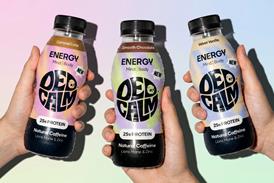
That’s why I worry about where clean label goes next. We’ve already watched protein become a marketing language in its own right. You don’t necessarily even need to shout “high protein”. Sometimes just putting the word protein somewhere prominent is enough to create the desired impression.
What happens when everyone starts saying ‘real food’, ‘simple ingredients’, ‘made properly’ and ‘nothing unnecessary’? They become another set of claims.
The Grocer recently reported Bio&Me co-founder Megan Rossi warning that weakly substantiated gut health positioning could make consumers sceptical of the category as a whole. I think that’s exactly the danger. Once everybody starts making broadly the same claim, the words themselves stop doing the job.
So perhaps the opportunity isn’t another claim at all. Maybe it’s giving people a better reason to believe you.
A reason to believe you
We’re working with a food business at the moment that hasn’t launched yet, so I won’t name it, but during the strategy work we uncovered a fairly simple truth about the ingredients they choose and the fats they cook with.
There was a point where we could have turned it into an aggressive position, telling consumers what we thought everyone else was doing wrong. We decided not to. They don’t need to tell the rest of the world it’s evil. They just need to demonstrate what they believe good looks like, explain why they do things the way they do and let people make their own minds up.
For me, that’s where trust becomes interesting.
You can’t put “trustworthy” on a packet and expect anyone to believe you. Trust might start with the packaging, but it gets built everywhere else: in the product, the ingredients, the sourcing, the website, the content, the people behind the business and what happens when somebody asks a difficult question.
People aren’t stupid, just busy, distracted and often looking for the easiest way to make a decision. Branding helps us do that, which is why it has so much commercial value.
I don’t think the answer is less marketing or less creativity. Quite the opposite. The creative challenge is better than that. Find what’s genuinely good or genuinely different about the product, work out why somebody should care about it and make that compelling.
Because trust isn’t something you print on a packet. It’s what happens when someone looks closer and the story still holds up.
Ben Martin is founder and creative director at Royal Flush





No comments yet