social media phone teen gen alpha

While a ban on social media for under-16s has been announced, it still requires legislation before it becomes law, so brands shouldn’t treat it as a fait accompli just yet. Even so, with a prime minister intent on moving faster than his predecessor, the direction of travel is clear. And regardless of whether the legislation arrives in its current form, the shift in thinking it encourages is one brands should be making anyway.

Here’s what gets lost in most of the debate around this. For the best part of a decade, the fastest way to build desire around a product among younger consumers has been to buy or earn attention on a feed. Remove that route and the desire itself doesn’t disappear, only the easiest mechanism for creating it does. That need still has to be met somewhere. If it’s not being met on a feed, it will be met by the product itself.

Which brings me to packaging. We’ve always said, in theory, that the pack is media: it sits on shelf, it appears online and in delivery apps, it travels through daily life long after any campaign has ended.

It’s also the moment that decides everything else: what P&G once called the ‘First Moment of Truth’ – the few seconds a shopper takes to decide whether a product deserves a second look.

What we haven’t done, as an industry, is fund that moment accordingly. Packaging is still too often treated as a production line item to be minimised, rather than a media investment to be maximised. That thinking needs to change.

Earning attention on shelf

The way younger shoppers actually respond to a shelf doesn’t match most category assumptions. Density and uniformity read as ordinary, expected, forgettable. Scarcity, rotation and a more editorial approach to presentation read as something worth paying attention to.

Pringles and Heinz have both tested this with limited-run flavours and collaborations. The versions that worked did so for a simple reason: if a product might not be there next time you look, that changes how you value it now. That isn’t a marketing trick. It’s simply how desire works.

Sustainability deserves more credit here too. Younger shoppers increasingly read a pack’s materials as a signal of what a brand actually stands for, not just what it’s selling. A shift to recyclable or reduced packaging isn’t just a cost or compliance story, it’s one of the few genuinely values-led messages a brand can make without saying a word, at a moment when saying it out loud on social media may simply not be an option.

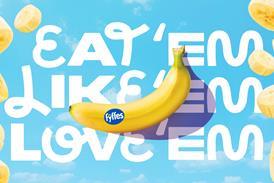
The graphic language has to work harder too, picking up a job the algorithm used to do: stopping someone as they move past, the way a strong piece of content once stopped someone mid-scroll. That calls for boldness, not restraint.

None of this happens in isolation. As social reach narrows, physical retail naturally becomes more influential – sampling, pop-ups, till-point moments that were once considered secondary start doing genuine commercial work. But packaging is the one asset that shows up everywhere, every time, without requiring further media spend to be seen. That’s what makes the investment case for it stronger, whether or not this legislation is ultimately passed.

The brands that start treating packaging as central to how they build demand, rather than as a finishing touch applied at the end of the process, will be the ones still generating desire whichever way this decision eventually goes. The brands that wait to see what happens with the legislation before acting will simply have spent that time standing still.


Howard Wright is executive creative and strategic director EMEA & Canada at Equator