






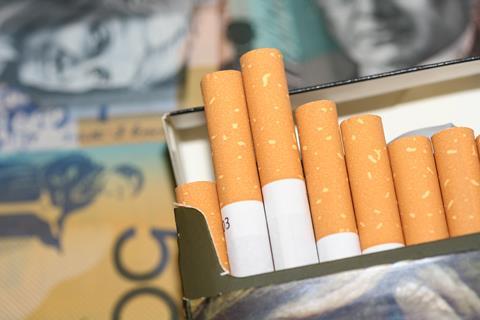
There are very few businesses in the UK whose existence depends on people continuing to smoke. They are either global tobacco multinationals or a handful of specialist tobacconists. For the vast majority of the UK’s estimated 56,000 tobacco retailers, cigarettes are simply another product line – one with shrinking volumes, tight margins, increasing regulation and a customer base that is both ageing and declining.
That customer base is set to shrink further from 1 January 2027, when people begin to age into the government’s proposed “smoke-free generation”. Anyone born on or after 1 January 2009 will never be legally sold tobacco. Over time, this policy will effectively phase out tobacco sales altogether.
It sounds radical, and in many ways it is. It resets the UK’s tobacco strategy from managing decline to answering a different question entirely: not whether smoking ends, but when. The brilliance of the policy, however, lies in how gradual it is. The change is seismic, but the transition is slow.
Retailers have already been living through this shift. As tobacco regulation has strengthened, sales have fallen – not, as tobacco companies often claim, because of a booming illicit market, but because these policies work. Fewer people smoke, and those who do smoke less.
Retail has the strength to adapt
Twenty years ago, smoking rates were roughly double what they are today. My first job, aged 15, was in a small convenience store, where every other customer seemed to buy a copy of the News of the World and a pack of Lambert & Butler. No one sells the News of the World anymore. Times change – and retail adapts.
Recent figures underline the scale of that change. At the end of last year, The Grocer reported tobacco and vaping shed more volume than any other grocery category, with combined year-on-year sales falling by just over £1bn. This was not driven by price alone. Across the store, shoppers are increasingly looking towards healthier habits.
From a public health perspective, this is hugely positive. Smoking remains the leading cause of preventable death in the UK. Almost all of us know someone whose life has been cut short by tobacco. It is not just another high street product.
Crucially for retailers, tobacco is also far from the most profitable part of the business. ASH analysis of EPoS data from the University of Edinburgh shows traditional tobacco margins at around 8.5%, compared with margins of over 37% on vape products. Furthermore, most of the profit from cigarette sales flows to manufacturers, not the shops that stock them.
Supporting stores through the transition
None of this is to underestimate the transition required by smoke-free generation laws. Retailers will be on the frontline of enforcement. Staff will need to apply a fixed rule: anyone born on or after 1 January 2009 cannot be sold tobacco, full stop.
Operationally, this is manageable. The same systems that support Challenge 25 can adapt, but it does require early engagement, clear guidance and proper training. At ASH, we are pressing government to set out clearly how it will support retailers through this change.
There are understandable concerns about illicit trade and shopworker abuse. But there is no compelling evidence that this policy will increase illegal sales; if anything, it will reduce demand. The number of people affected initially is also small. Fewer than 7% of 17-year-olds currently smoke. Even if every one of them attempted to buy tobacco, that would equate to roughly one additional person being refused sale per retailer.
The UK’s journey to a smoke-free future is not yet complete, but the direction of travel is clear. Tobacco sales are in structural decline, consumer preferences are shifting, and the policy framework is settled. Retailers who engage early will not only ease the transition – they will help shape a healthier, more resilient high street for the future.
Hazel Cheeseman is CEO at Action on Smoking and Health (ASH)









No comments yet