



The grocery sector is one of the most sophisticated in the world at managing the risks it can name. Cyberattack, fraud, border disruption, currency, cost volatility: each has its own owner, its own register and its own slot on the risk committee agenda. But somehow climate risk gets a different treatment.
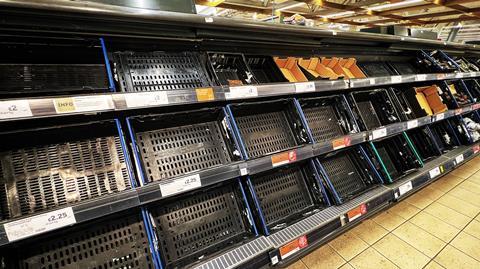
Grocery retail is both highly exposed and highly visible on climate. Structural Scope 3 concentration, reputational fragility around empty shelves, intense competition on price point and headline public commitments put grocery ahead of many consumer-facing sectors. But look at the detail of recent reports and transition plans, and progress looks advanced in awareness and rhetoric, and dare we say it, behind on delivery.
This isn’t a case of the grocery sector being uninformed when it comes to climate risk. But it points to a more systemic problem of knowing what decisions need to be made and who is responsible for them.
Climate risk runs through every part of the business: it is the border disruption, the cost volatility, the fraud opportunity created by scarcity, the stock that spoils before it reaches a shelf. And yet it is still treated as a future concern that belongs to a small and select group of people.
And the price competition that should be driving investment in resilience can just as easily starve it: wafer-thin retail margins leave little room to absorb shocks or invest in resilience.
The sector’s problem isn’t a lack of information. The problem is that governance structures were built to produce compliant disclosure, not to force strategic interrogation, and the people making decisions have often not been equipped to convert that data into pricing, sourcing, and capital decisions. So while climate disruption is recognised and felt in the P&L, it’s absent from the decision-making processes that can make the biggest difference.
This summer supplied the proof. Drought pushed the wholesale price of tomatoes up by more than 60% and iceberg lettuce by 90%, forcing retailers to fly in produce from Spain at the height of the UK growing season. Arla raised its farmgate milk price twice in two months, and farmers now predict short supply into 2027.
The Food & Drink Federation has warned that heatwaves are already squeezing fruit, vegetable and grain supply, with the pressure carrying well beyond this season. All through our hot summer, we watched supermarket fridges and freezers fail under record heat: proof that climate risk isn’t only upstream in sourcing, it’s inside the shops too.
What the science predicted
None of this was unforeseeable; it’s exactly what the science predicted. The failure point was ownership, not forecasting. Milk pricing sat with commercial teams, crop failure with procurement, refrigeration with estates, and reputational fallout with comms.
We’ve made the case before that unglamorous pragmatism, rather than glossy transformation programmes, is what builds resilience in practice. Applied to a sector staring at failing supply chains and broken refrigerators, that pragmatism looks like three focused changes to how grocery buys, audits and invests.
It starts with tying climate metrics to the KPIs buyers are paid against. Buyer and commercial bonus structures need a climate line. Without this, the incentive to act stays with the one function least able to change sourcing or supplier contracts.
It also means extending the supplier audits. Grocery already runs ethical and modern slavery audits deep into tier two and three suppliers with the teams, scorecards and commercial leverage already in place. Extending that infrastructure to score water stress and heat exposure by growing region is a data and mandate change, not a new function. The same data should shape margins and promotions, so lower-impact suppliers and products become commercially attractive.
And it means putting refrigeration and estate resilience on the capex risk register, not the facilities to-do list. This summer’s fridge failures were a capital allocation problem, not a maintenance one. Cooling capacity in a warming climate belongs on the same board risk register as store security and IT resilience, reviewed and funded the same way.
Nobody needs to solve the whole problem today. Every buyer KPI rewritten this quarter, every supplier audit extended this year, every fridge put on the capex register this cycle is disruption avoided now, while the wider shift to genuinely resilient business gathers pace around it.
John Gummer, Lord Deben, is chairman of Sancroft and Kathleen Enright is managing partner, Sancroft










No comments yet