






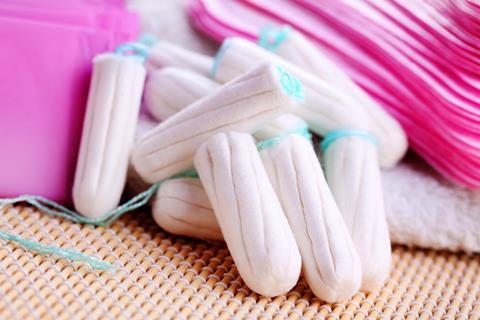
Period products are classified as general consumer goods in the UK. That means a tampon – something used inside the body for up to eight hours at a time – has been through less stringent safety testing than a kitchen sponge or a scented candle.
We’ve said this for years, but it isn’t niche. It’s a category-wide problem every retailer must understand.
Two developments are happening in parallel. Domestically, the UK government is consulting on a new product safety framework – the first meaningful chance in a generation to set product-specific standards. That consultation is a direct result of mounting pressure, including the parliamentary petition we at TOTM spearheaded, calling for mandatory ingredient labelling on tampons.
Then there’s ISO 25130, the first dedicated international standard for menstrual products, in development with publication expected in 2027/28. The part every buyer should note: once designated under the UK’s new product safety framework, the resulting duties won’t sit with manufacturers alone – they run across the supply chain.
The window to get ahead of this is open. It won’t stay that way.
What the science is telling us
The absence of regulation hasn’t meant the absence of risk. It’s meant the absence of scrutiny.
Research by UC Berkeley found traces of 16 metals, including lead and arsenic, in tampons from 14 brands sold across the US, UK and EU. A joint report by PAN UK, the Women’s Environmental Network and the Pesticide Collaboration found glyphosate – a pesticide linked to cancer – in period products at levels 40 times higher than the legal limit for drinking water.
These are credible, peer-reviewed studies and reports from heavyweight public health organisations.
But it isn’t only what goes into a tampon that matters, it’s what might be left behind. Fibre shedding, where loose fibres detach and remain in the vaginal canal, is an emerging area of scrutiny. It’s a question of physical construction: without a secure veil holding the absorbent core together, a tampon can leave behind significant material that, with repeated use, may accumulate rather than clear. It’s one of the safety questions now being examined in the international standardisation work – a risk the price-and-promotion buying conversation has never had reason to ask about.
Retailers have always had skin in the game on product safety. But period care has been treated as a mature, low-risk category – one where the buying conversation is almost entirely about price, range and promotion. That is shifting fast.
Consumer awareness is growing, with searches for organic tampons and ingredient transparency trending upward. Buyers who’ve watched the same shift in baby food, deodorant and household cleaning know the pattern: ingredient scrutiny moves from niche to mainstream and brands that haven’t prepared are left exposed.
It’s sharpest of all for the many retailers carrying own-label period care. Under product safety law, putting your name on a product makes you its producer – with the same duties on safety, traceability and recall that a manufacturer carries. For own-brand ranges, this was never only the supplier’s problem to solve.
Holding the category to a higher standard
At TOTM, we’ve spent 10 years building period care on 100% certified organic cotton, full ingredient transparency and an uncompromising position on what goes inside the body. It’s also why our new compact applicator tampons use a 360-degree security veil to guard against fibre shedding. We’re a contributing member of the BSI Technical Committee for Menstrual Products. We led the parliamentary petition and submitted a formal response to the government’s consultation.
Tighter regulation may push some prices up. The honest answer is that safer products cost more to make. Those choices have always been built into our cost of goods. A regulatory baseline requiring safety testing and ingredient transparency will narrow the gap between products that have always been made this way and those that haven’t. A category where the cheapest product wins precisely because it avoids the costs of being safe is not a tenable position for any retailer.
Clearer safety standards protect everyone: those using these products and the retailers selling them.
Regulation is coming. The retailers who treat this as a prompt to review their range now – rather than a problem to manage later – will come out ahead.
St.John Pearce-Burke is co-founder and CEO at TOTM







No comments yet