




On August 4, Procter & Gamble agreed to buy Thorne for $3.8bn. Thorne spent four decades building credibility with practitioners, athletes and consumers who read certificates of analysis before buying, so the reaction was predictable: what happens to quality when a trusted independent supplement company becomes a line item inside a global corporation?
It’s a fair question. But a study published two weeks earlier by researchers at the University of California, Davis (UCD) suggests we’re worrying about the wrong thing. What makes a product what it claims to be isn’t who owns it. It’s whether anyone has verified the ingredients.
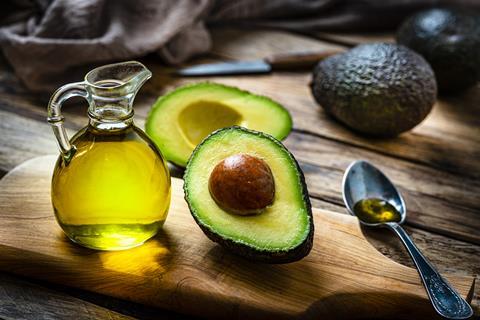
Selina Wang’s lab analysed 74 packaged foods – chips, mayonnaise and salad dressings – listing avocado oil or olive oil as the only oil ingredient, comparing fatty-acid and sterol profiles against authentic reference samples. Fifty-four were labeled avocado oil. Forty-eight of those failed.
Ninety-three per cent of the chips were inconsistent with pure avocado oil, along with 71% of the mayonnaises and every salad dressing tested. One contained essentially no avocado oil. The researchers anticipated the obvious objection – that frying might scramble the markers – and ran their own experiments to check. The markers held, even allowing a 10% margin for natural variation among varieties. Then they ran the same tests on the 20 olive oil products and found exactly one failure.
That gap is the whole story. Olive oil has been under a microscope for decades, and the scrutiny built something durable: identity standards, validated methods, and enough enforcement history that suppliers assume somebody might check. Avocado oil got the demand and the premium without the infrastructure, and the seed oils that pass for it in a fryer cost a fraction of the price. Wang has pointed at the supply chain rather than individual brands, noting that suppliers of adulterated oil “may be hiding behind a couple of layers of supply chain.”
So a brand can sell an adulterated product without intending to do so. In the UCD study, price didn’t predict authenticity. Expensive products failed at roughly the same rate as cheap ones. Without testing, a company knows only what its supplier communicates.
I should say plainly that I sell supplements, so I have a commercial interest in this argument. But that’s also why it isn’t abstract to me. When a competitor’s label recently claimed 135% of the daily value for a nutrient, we bought a bottle and had it tested. It came back at roughly one one-hundredth of the claim.
That permanently shifts the way you read a label. It’s why my company tests raw material against specifications before manufacturing, then tests the finished product through independent laboratories. It’s slower, more expensive, and worth it.
The study didn’t let anyone off according to ownership. Primal Kitchen belongs to Kraft Heinz, Siete to PepsiCo, Kettle Brand to Campbell’s. But independent brands failed, too. The lesson has nothing to do with big companies being bad or small companies being good. Integrity doesn’t change with scale. What matters is the number of hands between the raw material and the bottle.
Which brings me back to Thorne, where the interesting number isn’t $3.8bn. Thorne has had three owners in five years: public in 2021 at roughly $525m, private with L Catterton in 2023 for $680m, now P&G at more than five times that. Multiples like that get paid on the promise of growth, and that may lead to supply chain issues.
So rather than guess what P&G will do, watch what can be measured. Does Thorne maintain its current manufacturing practices? Does raw material get tested at the same frequency a year after closing? And does Thorne keep NSF Certified for Sport – a credential built on lot-level testing that no press release can fake, and anyone can verify in 30 seconds?
None of that requires trusting anyone. That’s the entire point.
A good reputation matters. So does Thorne’s beautiful label, a 40-year history and a premium price. And none of them tell you what’s in the bottle. Testing does.
One of my company’s core values is “know better, do better”. But consumers can only know better if someone first hands them accurate information. If a label says avocado oil, there should be avocado oil in the product.
Dan Corrigan is the founder of Smidge Small Batch Supplements and the author of Eat Well, Supplement Well, Digest Well: A Nonconformist Approach to Optimal Health







No comments yet