




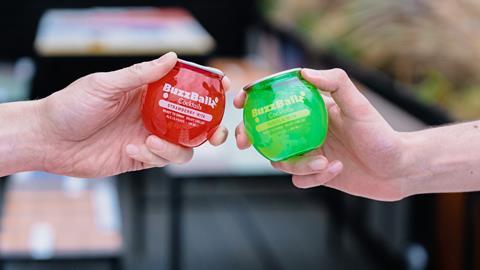

If you have working eyes and live in the UK, you’re highly likely to have spotted an empty BuzzBallz container lately. Perhaps you’ve spied one of the brand’s lurid plastic spheres perched on top of a bin, tossed nonchalantly on to the street or abandoned on the Tube post-Christmas party.
Described by one Grocer journalist as “a visual mash-up between a Christmas bauble and a hand grenade”, BuzzBallz have exploded in popularity in the UK over the past 12 months. The ready-to-drink cocktail brand – founded in the US in 2009 by then 47-year-old teacher Merrilee Kick – has recorded UK off-trade sales of £24.6m, after volumes climbed by nearly 800% [NIQ 52 w/e 6 September 2025].
Given these figures may not capture all of wholesale and independent convenience, the real size of the BuzzBallz boom is likely even bigger.
RTD NPD
From Buzzballz to Moth, it has been impossible to escape the onslaught of boozy ready-to-drink innvation that has hit supermarket shelves over the past 12 months. With socialising mostly back to pre-pandemic levels but consumer budgets continuing to be stretched, canned cocktails sales have surged as shoppers look for more affordable and convenient alternatives to standalone spirits.
Suppliers that have successfully responded to this trend have reaped quite considerable rewards. Take Au Vodka, for example, which recently became the bestselling alcoholic RTD brand in the UK, leapfrogging gin giant Gordon’s. Soft drinks brands including Coca-Cola Europacific Partners and Fever-Tree have also launched more boozy NPD of their own, further adding to the diversity of premixes on offer.
While sales of mainstream spirits continue to suffer a post pandemic hangover – nine of the top 10 brands in The Grocer’s annual Top Products survey saw volumes decline this year [NIQ 52 w/e 6 September] – the RTD market remains comparatively buoyant.
Cheap and cheerful
Back to BuzzBallz though, where demand is being driven by the notoriously alcohol-adverse Gen Z, who have fallen for the brand’s Lost Mary-esque range of sweet flavours (Choc Tease or Strawberry ‘rita, anyone?), distinctive packaging, and cheap-and-cheerful positioning. Nostalgia for 1990s alcopops may also be boosting sales of BuzzBallz among older drinkers – both Bacardí Breezer and Reef have returned in recent years to tap this trend.
Whatever the cause, BuzzBallz is clearly a brand on the up, and corner shops are doing a roaring trade selling the 13.5% abv tipples to festival and house party-goers alike. Major mults have hopped on the bandwagon, too, with Sainsbury’s, Morrisons and Tesco listing the brand’s single-serve 200ml cocktails as well as its gigantic 1.75-litre ‘biggies’.
Like any social media-driven trend, however, the question that lingers with BuzzBallz is one of longevity. Owner Sazerac clearly thinks the brand has legs; having splashed around $500m to acquire it last year. But Gen Z are a notoriously fickle bunch (whatever happened to Prime!?), and Buzzballz – with their sickly sweet taste and gaudy packaging – don’t exactly scream sophisticated.
Next year, all eyes will be on whether the novelty-driven brand can evolve to remain relevant. Failure to do so risks shoppers getting bored and Buzzballz being relegated to the sticky floors of history.








No comments yet