

Every buyer, producer and supplier we have ever worked with always had a contingency plan for a bad harvest. Very few had a plan for no harvest at all, but many do now.
It isn’t contingency planning any more, it’s mandatory resilience.
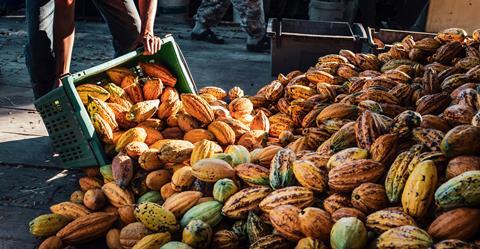
Cocoa is the clearest recent example. When it turned from a commodity into a crisis, the instinct was to treat it as a pricing problem: hedge the spike, absorb the cost, pass it along the chain. But the west African harvests, where a few countries grow most of the world’s cocoa, failed for reasons pricing and hedging couldn’t address. Drought, disease and trees long past their productive best. You cannot harvest a pod that never formed. Prices have since eased, but it appears nothing structural has changed, and the next El Niño could make that plain.
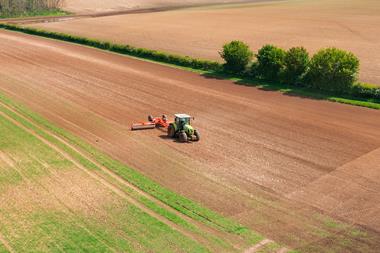
It is tempting to see this as someone else’s weather, far from British shelves. This summer reminded us it is not. The UK and Europe have been battered by severe drought and other extreme weather over the past few years. Yields were lost for good across southern and eastern Europe, and the UK has fared little better, with grain yields considerably down this year. The EU now loses tens of billions a year to extreme weather, most of it to drought. This is fruit, vegetables and staples, grown a short distance from distribution centres, failing the same way.
The deeper issue is how the trade thinks about risk. Most models run on price and substitution: if one source gets expensive, another opens up; if one supplier falters, a second is available elsewhere. That holds until an entire growing region is hit at once: there simply is no substitute.
Then there is resilience, a word the industry leans on heavily. In practice it takes a familiar shape: hold more stock, secure a second source, tighten service levels. All sensible measures, made for sound reasons, with retailers and wholesalers facing real pressures of their own to keep shelves full and prices fair.
The difficulty is that resilience resting on one part of the chain doesn’t go away. A supplier absorbing every shock on limited visibility hasn’t made the chain robust, only moved the weak point a link back.
Real resilience runs in all directions, and across a network, not just up and down a chain. When growers and importers hold buffer stock, invest in sturdier sourcing and ride out hard seasons, it works best when the effort is shared through longer commitments and honest forecasting. The strongest chains are part of a network that treats resilience as a shared investment, each link supporting the others, not a cost that settles in one place.
But no business can build that alone. Supply networks are now so interconnected and co-dependent that no one company, and no one government department, can see the whole picture. It requires collaboration.
As an established importer of fmcg goods, I sit in the middle, close enough to growers to watch a harvest fail, as well as to retailers and wholesalers to see the pressures that follow.
Encouragingly, the relationships we need are already here. British grocery has some of the closest supplier partnerships anywhere, and the collaboration behind our quality, provenance and value can – and pertinently, in my opinion, should – now be pointed at resilience.
Treat the next difficult season as a shared problem, not a risk to allocate, and the chains we build now should still be delivering, dependably, whatever the weather.
Tom Campbell-Smart is operations director at Brand Organic

No comments yet