





The UK food and drink industry prides itself on innovation. Startups and scale-ups are the lifeblood of supermarket shelves, driving emerging consumer trends in flavour, health and sustainability. Yet, behind the scenes, an operational barrier threatens these brands before they can ever reach true scale.
This is a structural penalty embedded deep within the industry. Traditional logistics service providers built their business models around multinational fmcg giants, which were characterised by predictable, high-volume production schedules and multi-year forecast horizons. As a result, the commercial entry barriers reflect this – rigid long-term contracts, steep minimum order quantities and significant upfront capital deposits.
For an emerging food and drink brand, these demands create a critical growth paradox. SMEs operate with volatile demand curves and seasonal surges, so tying up the minimal working capital available in fixed, multi-year warehouse leases, or paying for underutilised pallet space, drains the financial capital needed to source ingredients, innovate, build brands and deliver new products to market.
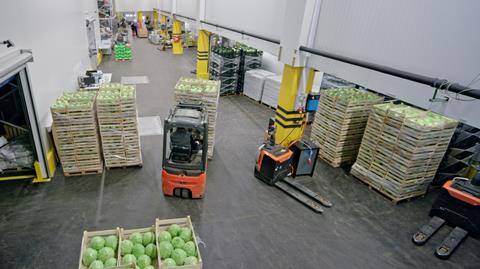
However, although it may appear so from the outside, this penalty is not caused by a limit in capacity. Across the UK, approximately 48.5 million sq ft of warehouse space lies available, according to BTG Eddisons Industrial Property Market Outlook 2026. Meanwhile, the Department for Transport and Road Haulage Association determined that articulated freight vehicles operate at an average journey load of just 63%, with weight and volume utilisation often dropping below 60%.
The physical assets exist. The warehouses, temperature-controlled storage and trailers, and freight space on lorries. What doesn’t exist, however, is the necessary access, flexibility and co-ordination.
That gap in co-ordination is clearest where the margin for error is smallest. Food and drink businesses operating across chilled and fresh products are most exposed to it. In order to transport goods accurately, there must be an unbroken cold chain from production to delivery. This means SMEs securing their first major listing face an ultimatum: do they scale instantly to fulfil this new capacity at a significant financial cost or face severe penalties and risk delisting for missed service level agreements?
To date, the food and drink industry’s default position has been to solve these logistical problems individually. SMEs attempt to negotiate bespoke contracts or scramble to build fragmented fulfilment networks. Herein lies the crucial flaw that could be the making of the industry and the disruption needed for this SME penalty. A brand moving 50 pallets a month will lose every time when trying to negotiate contracts with an infrastructure built for 5,000 pallets or more.
In order to ensure a resilient, diverse grocery market, the industry must abandon this siloed, competitive mindset. Businesses must work together to move from an individualised to a collaborative, shared supply chain.
By working together, smaller businesses can create the volume necessary to access premium logistics networks on more favourable, flexible terms. Sharing warehouse space and filling haulage journeys currently operating at 60% to 63% capacity will reduce supply chain costs, while also reducing Scope 3 emissions across the UK’s £85bn freight sector.
There is no logistics shortage in the UK. Only a restriction on visibility and a tendency to operate in silo, rather than collaboratively. Only when the industry stops treating logistics in this way and instead embraces a united, pooled network will the SME penalty become a thing of the past and innovation across F&B businesses be allowed to flourish.
Michael Ostroumov is chief executive at Value Chain Lab and Flox project lead










No comments yet