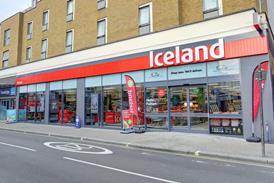
Associated British Foods’ share price has plummeted 11% in the wake of a surprise profit warning this morning (8 January).
ABF revealed a challenging end to the 2025 calendar year, as Primark’s European sales slumped and difficulties in its food division failed to pick up the slack.
Suffering a 5.7% drop in like-for-like sales in Europe – which makes up 49% of Primark’s total sales – ABF warned that full-year profits would fall below previous expectations, with weak US food sales and “more acute than anticipated” challenges in cooking oils and bakery ingredients hitting its food division’s top line.
Group revenues fell 1% in constant currency terms in the 16 weeks to 3 January. ABF’s grocery division and retail divisions were up 1%, ingredients, sugar, and agriculture all fell 2%, 5% and 4% respectively.
Revenue engine Primark’s poor performance was the prime focus for CEO George Weston, who praised positive trading in the UK despite the business’ weakness on the continent.
“In a challenging consumer environment, our focus is on factors within our control, including initiatives now underway in Europe aimed at improving performance,” he said.
“Our food businesses experienced mixed trading in the period, particularly in the US where consumer demand in certain categories has continued to weaken. While we expect the tough trading conditions to continue in the short term, we remain confident in the overall prospects for the group.”
AJ Bell head of markets Dan Coatsworth said Primark’s tough H1 2026 had put ABF in a “difficult situation”.
“Marks & Spencer and Card Factory have both recently bemoaned UK high street conditions, so one might have expected Primark to deliver a Grinch of a festive update for its homeland territory. Fortunately, its UK stores did well, particularly with womenswear,” he said.
“Sadly, Primark’s mainland European stores had a terrible time, with a large decline in sales. Even the US stores were volatile. When all the different territories are factored in, Primark has disappointed big time and forced management to slash prices to rock bottom levels to clear inventories and stop its stores from gathering dust. It’s a far cry from the halcyon days where Primark could do no wrong.”
ABF revealed it was considering a spin-off of Primark in November 2025, in order to offer investors a clearer investment picture for the separate retail and food businesses.
Despite its weak 16-week picture, Primark still has strong growth prospects in the medium term, according to RBC analyst Richard Chamberlain.
“ABF’s largest business, Primark, offers a solid space rollout story in Europe and the US, and remains the leading value player in the UK retail space, albeit its price perception appears to have risen in several markets,” he said.
“On the food side of the business, grocery has now passed through a period of super-normal pricing in the US, while Ingredients has shown consistently strong growth up until now. Sugar profitability has been very weak due to Vivergo weakness and low EU sugar prices. It should recover somewhat in FY26, although visibility remains low.”
On the same morning as ABF gave its profit warning, the Competition & Markets Authority announced it had accepted proposals from ABF subsidiary Allied Bakery and Hovis to speed its investigation into their merger straight into an in-depth phase 2 investigation. Had the CMA taken its full allotted time to undergo a phase 1 investigation before proceeding to phase 2, ABF would have had to wait up to six weeks longer to see Hovis folded into Allied Bakeries.


No comments yet