




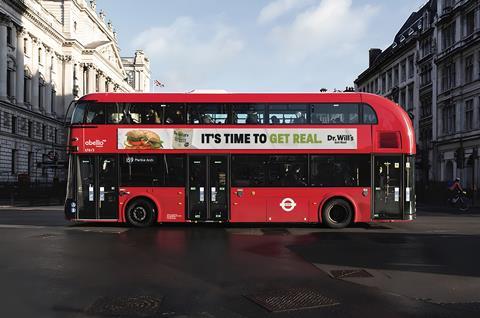
Dr Will’s has called for a rethink on HFSS advertising restrictions after having one of its adverts rejected by Transport for London.
Earlier this year, the healthier condiment brand applied to advertise its Avocado Oil Mayo across London’s bus network, but the campaign was rejected due to TfL’s restrictions on advertising HFSS products.
The brand’s Avocado Oil Mayo, made with 100% avocado oil and no artificial thickeners or additives, had fallen foul of regulations that “failed to recognise the difference between minimally processed foods and products containing a long list of additives”, the brand claimed.
Amid growing consumer scrutiny of UPFs, shoppers were “increasingly paying attention to ingredient lists and looking for products made with recognisable, minimally processed ingredients”, it said.
Dr Will’s argued current restrictions “painted products made with simple, high-quality ingredients in an even more negative light than their heavily processed alternatives”.
They also raised “questions around consistency”, it said, adding that products such as burgers and alcohol were permitted to be advertised while condiments made with simple ingredients faced restrictions.
The brand also questioned if regulations went far enough in considering how products were consumed, noting condiments were “typically enjoyed in relatively small serving sizes”.
It called on TfL to reconsider how its advertising restrictions assess food products, encouraging a “more balanced approach” that took ingredient quality, processing and nutritional value into account.
TfL’s advertising policy
TfL introduced restrictions on advertising food and non-alcoholic drinks high in fat, salt and sugar (HFSS) across its network in 2019. All food imagery featured in adverts is assessed using both the Nutrient Profile Model (NPM) and the transport authority’s own advertising policy.
“Using a model that focuses so heavily on fat and calorie content to determine what is healthy, and therefore what can be advertised, simply doesn’t reflect the way we’re thinking about food today,” said Liam White, co-founder of Dr Will’s.“Under the current rules, you could advertise a ‘light mayo’ containing gums, thickeners, additives and added sugar, yet our Avocado Oil Mayo, made with 100% avocado oil and only natural ingredients, is restricted.
“We’re not saying fat and calories shouldn’t matter, but surely the quality of the ingredients and how a product is made should be part of the conversation too? Consumers are becoming increasingly conscious of what goes into their food, and we believe advertising regulations should reflect that.”
Supporting Dr Will’s position, Tonic Health founder Sunna van Kampen added: “TfL needs to have a look at its advertising policies. You can’t advertise cheese or a mayo made with 100% avocado oil, but alcohol is fine. The HFSS rules used aren’t fit for purpose when healthy nuts are banned and UPFs full of additives are waved through. Regulation should reward real food, not punish it.”
Approached by The Grocer, a TfL spokesperson said: “Dr Will’s approached TfL to apply for an exemption to the HFSS rules for its product, but was unable to provide evidence to warrant an exemption. As the product is classified as HFSS, and no exemption has been granted, it does not comply with our policy.
“We work closely with advertisers to help them meet our requirements and would be happy to work with them if they can provide further evidence to support an exemption.”
The rejection does not apply to Dr Will’s entire range. The brand’s HFSS-compliant Tomato Ketchup has previously been approved for advertising on the TfL network.




No comments yet