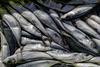
Fishers and seafood processors have condemned Waitrose’s decision to indefinitely suspend its mackerel sourcing.
The retailer announced it would halt the sourcing of fresh, chilled and frozen mackerel by 29 April, due to concerns over the sustainability of stocks, with canned lines to follow once current stock had been sold.
However, members of the Scottish Pelagic Sustainability Group (SPSG) have reacted with anger to the move, saying they were “disappointed” with the decision and alleged Waitrose was “unfairly penalising the UK”.
The SPSG represents Scotland’s pelagic industry, including catching, processing and marketing. It was established to oversee the certification of its main fisheries to the Marine Stewardship Council eco-label standard.
“The UK has led the way in trying to get a workable sharing arrangement in place to secure sustainable fishing for northeast Atlantic mackerel and we are perplexed why we should be punished for these efforts,” said the group’s chairman, Ian Gatt.
The SPSG chief pointed to the four-party agreement for 2026 that will reduce fishing pressure by a further 9% of the global Total Allowable Catch, on top of the previous tripartite agreement between the UK, Norway and the Faroe Islands.
Gatt further stressed the UK was continuing to press for the EU and Greenland agree to a more comprehensive agreement.
Read more: Waitrose suspends mackerel sourcing over sustainability concerns
“The UK, with support from mackerel fishermen and processors, is pressing hard to seek a solution, but the problem lies with other countries failing to show willingness to reach an agreement,” he continued.
According to the SPSG, the UK’s pelagic sector has led the way on a series of sustainability initiatives for northeast Atlantic mackerel.
These include the Scottish Pelagic Industry-Science Data Collection Programme, which collects data for the purposes of stock assessment and research to improve understanding of pelagic fisheries and stocks.
Gatt added: “The Scottish pelagic sector is committed to a sustainable future for mackerel catching in the northeast Atlantic and it does not make sense to penalise the UK for being at the forefront of trying to secure a comprehensive deal on mackerel quota shares.”
The Scottish government joined the condemnation of the move, with the cabinet secretary for rural affairs, land reform and islands, Mairi Gougeon, questioning where Waitrose would ”sourcing alternatives from, and what standards are applied to those fisheries compared to those in Scottish waters”.
The scottish minister added: ”Our fisheries operate to the highest standards, which are subject to strict regulation, they support a wider supply chain and are vital to our economy. I therefore urge both you and the wider business to reconsider this decision.”
Waitrose said suspending mackerel sourcing would “reinforce our ethical and sustainable business commitments, acting to tackle overfishing and protect the long-term health of our oceans and this crucial fish”.
Read more: Better traceability ‘could net seafood companies billions’
“Our customers trust us to source responsibly, and we are closely monitoring the fishery,” said Jake Pickering, Waitrose head of agriculture, aquaculture and fisheries.
However, the move was welcomed by ocean sustainability charity Oceana. It’s executive director Hugo Tagholm said it was “good news”.
“As Waitrose says, we should all be considering sustainability and looking to diversify the seafood we eat to ensure a thriving future for our ocean and the UK’s fishing communities. However, the responsibility cannot lie entirely with retailers or shoppers,” he said. ”It is the government that sets catch limits, and the government that has failed, year after year, to devise a cogent strategy to end overfishing once and for all.
”Now, with staple fish like cod and mackerel on the brink of disaster it must act immediately.”
The North Atlantic Pelagic Advocacy Group (NAPA) echoed Tagholm’s sentiments, calling the lack of a resolution surrouding escalating and unresolved sustainability concerns ”indefensible,” and urged for a “comprehensive sharing arrangement” during negotiations over mackerel taking place this March.
”The market is clear: healthy fisheries are essential for sustainable businesses,” Aoife Martin, NAPA executive chair, said. ”If the supply chain cannot rely on a long-term future for northeast Atlantic fisheries, they will look elsewhere, and indeed this is what we’re now seeing.
“These are the direct consequences of the lack of action by coastal states.”


No comments yet