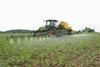
Tractor in field spraying crop - stock photo - Getty

Source: Getty Images

Dave Bench, CEO of CropLife UK, said: ‘We are suggesting the UK government should negotiate a deal that provides the best net benefits for British producers’

Greenpeace has accused CropLife UK of being at the helm of a campaign to protect the use of harmful pesticides as part of any EU reset deal.

The pesticide industry body was accused of “prioritising industry profits” by Greenpeace, which said it was lobbying against a quick ban on chemicals “found to pose serious hazards to human health, wildlife or the environment”.

As reported by The Grocer, a CropLife UK report said British farmers could lose millions of pounds and see food production slump without phased alignment on plant protection products (PPP) in a sanitary and phytosanitary (SPS) deal.

Greenpeace argued the report was misleading and “takes no account of the cost benefits for British farmers that smoother access to the UK’s biggest market would bring”. 

Its investigative journalism unit, Unearthed, which found 10 “toxic” chemicals banned in the EU were still permitted in the UK due to divergent standards since Brexit, said any alternative to a quick ban “could keep hazardous chemicals in use on British farms and infiltrate our food systems for years”. 

“British farmers deserve a better deal – one that gives them fair access to markets and supports safer, more nature-friendly farming,” added Nina Schrank, Greenpeace UK nature campaigner. “And consumers shouldn’t have to worry that everyday foods could pose risks to their health, that of their future children, or the wildlife and the natural world we all depend on.”

Read more

Modelling by CropLife UK and consultancy Andersons said more than £800m a year could be wiped off the profits of UK farming businesses unless the government safeguards the continued use of vital crop protection products. 

It used a worst-case “cliff-edge” alignment scenario, which showed the loss of key crop protection tools “would reduce yields, alter cropping patterns and increase production costs”.

“The Andersons analysis models some high-level assumptions to illustrate that different approaches could have different outcomes for UK crop production,” said Dave Bench, CEO of CropLife UK. “That is intended as a piece of evidence for UK government to use alongside its other data and information, to ensure it can calculate the net benefits of different options.”

He continued: “The Greenpeace analysis ignores or misunderstands this.”

According to Bench, his organisation wanted the government to ensure it understood the net benefits of different approaches to any SPS agreement before finalising a deal.

“We are not suggesting that there are no benefits associated with a new SPS agreement and we are not suggesting that a new SPS agreement should be delayed,” he added. “We are suggesting that the UK government should negotiate a deal that provides the best net benefits for British producers.”

The NFU’s president, Tom Bradshaw, argued British farmers should be allowed to retain their access to crop protection products permitted by the Health and Safety Executive.

“As an expensive product, farmers use them carefully, often alongside other methods of plant management to control pests, boost productivity and protect the environment,” he said. “With global food production becoming more difficult due to war, climate change and economic instability, having access to tools where any risks can be effectively managed can help us produce nutritious food for the nation in an efficient, sustainable and safe way.”

A government source said: “We are committed to reducing the risks associated with pesticide use and continuing to lower overall usage to minimise impacts on the environment and human health, while ensuring farmers have the tools they need for food production.

“The UK already performs well on pesticide usage, particularly when compared to the rest of the world. We’re clear that we will only sign a deal that is in the interest of the UK public.”