





Meat industry leaders have urged the government to prioritise farm and factory water supplies against water company restrictions.
Representative bodies and businesses argued the step was necessary on food safety and animal welfare grounds, and to ensure UK food security, with swathes of the country on the cusp of drought conditions and water usage restrictions escalating.
The calls follow the sudden closure of a 2 Sisters factory in Willand, Devon last Wednesday, which processes up to a million chickens a week.
The facility was offline for two days after South West Water imposed water restrictions across part of Devon due to soaring demand and prolonged dry weather.
“What happened at 2 Sisters Willand is an illustration of how quickly things can go wrong,” said British Poultry Council CEO Richard Griffiths. “It wouldn’t take many examples of that incident to compromise food production in the UK.”
“My estimate is fewer than 20 plants provide 90% of the chicken produced in this country, so one, two, or three being affected would have a huge impact,” he added. “The resilience that we think we have in the system is perhaps less robust than we believe.”
Griffiths added: “I wouldn’t have wished last week’s incident on anyone, but it has raised the issue of what happens when different parts of critical national infrastructure come into conflict.”
Despite not experiencing any shutdowns itself, Avara Foods insisted water was “essential to maintaining animal welfare and food safety standards and to keeping shelves stocked for British consumers”.
“Its use in poultry production is a regulatory requirement,” it added.
“Establishing a formal priority so that essential services can continue during severe shortages, which was so effective during disruptions to CO2 supply, is an obvious and necessary step that we would fully support.”
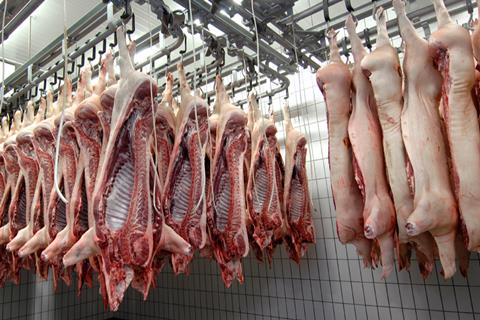
National Pig Association chief executive Lizzie Wilson also stressed the viability of pig and poultry abattoirs was dependent on “optimum throughput”, which must be “managed rigorously”.
She warned disruptions to the slaughtering and butchering process could have “huge impact” on supply chains, especially on farms.
Association of Independent Meat Suppliers head of marketing and communications Tony Goodger agreed, saying “livestock can quickly back up on farm which in turn can lead to animal welfare problems”.
In the case of poultry farms, the BPC previously warned a backlog could lead to birds being slaughtered on farm.
British Meat Processors Association CEO John Powell acknowledged the situation in Willand “was of real concern to the whole industry”, but asserted it was “resilient and processors invest heavily in contingency planning wherever possible”.
“However, while it’s feasible to hold strategic reserves of carbon dioxide, storing the volumes of water required to keep a modern processing plant operating is a much greater challenge,” he suggested.
He called on water companies to work “much more closely with industry and government to ensure food processing sites have continuous access to water, irrespective of wider pressures on local supplies”.
Powell added: “Protecting water supplies for critical food production is essential if we are to safeguard animal welfare, maintain food production and protect the resilience of the UK’s food supply chain.”
Defra has been approached for comment.







No comments yet