



Innovation in own-label overtook branded for the first time last year, a tipping point for new product development.
New data from Mintel’s GNPD, which monitors product innovation and new product activity, found that 53% of new products launched in 2025 were own label, up from 50% in 2024. The balance has been slowly shifting since 2000, when just 18% of innovation came from own label. By 2019, the proportion had reached 39%.
Jonny Forsyth, principal strategist at Mintel Food & Drink, predicted that own label could account for up to 60% of innovation over the new few years. Innovation can be categorised as a renovation – for example a reformulation, new variety or brand extension – or something completely new in the category.
“We are past the tipping point now,” he said. “The line between branded and own label is very, very thin. We have had quite a long time of consumers shifting over towards private label.”
What is driving the shift?
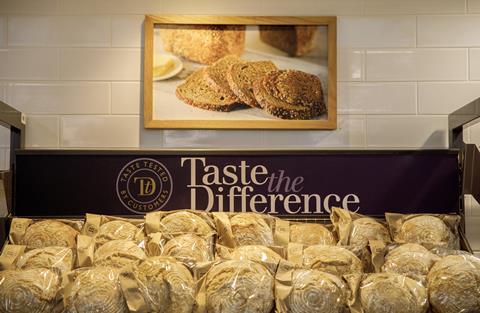
That shift has been “really accelerated” by discount retailers Aldi and Lidl, as well as a move to savvier consumerism that began around the 2007/08 financial crisis “and has never really gone away”, according to Forsyth. He pointed to the success of premium own-label brands in particular, highlighting the success of Tesco Finest and Sainsbury’s Taste the Difference, where sales have now topped £2bn.
Own label dominates more traditional food categories such as fruit and vegetables, ready meals, processed meat, fish and eggs. Innovation in more impulse-led or indulgent categories, such as energy drinks (6% own-label innovation) and soft drinks (15%) is still driven by brands.
But own label is moving into areas previously dominated by brands. For example, 31% of innovation in the alcohol category came from own label in 2025, while in chocolate and confectionery it was 37%.
“It appears to be a deliberate strategy,” said Forsyth. “[Own label] has gone after the trusted, bread and butter categories, then once they’ve established themselves as trusted in those categories, they’re trying to move into new categories.”
Brands should, he said, be “panicking” because innovation is one of reasons why consumers are willing to pay more for branded products. But he believes there are lessons to be learned from categories such as energy drinks, where a focus on building communities and emotional brand equity has paid off.
However, Forsyth cautioned that across both own-label and branded, there was less genuine innovation and more renovation.
“Brands have become too risk-free,” he said. “Innovation is one of the major areas, alongside marketing, why you pay more for the brands. Brands have lost that a little bit and they need to find it [again].”





No comments yet