


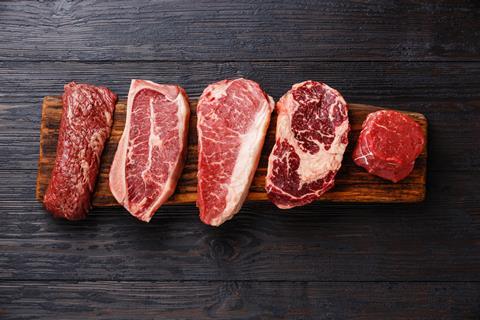
Red meat retail sales dropped by over 3% year on year, according to AHDB, in a continued decline for the sector – but there are signs this could be changing.
The organisation’s latest data found lower demand for beef and processed pork were chiefly to blame, down by 3.2% and 3.4% respectively in the 12 weeks to 13 June.
Lamb sales also declined by 1.1%, despite total lamb retail spend increasing by 5.1% year on year – driven by a 6.2% price increase.
It comes as demand for meat has declined steadily over the past year, largely driven by inflation in beef, lamb and pork with prices up 28%, 17% and 10% in two years respectively, according to the British Retail Consortium.
However, according to analysis by The Grocer of Assosia data [4 w/e 6 June 2026], beef prices have started to decrease, with prices dropping by 0.5% in the past four weeks, building on a decline in May of 0.3% in supermarket beef prices.
Although it is too soon to say whether the inflation period is completely over, Association of Independent Meat Suppliers head of communications Tony Goodger said there were encouraging signs. He pointed to AIMS inflation data which showed that average prices across the red meat and poultry sectors fell by 0.4% in June, with overall beef prices falling by 2.3%.
”The coming two months will really provide a much clearer view as to whether meat and poultry price inflation is behind us,” he added.
There have also been pockets of growth in sales including in added-value beef, which saw a 1.2% growth in volumes, a trend which was replicated in lamb and pork where added-value sales rose 7.4% and 5.8% respectively.
“Retailers are adapting to keep meat as affordable as possible, expanding value ranges and giving more space to lower-cost cuts and convenient options,” said Harvir Dhillon, economist at the BRC, adding that consumers were trading down rather than out of red meat.
David Marston, director at consultancy Category Wins, told The Grocer the red meat category had entered a “period of change” and was “evolving rather than declining”.
“Shoppers are and will continue to feel cost of living pressures, and that’s changing how they approach higher‑priced proteins and the protein category overall,” he said. “They’re buying more cautiously, weighing up value more deliberately (it’s genuinely about ‘value for money’ rather than cheapest price in many cases), and reducing consumption of red meat on a daily or weekly basis.
“They’re looking for convenient meal solutions and trading between different proteins and solutions,” Marston added. “There is also an increasing trend of piecing meals together with side dishes, smaller dishes and different options, or solutions.
“While volumes may remain under pressure with price an issue, retailers can still unlock growth through value for money clarity, innovative NPD (including world foods inspiration), and formats that make red meat feel more accessible in a tight household budget,” Marston added.







No comments yet