




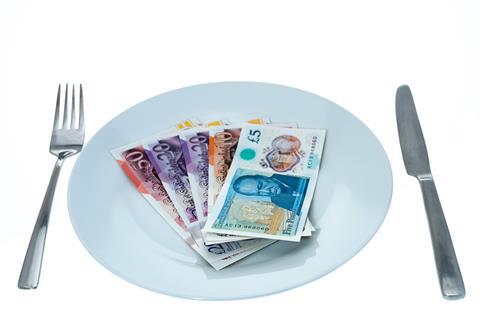
Surging food prices will not come back down, the Energy & Climate Intelligence Unit has warned.
In its ‘Rockets and Feathers’ report, the NGO found food prices affected by major shocks tended to decrease afterwards slowly or not at all.
The analysis revealed shelf prices dropped just 1% after six months, 5% after a year and 7% after two years.
Based on 30 years of data, ECIU argued this “rocket and feathers” pattern – where food prices shoot up like rockets but drift down like feathers – helped to explain why food costs have remained far above pre-Covid levels.
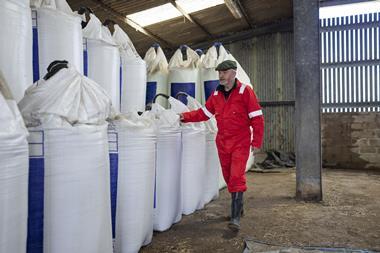
“Shoppers feeling that prices are on a never-ending escalator upwards is borne out by the data,” said ECIU food and farming analyst Chris Jaccarini. “War and extreme weather are increasingly pushing up the cost of the weekly shop, with the latest conflict in the Middle East driving up the price of oil, gas and fertiliser used to grow, ship and process food.”
He reiterated the ECIU’s calls for the UK to cut its reliance on oil and gas “which would also help shelf food prices from the volatile global markets that have helped drive the cost of living crisis”.
“In England, we’ve had three of the worst harvests on record in the past five years and next year is shaping up to be the hottest globally,” he continued. “The only way to stop the growing risk of floods and droughts is to reach net zero and bring the climate back into balance.”
Placing the start of the cost of living crisis in mid-2021, ECIU forecast that food prices were set to be 50% higher by November than mid-2021 – almost as much as the growth seen in the 20 years prior.
It added that with the Iran war and ‘super’ El Niño climate event due to hit supply chains meant household staples were set to become even less affordable.
“What’s striking here is the lasting impact of these shocks: once food prices go up, they rarely come properly back down and that means for millions of people in Britain food becomes harder and harder to afford, and food insecurity continues to remain unacceptably high even after the headlines have moved on,” said Anna Taylor, executive director of the Food Foundation.
“If we are serious about making food more affordable, we have to focus on reducing the impact of the next shock, not just responding after the damage is done.”
She called on the government to bring in A Good Food Bill to help “protect families, farmers and food businesses alike by building a more resilient food system and helping to ensure that everyone can afford and access healthy food”.
Henry Dimbleby, who led the government’s abandoned National Food Strategy, said food supply chains had to become more resilient or food inflation “will keep biting”.
“Unless we cut our reliance on fossil fuels, diversify supply chains and build real resilience into food production, higher food prices will become a lasting feature of daily life – with the heaviest burden falling on those least able to bear it,” he said.
In meeting the challenge, ECIU said rising interest rates were discouraging businesses and government from undertaking the net zero investments needed.
David Barmes, senior policy fellow at the London School of Economics’ Centre for Economic Transition Expertise, said they needed to be seen as part of the fight.
“The shocks increasingly driving inflation are supply-side shocks, often linked to climate impacts and geopolitical disruption, and those are exactly the shocks that interest rates alone are least well suited to solve,” he said.
Barmes added: “Reducing exposure to fossil fuel volatility and climate damage is not separate from price stability, but increasingly central to it.”


No comments yet