




Britain’s Biggest Alcohol Brands is The Grocer’s annual ranking of the biggest booze brands in the UK by value and volume.
Read our full analysis of what the year has brought for the off-trade alcohol sector here.
This ranking is part of Britain’s Biggest Alcohol Brands 2026. See what the top 100 brands have to say about their performance over the past year
1 (1)
Stella Artois
Sales: £698.7m
Growth: –1.5%
How times have changed for Britain’s biggest alcohol brand. In the 1990s, Stella Artois was synonymous with the worst excesses of football and lad culture, brewed to a punchy 5.2% abv, piled high and sold cheap despite its ‘Reassuringly expensive’ tagline.
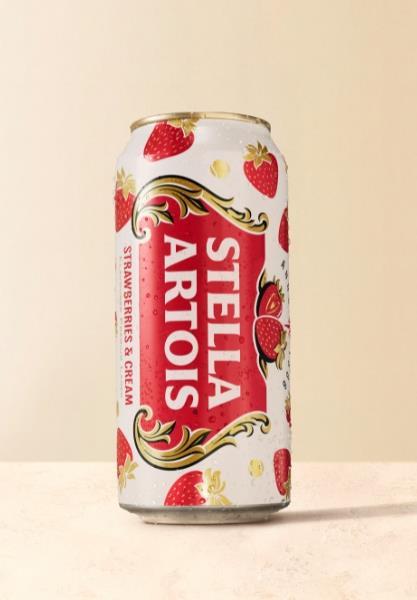
To see how far it’s come, look no further than its latest launch: limited-edition Strawberries & Cream. The 3.4% abv flavoured lager rolled into Sainsbury’s and Co-op this month to mark the brand’s long-standing partnership with that most genteel of summer events, the Wimbledon Lawn Tennis Championships.
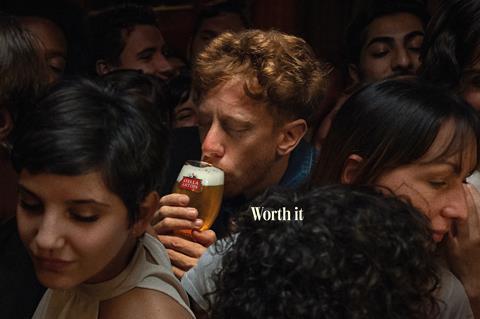
“UK drinking culture is becoming increasingly focused on premium experiences, with consumers prioritising quality, taste and the overall social occasion when choosing what to drink,” says Jess McGeorge-Stevens, marketing director for premium global brands at owner Budweiser Brewing Group. “People are placing greater value on how a drink enhances the moment.”
Against this backdrop, many standard lagers are losing out. In fact, four of the five biggest losers in this year’s ranking are lagers: Budweiser (3), San Miguel (10) Carling (12), and Foster’s (15). They’ve shed £140.5m and 63 million litres between them.
Stella’s performance doesn’t look so bad in comparison. Its value has fallen £10.4m on volumes down 5.3 million litres.
“Beer remains the UK’s largest alcohol category and has continued to demonstrate strong resilience over the past year despite wider pressures on consumer spending,” says McGeorge-Stevens.
“Within this, premium and no-alcohol segments continue to create exciting growth opportunities, with Stella Artois outperforming the wider beer category with growing market share across the off and on-trade.”
Not that Stella’s non-core lines have helped matters. The brand’s overall decline is chiefly down to an £11.6m (35.5%) loss for premium Stella Unfiltered. It has shed 39.4% of volumes after Tesco and Asda delisted the product and Sainsbury’s cut its Unfiltered lineup to just one SKU, a 620ml bottle. Meanwhile, alcohol-free Stella 0.0% has fallen 22.8% in value on volumes down 20.5%.
That’s left the core 4.6% abv Stella lager to do the heavy lifting. Value sales have climbed 0.3% to £674.4m on volumes down just 0.4%, thanks partly to ongoing investment in promotions and ads starring big-name celebrities.
“We brought to life a powerful multichannel media campaign with ‘A Taste Worth More’, fronted by David Beckham, with 22 weeks on air across the year,” says McGeorge-Stevens. “The campaign serves to remind people of the quality and taste credentials that Stella Artois is known for and keeping the brand front of mind throughout the year.”
Other initiatives include ‘Perfect Serve’ activity starring Maria Sharapova and the Christmas ‘Let It Flow’ push comprising in-store and media activity. There were also limited-edition cans to celebrate Stella’s sponsorship of the 2025 Wimbledon tournament. This year Stella has extended the activity, putting Wimbledon tickets up for grabs for shoppers who find limited-edition cans.
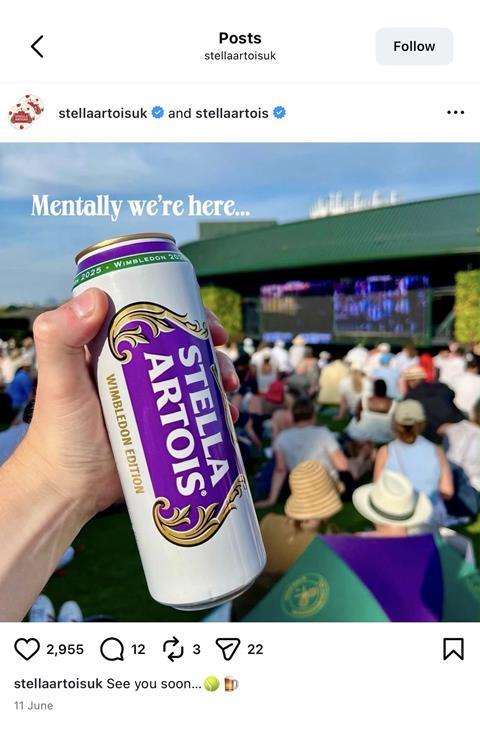
Format mix has also been crucial to performance. “Can multipacks continue to be a major driver of sales,” says McGeorge-Stevens.
The format’s market share has grown 2.3ppts. “This is because they fit so naturally into at-home gatherings and shared occasions. Our 440ml multipacks remain a key format that shoppers choose time and again,” she adds.
That’s partly because cans are cheaper than bottles. Tesco, for instance, is selling can multipacks of Stella for as little as £2.22 per litre – whereas bottle multipacks are no cheaper than £2.53/litre, even with Clubcard.
That price gap has widened following last year’s imposition of extended producer responsibility. EPR charges brewers upwards of 3p for every 330ml bottle they fill, while cans are not covered because they will be subject to the deposit return scheme next year. DRS will exempt glass in England and Scotland but include it in Wales.
Not that Stella is planning on ditching glass. “Beer occasions aren’t one-size-fits-all, which is why having a range of formats is so important,” says McGeorge-Stevens.
“Different packs naturally suit different occasions. Glass bottles are typically consumed for more premium or celebratory occasions, while cans can be the right option for more relaxed, everyday socialising or on the go.”
Stella Artois’s next test is not about being reassuringly expensive, but reassuringly available in the right pack, at the right price, for the right occasion.
2 (2)
Smirnoff
Sales: £595.8m
Growth: +0.0%
A flat top line and 0.7% volume dip for the UK’s top vodka is worth raising a glass to considering the performances of the bestsellers in gin, whisky and rum.
Gordon’s (4), Captain Morgan (21) and Famous Grouse (24) are all in value decline – of £42.1m combined – and have suffered hefty volume losses.
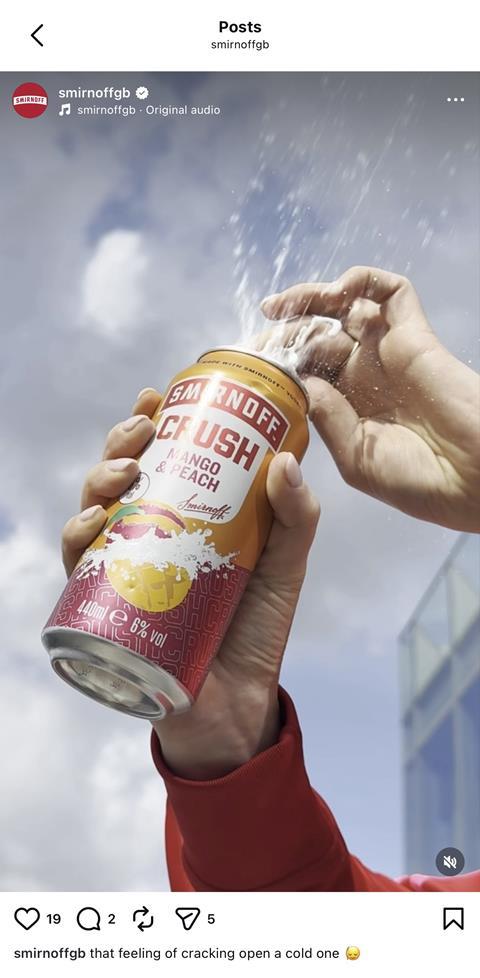
Smirnoff’s RTDs merit particular praise. Their combined value sales have surged 12.1% to £50.2m. Volumes have grown 8%, or 601,000 litres.
“RTDs remain a key growth driver for the brand, reflecting increasing demand for convenience and versatility,” says a spokesperson for Smirnoff owner Diageo.
“People still want connection, energy and social release, but the way they access it is evolving in a more cautious consumer environment.
“We’re seeing a shift towards more flexible, lower-pressure and experiential moments, including festivals, casual hosting and earlier social occasions.”
Hence the 2025 launches of Smirnoff Miami Peach & Lemonade, Smirnoff Crush Mango & Peach and Smirnoff Crush Lemon & Lime RTDs. They’ve racked up £5.6m between them. The brand’s bestselling mixed drink, Smirnoff Ice, has also done well, growing value 3% to £23.5m on volumes up 1.4%.
“Smirnoff Ice remains a culturally and commercially important brand, while flavour-led innovation continues to resonate with consumers seeking more experiential drinking occasions,” says the Diageo spokesperson.
In-store marketing has also played a key role in driving growth in RTDs, they add.
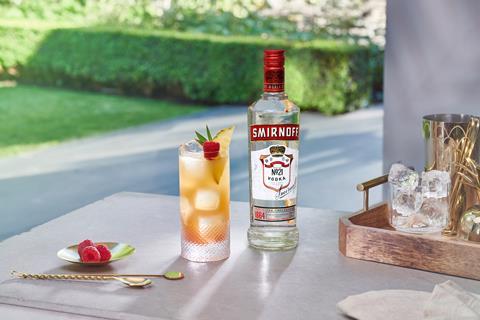
Standard vodka is still by far the brand’s biggest money spinner, however. The core No.21 line has brought in 86.9%, or £517.9m, of Smirnoff’s retail sales value. However, No.21’s sales have dipped 0.5%, or £2.7m, on volumes down 3%.
3 (3)
Budweiser
Sales: £385.4m
Growth: –6.2%
It’s been another dud for Bud. After seeing value sales slide every year since 2021, the self-styled King of Beers has lost £25.6m and shifted 12.7 million fewer litres – a volume decline of 7.9%. But things may now be looking up for the number three booze brand.
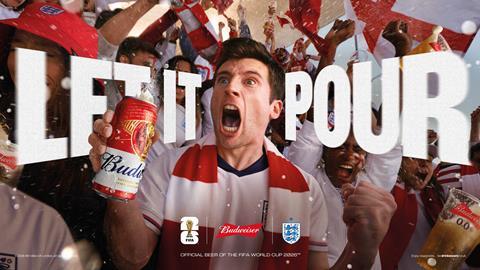
Budweiser is central to “what we see as the biggest beer moment of the year: the Fifa World Cup 2026”, says Jess McGeorge-Stevens, marketing director for premium global brands at Budweiser Brewing Group.
“As an official tournament sponsor for the past 40 years, Budweiser is leaning into football nostalgia, national pride and shared moments as we look to drive engagement in store this summer.”
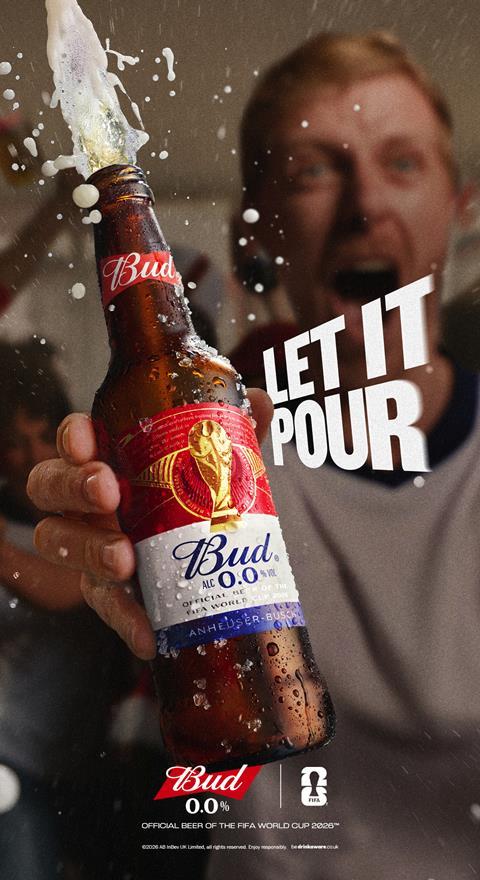
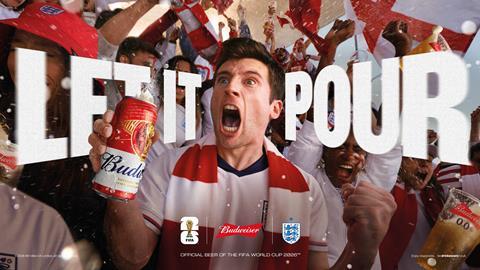
Alongside its ‘Let it Pour’ campaign, Bud has splashed out on in-store marketing. That includes displays featuring limited-edition packs and special can designs that celebrate previous World Cup tournaments.
“To help bring our 40-year sponsorship to life, we are introducing limited-edition ‘Budstalgia’ packs that celebrate previous tournaments with special can designs,” McGeorge-Stevens adds. “The nostalgic cans are a great way for shoppers to relive tournaments of the past.”
It’s not all about the footy, however. Budweiser is also investing heavily in its partnership with music festival promoter Live Nation throughout the summer, McGeorge-Stevens adds. An on-pack promotion offers drinkers the chance to win tickets for events such as the Reading & Leeds Festivals.
“The promotion focuses on shared experiences rather than individual rewards, with winners receiving festival tickets not just for themselves but their friends as well to reflect how consumers actually experience live music and festivals, which is as a group,” says McGeorge-Stevens.
As well as tapping big events, Bud has been focused on the low & no boom. “As a brand, we are also continuing to prioritise growth in low & no alcohol, reflecting changing consumer drinking habits,” says McGeorge-Stevens. “Bud Zero has undergone a full relaunch in 2026, including a renovated liquid, redesigned packaging and new pack sizes to more closely align with the core Budweiser brand.”
4 (4)
Gordon’s
Sales: £311.5m
Growth: –7.2%
Gordon’s decline is slowing steadily. This year’s losses across the brand’s portfolio amount to £24m – a marked improvement on the £35.2m reported last year.
Gordon’s flagship London Dry Gin has shed £8.7m, while three flavoured variants – Mediterranean Orange, Sicilian Lemon, and Morello Cherry –have taken a £7m collective hit.
Despite relentless challenges, owner Diageo insists its ongoing commitment to evolving the Gordon’s brand in line with evolving consumer preferences and drinking occasions has helped the brand weather some of the tumult faced by the spirits sector in general.
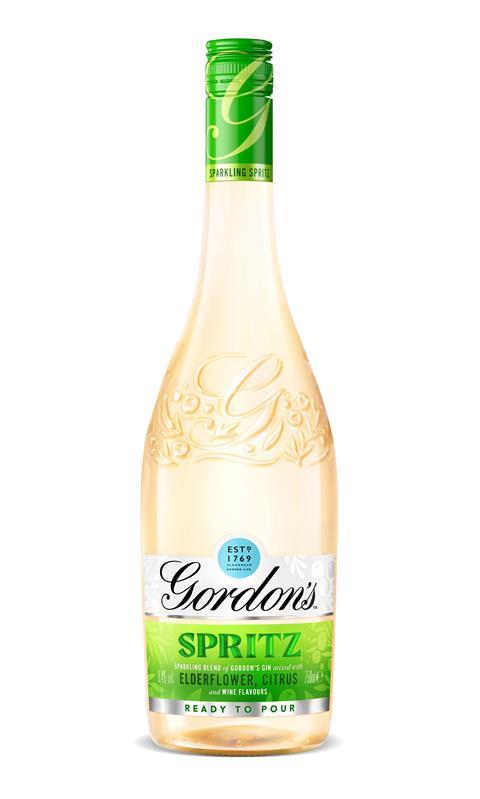
That has included NPD targeting new occasions, most recently the ready-to-pour Spritz unveiled in April, designed to tap into early evening drinking.
5 (5)
Corona
Sales: £304.6m
Growth: +0.3%
Alcohol-free Cero proved to be the standout performer for Corona over the past year. It added £3.9m, mitigating the losses elsewhere in its portfolio.
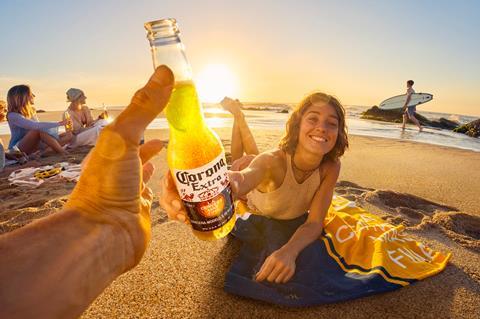
The selection of Cero as the first global beer sponsor of the Winter Olympics undoubtedly helped to boost its profile. It was also buoyed by Corona’s ‘Dear Nature’ campaign. The push “inspired consumers to reconnect with nature year-round – a powerful platform that extended Corona well beyond traditional summer occasions while driving meaningful growth in the alcohol-free category,” says Jess McGeorge-Stevens, premium global brands marketing director at owner BBG UK&I.
It plans to keep up that momentum this summer through Corona’s ‘This Is Living’ activity, she adds.
6 (7)
Jack Daniel’s
Sales: £292.3m
Growth: +1.8%
The UK’s thirst for Jack Daniel’s shows no sign of abating. The brand’s growth has picked up pace since last year’s report – driven in part by a 4.9% fall in average price per litre.
Innovation has also had a hand in JD’s 7% volume gain. In September, it added Blackberry to its Tennessee whiskey range. The variant added £7.2m in its first two months.
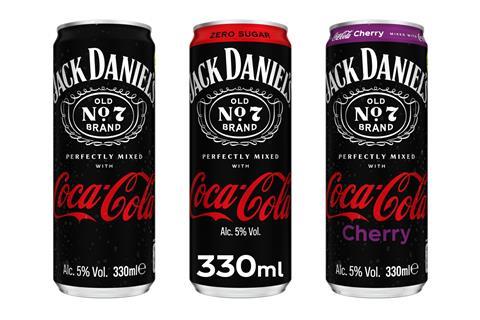
It was preceded in March 2025 by Jack Daniel’s & Coca-Cola Cherry – part of a pre-mixed drinks lineup that’s grown volumes 4.9%. Jack Daniel’s & Coca-Cola is now Britain’s number one boozy RTD by volume, according to Elaine Maher, associate director for alcohol ready-to-drink at Coke supplier CCEP GB.
Experiential activity “has helped keep the brand culturally relevant”, she adds.
7 (6)
Yellow Tail
Sales: £280.8m
Growth: –3.9%
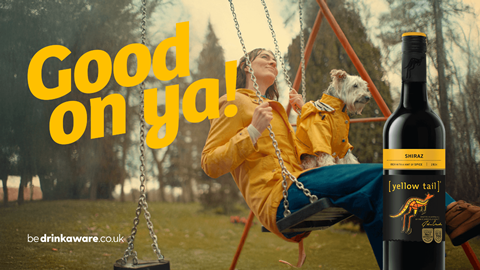
Yellow Tail has slipped into decline. Having powered to the number one slot in wine last year, the brand has seen value slide by £11.6m. It sold 2.6 million (8.7%) fewer litres.
Kevin Chinn, marketing director for Europe at owner Casella Family Brands, is unequivocal in his assessment of the past year. “In a word, it’s been challenging,” he admits.
“Fewer consumers are drinking, and those who are tend to be drinking less across most alcohol categories. Moderation is clearly a long-term structural trend, but it’s been compounded by a persistently inflationary environment,” he says.
“On top of that, the category has had to absorb significant additional cost pressures from duty changes, EPR and wider regulatory shifts.”
Wine brands have had to make tough choices in the face of these pressures. Several – such as Hardys (9) and Blossom Hill (65) – cut alcohol content ahead of the February 2025 introduction of a new duty regime that determines tax payable by exact abv, as opposed to the previous tier-based system.
Yellow Tail has taken a different tack. “Our average selling price has increased by over 5% in the past 12 months, ahead of the still wine category at 2.9% and the highest among the top 10 wine brands, largely reflecting the impact of EPR and the new duty rates introduced from February 2025,” says Chinn.
“The reason our pricing has moved more than the category is that we made a deliberate decision to maintain abv across the range. As a result, we have absorbed a greater share of the duty increases than brands that have reduced alcohol levels as a means of managing margin and price. We did this because we firmly believe alcohol plays a critical role in delivering the flavour and quality consumers expect.”
He could be right. After all, 11 wine brands have suffered greater value percentage losses than Yellow Tail, including ones that cut alcohol content to mitigate the tax changes.
Sales data shows Yellow Tail gained market share in May, Chinn adds. This is partly down to the brand’s growing presence in the £10-£14 segment, following launches such as May 2025’s Yellow Tail Prosecco and this year’s Signature Series Red.
8 (12)
Guinness
Sales: £259.2m
Growth: +8.3%
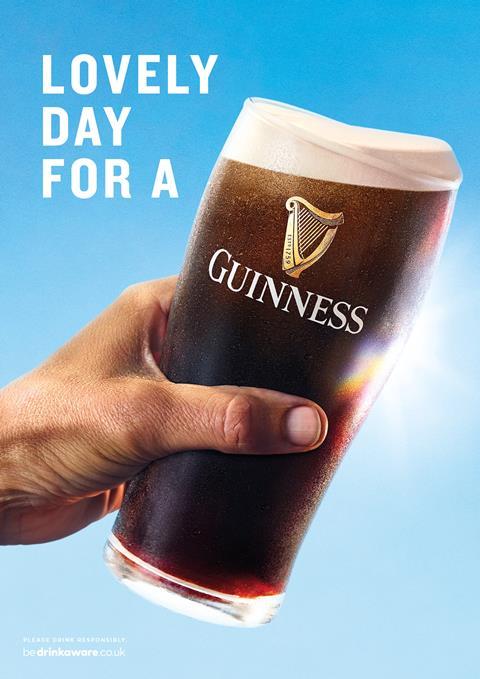
Brits are still ‘splitting the G’ with gusto, it seems. Guinness is up £19.9m – the fourth-biggest absolute gain in this report. Its volumes have increased by 2.6 million litres.
The stout giant “has had a strong year, maintaining its position as GB’s number one beer brand, with momentum driven by both commercial performance and cultural relevance”, says owner Diageo.
The brand “is delivering strong growth despite a declining total beer category, with performance led by Guinness Draught, Guinness 0.0 and Nitrosurge”.
Those three lines combined have generated an extra £22.3m, with Guinness 0.0 delivering £12.5m. “Increased distribution and improved in-store visibility have supported growth,” Diageo adds.
9 (10)
Hardys
Sales: £246.1m
Growth: –8.9%
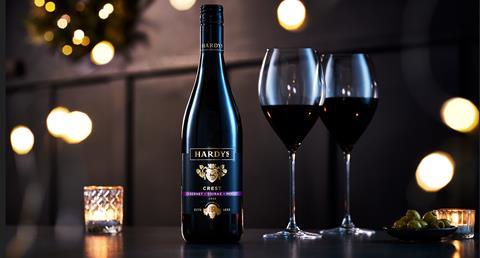
Hardys is taking a hammering as retailers cut space for branded wine and push shoppers towards premium own label. No wine brand has shed more in absolute terms. Its £23.9m loss reflects a volume decline of 12.1%.
Part of the problem is the scale of Hardys’ portfolio, which comprises 26 lines by NIQ’s reckoning. For context, NIQ lists nine lines in number one wine brand Yellow Tail’s (7) lineup and five for third-placed Casillero del Diablo (17). Hardys owner Vinarchy wants to simplify matters. “We’ve reviewed our portfolio architecture and identified an opportunity to refine the range,” says Tom Smith, marketing & category director. “We’re about to embark on a transformational journey to get the brand back to number one in wine.”
10 (8)
San Miguel
Sales: £244.5m
Growth: –12.4%
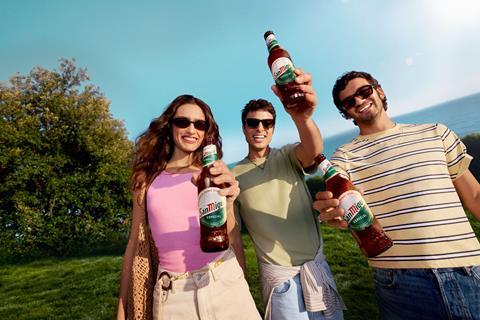
Budweiser Brewing Group took control of production and distribution of San Miguel at the start of 2025. Prices of the Spanish lager quickly shot up across the mults, analysis by The Grocer in May that year showed, with the cost of some SKUs up by as much as 38%.
That trend has continued –albeit at a slower pace. Average price per litre has risen 0.9% over the past 12 months, likely driven by the same duties and taxes that have dogged much of the alcohol category. Those higher prices haven’t helped San Miguel’s performance, however. It sold 12.4 million fewer litres, a 13.1% decline.
But BBG says it has a plan to rekindle growth. That included its first pack refresh in a decade in March, and the relaunch of its ‘Spanish Summer, No Matter When’ campaign.
11 (16)
Peroni
Sales: £233.7m
Growth: +4.3%
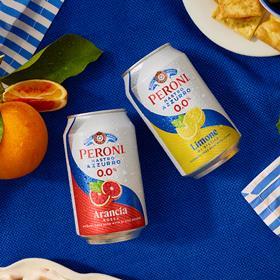
Peroni’s been eyeing “moments of passion and celebration” – hence a multi-year distribution deal with Arsenal FC signed last June. Other highlights include the February launch of two fruity, 0% abv brews.
12 (9)
Carling
Sales: £232.8m
Growth: –15.6%
Carling has had a difficult 12 months. It shed £42.9m in value sales – the biggest absolute loss in this report. Volumes have fallen by 15.9%, or 22.1 million litres.
To attempt to arrest that decline, Carling revived the Black Label name in February, having dropped it 29 years ago. This time around it’s a premium lager with a 4.7% abv and the promise of “an intense flavour experience”.
The relaunch marked Carling’s “boldest move in over a decade”, the brand says. “As premiumisation continues to drive growth across the category, Black Label offers retailers a compelling trade-up opportunity within a trusted brand. Early performance is really encouraging as distribution continues to be scaled.”
Elsewhere, to maintain its position as “the bestselling core lager brand in the UK off-trade”, Carling continues to focus on the beautiful game. “Football is central to Carling’s DNA, with the brand extending its partnership as official beer partner of the Emirates FA Cup and Adobe Women’s FA Cup until at least 2027, putting the brand front of mind for shoppers during football occasions,” the brand adds.
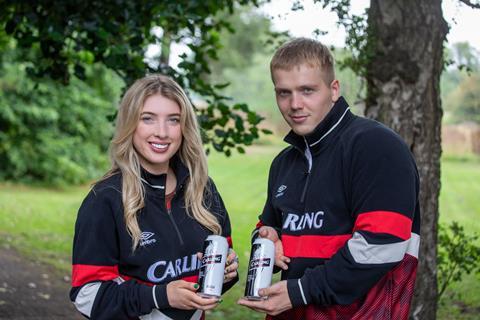
As part of that sporting commitment, Carling teamed up with Umbro last autumn to give away branded fleeces and limited-edition retro-style cans of lager.
13 (15)
Carlsberg
Sales: £227.8m
Growth: +1.5%
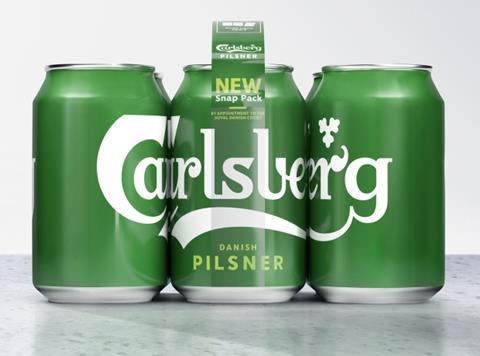
Carlsberg shifted an extra 6.1 million litres – a 5.2% gain – after average price per litre fell 3.5%. The brand’s core Pilsner is up £7.3m, but its alcohol-free brew, 0.0, continues to struggle. It’s down 51% in value.
14 (13)
Birra Moretti
Sales: £221.1m
Growth: -7.0%
Birra Moretti went big on marketing last year. It delivered a food-and-beer pairing push in partnership with Tesco and ran ’Enjoy Life’s Simple Pleasures’ to highlight its Italian credentials.
15 (11)
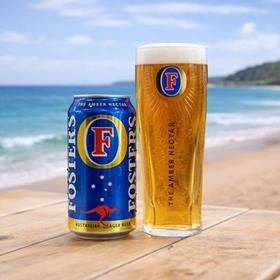
Foster’s
Sales: £215.4m
Growth: –14.8%
Shoppers continue to reject Foster’s in favour of fancier brews. It underwent a major rebrand in May 2025 across its lager and shandy variants, to pay homage to its “roots and playful Aussie charm”.
16 (23)
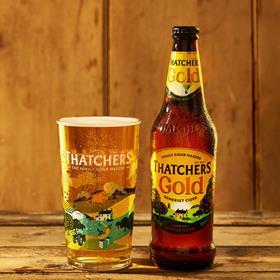
Thatchers
Sales: £213.0m
Growth: +7.1%
Thatchers has overtaken Strongbow to secure the top spot in cider. The Somerset brand is worth an extra £14.2m, having sold an 5.4 million more litres. Volume sales of Thatchers Zero are up 64.2%.
17 (14)
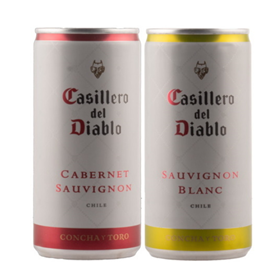
Casillero del Diablo
Sales: £211.0m
Growth: –6.2%
Having shed 7.7% of volumes, Casillero del Diablo tapped the trend for sweeter red wine in October with Jammy Red Devil – after the brand made its debut in canned wine in August with two variants.

18 (18)
Barefoot
Sales: £204.9m
Growth: –4.9%
Barefoot is looking to revive its fortunes this summer via its biggest-ever on-pack promo alongside a new pack design. The push comes after the brand lost £10.5m and shifted 1.7 million fewer litres of wine.
19 (22)
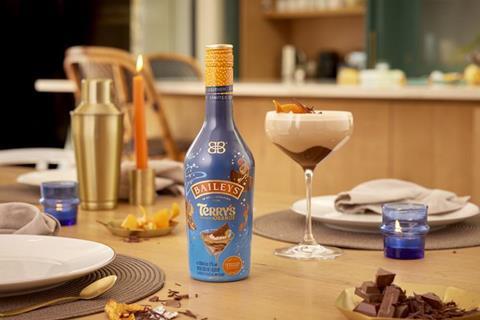
Baileys
Sales: £200.2m
Growth: –1.0%
Christmas tie-up Baileys x Terry’s Chocolate Orange generated “consumer interest and recruitment”, says Diageo. E-commerce was an important growth channel, delivering “strong performance”.
20 (17)
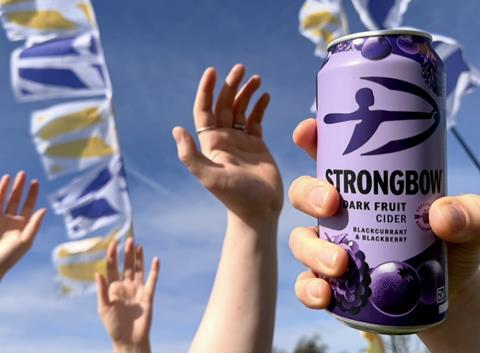
Strongbow
Sales: £195.1m
Growth: –11.7%
In September, Strongbow became the first alcohol brand to add NaviLens. Packs feature a QR code that “helps blind and partially sighted shoppers find, understand and engage with the product”.
21 (24)
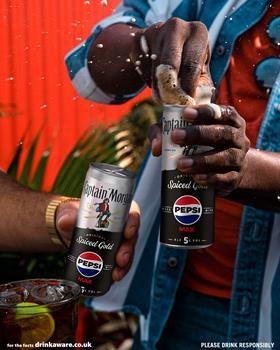
Captain Morgan
Sales: £193.3m
Growth: –2.0%
A “cautious consumer environment” is a key factor in Captain Morgan’s decline, it says, but an “efficient approach to marketing ensures we maximise impact while staying closely aligned to preferences”.
22 (29)
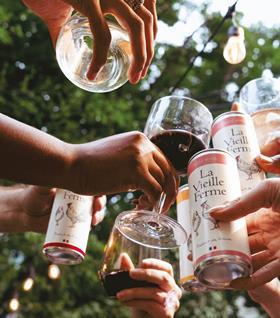
La Vieille Ferme
Sales: £193.2m
Growth: +43.8%
La Vieille Ferme’s extra £58.8m is the year’s third-largest absolute value gain. The social media sensation’s rosé in a can, added in March, has “literally flown off shelves”, says MD Andrew Bayley.
23 (19)
Heineken
Sales: £192.0m
Growth: –9.5%
To address declines, Heineken jumped on the fruit beer bandwagon in March. Lemon & Elderflower 0.0% and Nectarine & Juniper 0.0% tap “growing demand for citrus beers”, says supplier HUK.
24 (20)
The Famous Grouse
Sales: £191.4m
Growth: –7.3%
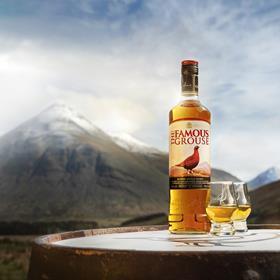
A key milestone for The Famous Grouse this year was its acquisition by William Grant & Sons. The brand says it is now “focused on unlocking its full potential” in a challenging blended scotch market.
25 (21)
BrewDog
Sales: £185.7m
Growth: –9.4%
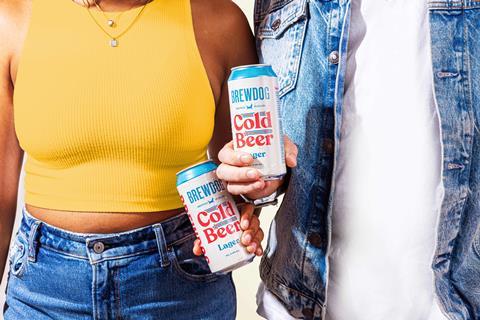
BrewDog was sold in March to US giant Tilray Brands for just £33m, sales in grocery having shed £19.2m. The brand has since “benefited from renewed investment, fresh energy and a clear focus”, it claims.
26 (38)
Cruzcampo
Sales: £170.2m
Growth: +63.8%
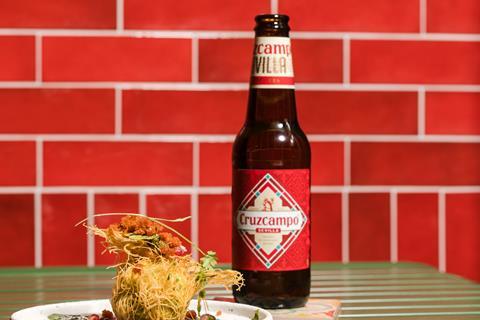
Cruzcampo has enjoyed a meteoric rise since its grocery debut in August 2023.
Just eight months later, it had stormed into the top 100 alcohol brands with a £29.6m gain, its rapid popularity prompting owner Heineken to invest in the multimillion pound ‘Choose to Cruz’ campaign later that year.
By 2025, Cruzcampo had passed the £100m sales mark. This time around, it has added £66.3m – the second biggest absolute gain of the year, helping it jump 12 places.
“This strong growth comes from tapping shoppers’ demand for more premium lagers that still offer value for money,” says Sarah Duncan, category & commercial strategy director at HUK.
The supplier has no intention of allowing that growth to slide. ‘Choose to Cruz’ is back for summer, “highlighting the brand’s Sevillian heritage, tapping the demand for Mediterranean styles during the peak summer season, while also speaking to the more relaxed drinking occasions that this brand is so well suited to”.
That follows Cruzcampo’s debut in the fruit beer market. Unveiled in February, the 3.3% abv Sevilla Orange promises to be a “crisp and refreshing” lager “with zesty citrus notes”. It responded to research that found two-thirds of shoppers were open to trying flavoured beer but were “worried it will be overly sweet”, Heineken said at the time.
27 (28)
Kronenbourg
Sales: £165.4m
Growth: +10.2%
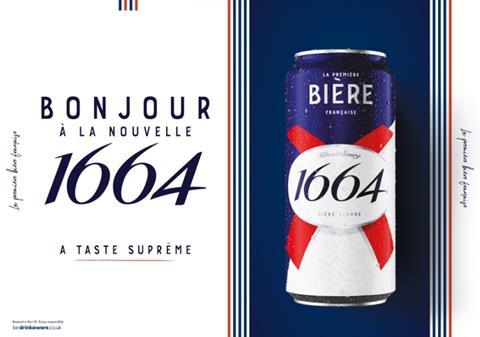
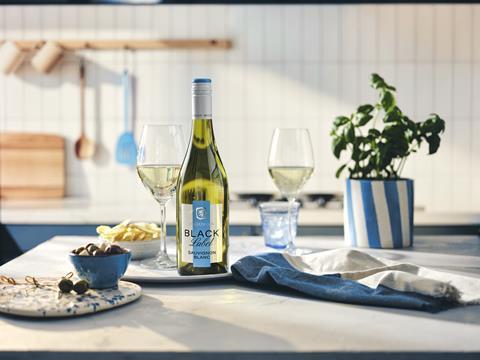
Kronenbourg moved into on-trend fruit beer in April with 1664 Rosé. Building on the success of 1664 Blanc, the variant promises a “fruit-forward option that blends the worlds of beer and viniculture”.
28 (25)
McGuigan
Sales: £162.4m
Growth: –10.2%
Of the 14 wines in the top 50, McGuigan has suffered the fastest value decline. It’s now looking “beyond the traditional 75cl bottle” via NPD like its 1.5-litre bag-in-boxes, says brand manager Emily Waterston.
29 (26)
Glen’s
Sales: £159.7m
Growth: –4.3%
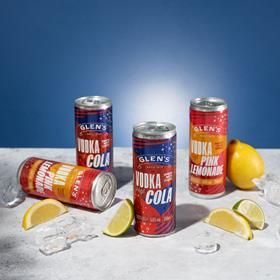
Glen’s has posted the biggest absolute loss of any top 100 vodka brand: £7.2m. James Middleton, UK sales director at owner Loch Lomond Group, points to “positive momentum” for its RTDs after a pack refresh.
30 (27)
Kopparberg
Sales: £142.0m
Growth: –7.0%
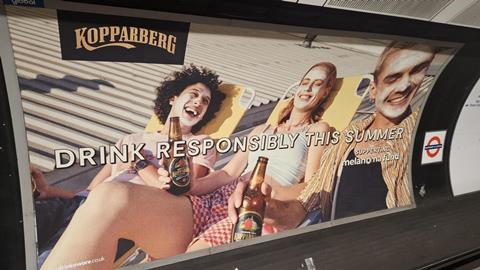
Kopparberg unveiled its first redesign in March, with the aim of reinforcing its premium positioning through a modern, uncluttered look. It came after the brand lost £10.6m in a torrid year for fruity ciders.
31 (33)
Madrí Excepcional
Sales: £129.5m
Growth: +4.6%
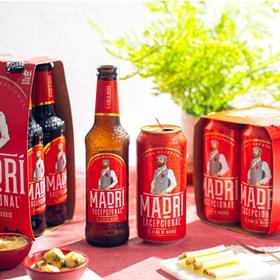
Madrí’s success story continues. It’s added £5.7m on volumes up 5.1%. It’s aiming for further growth through a £5m push that kicked off in May – hot on the heels of Limón, its first fruit beer, which debuted in April.
32 (30)
Bacardí
Sales: £129.1m
Growth: +0.7%
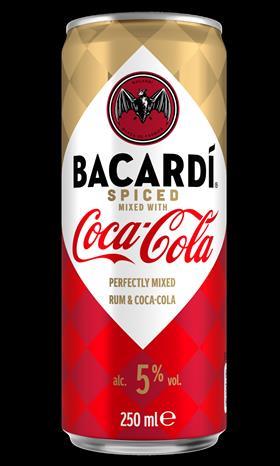
After the much-heralded return of Breezer last June, Bacardí followed in March with a Spiced variant of its Bacardí & Coca-Cola RTD. The brand’s value has returned to the black due to higher average price per litre.
33 (34)
Villa Maria
Sales: £123.0m
Growth: +6.3%
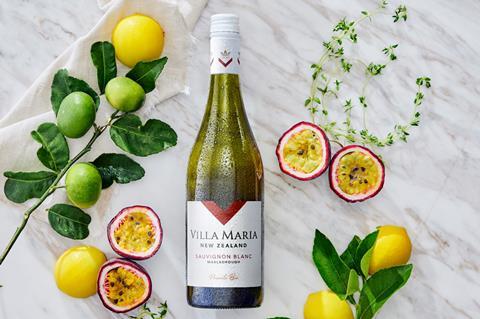
Villa Maria has turned in the third-strongest value performance of any wine in this year’s ranking, adding £7.3m. It’s also shifted an extra 331,000 litres – a volume increase of 3.2%.
“The single biggest driver shaping the market right now is premiumisation,” says Nikki Wasylkowski, brand manager at distributor Hatch Mansfield. “Shoppers are more deliberate about when and what they drink, and when they do pick up a bottle, they want it to be worth it. We’re delighted with our performance. These results are the payoff from years of deliberate, patient brand building.”
And format innovation. April 2025 saw the rollout of Villa Maria’s signature Private Bin Marlborough Sauvignon Blanc in a 200ml can. It was a bid to appeal to on-the-go drinkers and compete with a growing number of canned wine challenger brands, such as Nice Drinks and Most Wanted.
“We took our time getting this right: a full year of trial to ensure the quality in can matched the quality in bottle,” says Wasylkowski.
The line is now the UK’s fourth bestselling canned white wine, after winning listings at Tesco, Sainsbury’s, Morrisons and Asda, she adds. “That patience has been rewarded. We’re proud to be the brand that has set the benchmark for quality in that space.”
34 (31)
19 Crimes
Sales: £122.6m
Growth: –3.3%
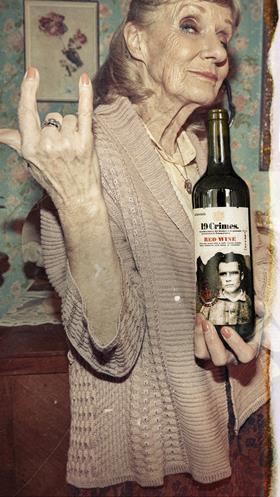
19 Crimes is “not a brand that plays it safe”, says international marketing manager Chantal McDowell. It’s also a brand that’s lost £4.2m despite its biggest ever ATL push, ‘Break Convention’, last summer.
35 (32)
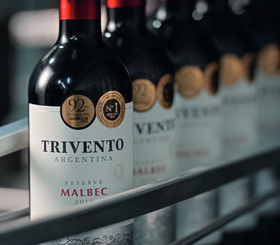
Trivento
Sales: £120.9m
Growth: –3.7%
Being affordable hasn’t protected Argentina’s Trivento from losses. Its two bestselling wines, Reserve and Private Reserve, have shed a combined £5.3m. The brand’s overall volumes are down 6.4%.
36 (36)
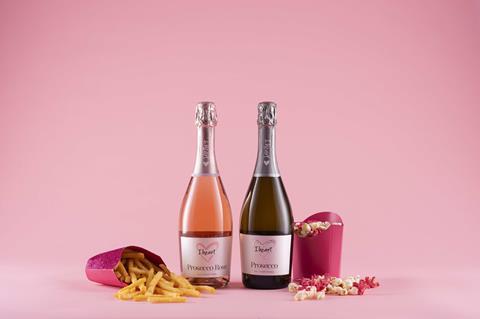
I Heart
Sales: £106.5m
Growth: –1.7%
Despite a challenging year for wine, Copestick Murray insists its budget-friendly I Heart brand “has outperformed the total market”. That was driven, it says, by a strong performance in sparkling wine.
37 (35)
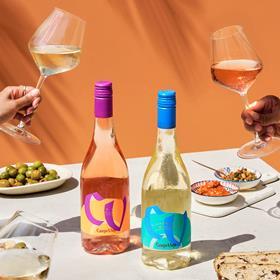
Campo Viejo
Sales: £106.1m
Growth: –4.5%
Campo Viejo moved beyond its red wine heartland to launch Contemporary, a lighter-style rioja in Blanco and Rosé designed “for more contemporary occasions” after losses of £5m across its range.
38 (37)
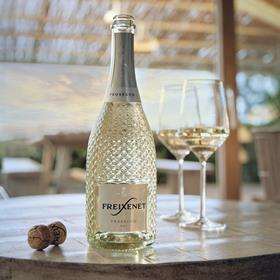
Freixenet
Sales: £105.2m
Growth: +0.5%
Brits love an affordable glass of bubbles, making Freixenet a popular choice. Its Cordon Negro Cava has been a particularly strong performer, says the brand, delivering “a double-digit return to growth”.
39 (43)
Absolut
Sales: £99.9m
Growth: +7.7%
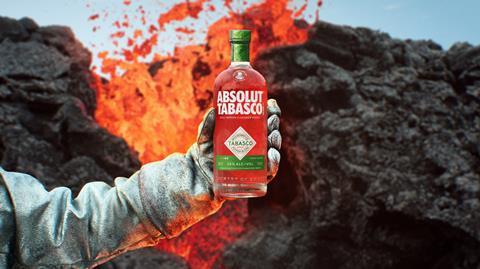
In January, Absolut partnered with Tabasco for a spicy vodka – its 14th flavoured line. “Collaboration is in the DNA of Absolut,” says Liam Murphy, marketing director at brand owner Pernod Ricard UK.
40 (39)
Jam Shed
Sales: £98.5m
Growth: –4.9%
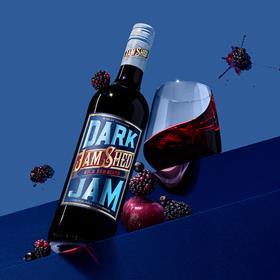
Jam Shed has lost 5.8% of its litres despite its ‘There’s no such thing as too jammy’ campaign, its biggest to date. In April, it launched Jammy Red Wine & Cola RTD, inspired by the Spanish calimocho serve.
41 (40)
Whyte & Mackay
Sales: £97.2m
Growth: –1.5%
Whyte & Mackay has endured a global battering for whisky surprisingly well. Bigger, pricier rivals The Famous Grouse (24), Johnnie Walker (76) and Grant’s (78) have all shed volumes at a faster rate.
42 (41)
Henry Westons
Sales: £96.8m
Growth: +0.7%
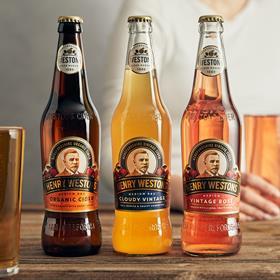
“There is still strong demand for premium apple cider,” says Sally McKinnon, Henry Westons head of marketing & strategy. Brits are happy “to trade up when they buy into brands they know and trust”.
43 (44)
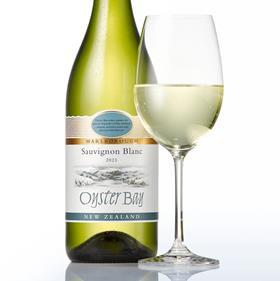
Oyster Bay
Sales: £91.2m
Growth: +0.2%
It’s been a tough trading environment for winemaker Delegat, its latest results show. But the business saw global case sales rise in 2025 – thanks to stable sales in the UK for brands such as Oyster Bay.
44 (48)
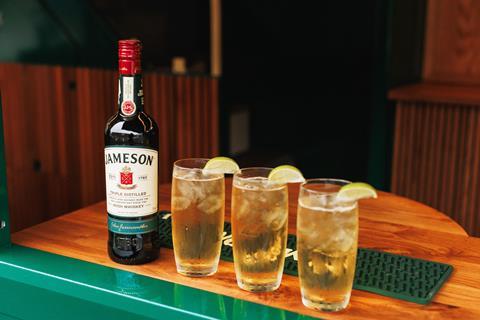
Jameson
Sales: £87.7m
Growth: +9.7%
Jameson leaned into the RTD trend in October by reviving “fan favourite” Ginger & Lime in a 330ml can. The brand also continued its sponsorship of the English Football League, handing out cans at games.
45 (42)
Tanqueray
Sales: £87.6m
Growth: –6.0%
Tanqueray’s volumes are down 5.2% – a decline it hopes to reverse with a global campaign featuring Sarah Jessica Parker, its first global ambassador. It has also added 5cl and 35cl formats for its gin.
46 (45)
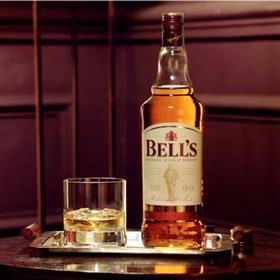
Bell’s
Sales: £86.4m
Growth: –4.2%
Bells has lost 5.7% in volumes after falling victim to cost-conscious consumers and the overall decline of alcohol consumption. While rivals add RTDs to return growth, Bell’s has made no such move.
47 (46)
Tennent’s
Sales: £84.4m
Growth: +0.2%
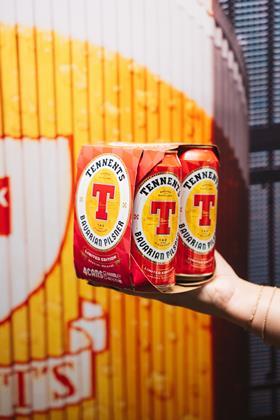
Tennent’s marked its 140th anniversary with the October unveiling of Bavarian Pilsner. Inspired by founder Hugh Tennent’s travels to Bavaria in the 1880s, it was the brand’s first NPD in “several years”.
48 (241)
BuzzBallz
Sales: £81.8m
Growth: +826.8%
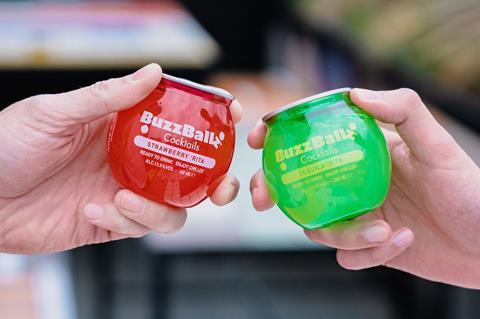
A £73m gain makes BuzzBallz the smash hit of the year. No other brand has made a bigger absolute value gain. “It’s been a huge year for BuzzBallz,” confirms Jess Scheerhorn, the brand’s president. “We’ve loved seeing more and more consumers discover the brand, whether through friends, social media or spotting BuzzBallz out and about.”

Eye-catching marketing has played a part in generating buzz about the RTD challenger. Take the exclusive shoulder bags unveiled in December, based on its spherical drinks. Just eight were available – valued at more than £4k but retailing for only £3.99.
NPD has also been key to BuzzBallz’s growth. In February, for instance, it added Berry Cherry Limeade – “which fans were incredibly excited to get their hands on, and we’ve loved seeing the reaction online”, Scheerhorn says. “With bold flavours, real cocktail strength and our instantly recognisable round shape, we’re giving consumers something that stands out from the crowd,” she adds.
There’s plenty more to come. “We’re still only scratching the surface of what BuzzBallz can be in the UK,” Scheerhorn says. “This year, we’re focused on giving fans more of what they already love: bold new flavours, unexpected brand moments and plenty more reasons to bring BuzzBallz along to pre-drinks, festivals, picnics and get-togethers.”
49 (47)
Desperados
Sales: £78.4m
Growth: –4.7%
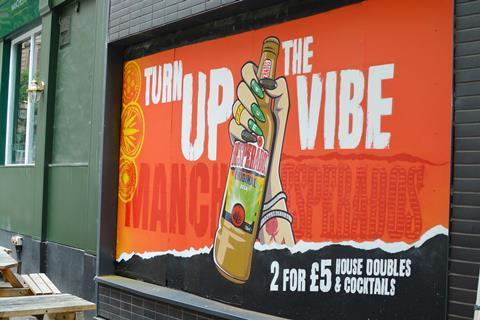
In 2025, Desperados aimed to turn Manchester into a “round-the-clock Latin party”. The push focused on “making the brand unmissable”, says Sarah Duncan, Heineken commercial strategy director.
50 (55)
Au Vodka
Sales: £72.0m
Growth: +22.5%
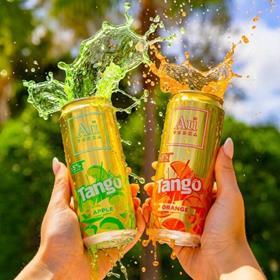
Au Vodka’s impressive growth continues – and so does its NPD. Last May, it unveiled caffeinated RTD range Ultra, followed in October by its first alcohol-free line, Blue Raspberry RTD.
51 (49)
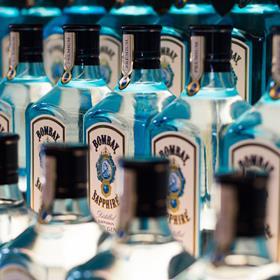
Bombay Sapphire
Sales: £71.7m
Growth: +3.8%
Bombay Sapphire invited concertgoers at the Royal Albert Hall to ‘Step Into The Blue’ last year by supping at its branded bar. In May, the gin maker unveiled a partnership with powerboat racing’s Team Aoki.
52 (58)
Inch’s
Sales: £71.5m
Growth: +32.2%
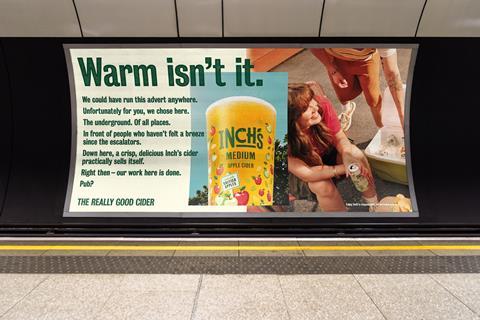
As drinkers opt for naturalness and craft cues in the cider aisle, Heineken’s sustainable Inch’s brand has gone from strength to strength since its 2021 launch, with volume sales rising 31.6%.
The addition of Inch’s Cloudy in March 2025 boosted growth over the past year, with the lightly sparkling cloudy cider racking up sales of £8.9m.
Half of Inch’s Cloudy sales in 2025 were incremental to the cider category, “driven by a loyal customer base”, says Sarah Duncan, category & commercial strategy director at Heineken UK.
In terms of value gain, Inch’s leading Medium Apple line wasn’t far behind, bringing in an extra £7.1m. The brand’s alcohol-free variant – “the first dealcoholised cider in the UK” – remains a smaller part of its portfolio at a value of £1.4m. But it gained new fans over the past 12 months, mostly younger drinkers.
To maintain momentum, Heineken added Inch’s Reserve in March this year. It’s a premium apple cider “with the recognisable signature appley taste of Inch’s Medium but elevated for sipping and savouring”.
The 7.4% abv cider was created “to bring modernity to the premium apple cider segment, giving younger consumers a compelling reason to trade up, and supporting retailers in driving value growth in cider”.
53 (50)
Coors
Sales: £69.0m
Growth: –0.1%
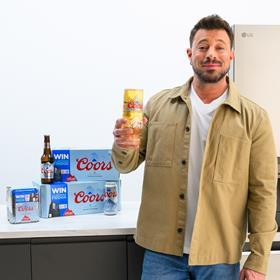
When Blue star Duncan James slides into your DMs, your Coors is ready to drink. That was the premise of Coors’ social media activation to mark the return of its ‘Peak of Technology’ campaign this spring.
54 (51)
Estrella Damm
Sales: £65.9m
Growth: –0.3%
It is 150 years since August Küntzmann Damm began to brew Estrella Damm to a recipe still used today. The brand’s first alcohol-free version, Estrella 0.0, launched last July in a 4x440ml pack of cans.
55 (56)
JJ Vodka
Sales: £63.9m
Growth: +14.2%
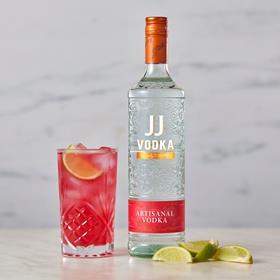
JJ Vodka has added £7.9m on volumes up 15.3%. It is now under a new owner after Halewood offloaded it to United Beverages Group in January. Halewood has retained UK distribution rights, however.
56 (68)
Asahi
Sales: £58.8m
Growth: +27.0%
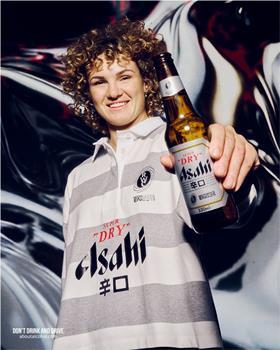
Asahi UK enjoyed a “pivotal” 2025, its Super Dry lager seeing volumes rocket 25.2%. Performance was buoyed by initiatives including a £2m ad push and a tie-up with the Women’s Rugby World Cup.
57 (53)
Echo Falls
Sales: £57.8m
Growth: –3.6%
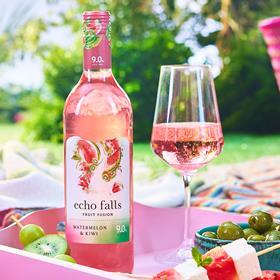
Echo Falls has seen volumes drop 8.5%, but owner Vinarchy stresses it “remains relevant through flavour-led innovation”. Highlights over the past year included limited-edition Fruit Fusion Summer Berries.
58 (54)
Malibu
Sales: £56.0m
Growth: –5.6%
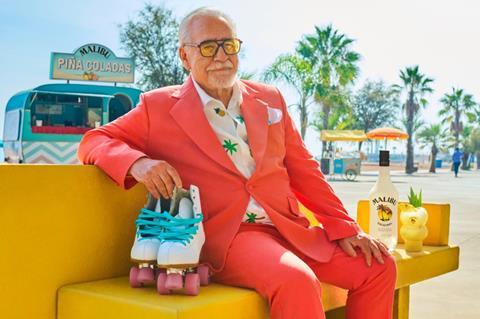
Malibu saw volumes slide 7% last year, amid what Pernod Ricard commercial director Ian Peart describes as “wider category headwinds”. But he stresses the brand “continues to outperform the rum category”.
59 (57)
Three Barrels
Sales: £54.9m
Growth: –1.0%
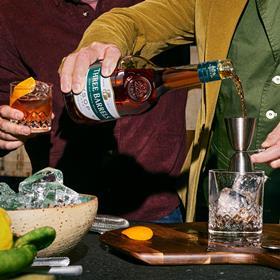
Three Barrels’ litres fell 4.4% as average price rose 3.5% due to the cost of living headwinds that impacted “most spirits categories”, says owner William Grant. But it’s still “the UK’s number one brandy brand”.
60 (60)
Courvoisier
Sales: £50.7m
Growth: –4.4%
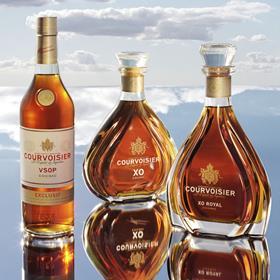
The same headwinds that hit spirit brands like Three Barrels (59) also weighed down sales of Courvoisier. The cognac brand, acquired by Campari from Beam Suntory at the start of 2024, saw volumes drop 5.5%.
61 (63)
Canti
Sales: £50.5m
Growth: +1.8%
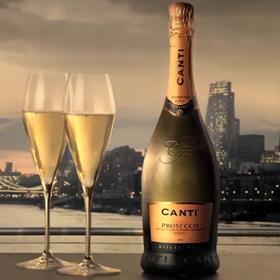
Nectar members were able to pick up a 75cl bottle of Canti Prosecco for just £6.75 last summer in Sainsbury’s – a 25% saving. Even at full price, the Italian brand is among the most affordable wines in the top 100.
62 (59)
John Smith’s
Sales: £49.8m
Growth: –7.6%
Despite volumes diving 10.4%, John Smith’s “no-nonsense character” continues “to connect across generations and establish loyalty”, says supplier Heineken UK. Extra Smooth is the key driver of sales.
63 (62)
Brancott Estate
Sales: £49.1m
Growth: –3.8%
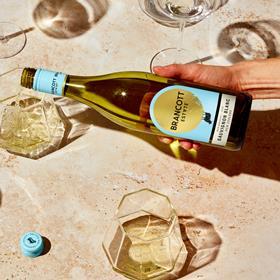
Brancott’s performance is commendable given the state of wine sales: 20 out of 29 brands in this ranking are in decline. Brancott’s £1.9m loss is one of the smallest –and the brand even kept a lid on prices.
64 (74)
Staropramen
Sales: £47.7m
Growth: +12.7%
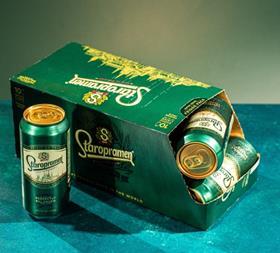
Straropramen says “strong momentum” is behind its 14.3% volume gain, boosted by a 1.5% drop in average price per litre. Its performance is helping “to drive the premium world lager category’s sustained growth”.
65 (52)
Blossom Hill
Sales: £47.7m
Growth: –24.4%
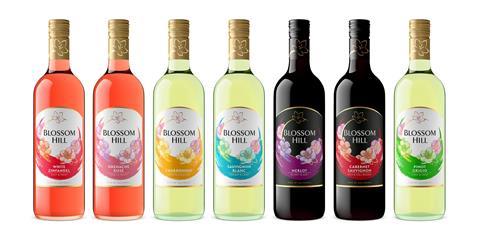
In percentage terms, Blossom Hill has suffered the greatest value and volume losses in this year’s ranking. It sold 2.1 million fewer litres of wine and spritzes and lost £15.4m.
“The past year has brought continued complexity to the off‑trade market, with inflationary pressures, duty changes and wider regulatory developments influencing pricing and shaping consumer behaviour,” says Angela Harkin, international marketing manager at brand owner Treasury Wine Estates.
“These dynamics have been felt across the wine category, where shoppers are becoming more selective and increasingly exploring lower‑strength, lighter‑style and alternative options. Blossom Hill’s performance reflects these broader market trends.”
But demand for lower strengths and alternative options has done little for Blossom Hill Gin Fizz – the range of 8.5% abv sparkling wines launched in 2019. It’s worth just £10.8k, having shed 31.3% of its value.
TWE isn’t disheartened. “Blossom Hill remains one of the UK’s most recognisable wine brands, playing a central role in making the category approachable for everyday occasions,” says Harkin.
“We’re building on this strength by sharpening our core range, investing in formats and varietals that reflect where consumer interest is moving.”
66 (61)
Gallo Family Vineyards
Sales: £47.5m
Growth: –8.0%
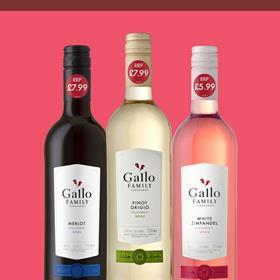
Gallo’s average price per litre rose 2.9% – driven by a massive downturn for winemakers in its home state of California that could last for years. In the UK, that has led to a loss of £4.1m on volumes down 10.6%.

67 (66)
Moët & Chandon
Sales: £47.0m
Growth: –0.3%
Moët & Chandon’s value has dipped despite major partnerships including one with Pharrell Williams, who put his name on a limited-edition champagne in March 2025. He’s back for another this summer.
68 (64)
Hobgoblin
Sales: £45.5m
Growth: –6.2%
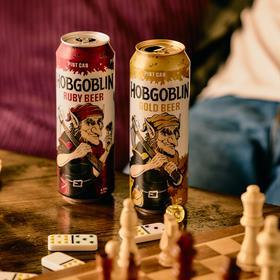
After Hobgoblin refreshed its packaging last year, sales stormed ahead. This year has been disappointing, with its Gold and Ruby ales slipping. Newer lines did better: Amber’s first full year delivered £1.6m.
69 (69)
The Kraken
Sales: £45.5m
Growth: –0.5%
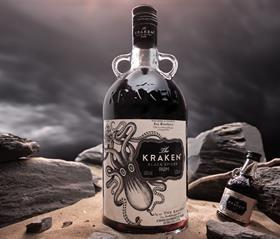
The UK is Europe’s fastest-growing flavoured rum-based spirit market, according to Grand View Horizon research. Good news for The Kraken, which has grown volumes 1.3% on a 1.8% fall in price per litre.
70 (65)
Bud Light
Sales: £43.9m
Growth: –8.0%
With sales still falling, Bud Light is tapping the fruit beer craze with Lemon Squeeze. “A new generation is seeking flavour profiles,” says Jess McGeorge-Stevens, BBG premium global brands marketing director.
71 (75)
Mud House
Sales: £42.7m
Growth: +2.4%
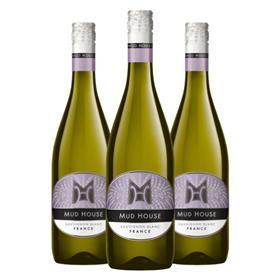
Kiwi brand Mud House, owned by wine powerhouse Vinarchy, has bucked wine’s downward trend. It has managed to grow volumes 5.2% – markedly faster than the previous year – as price per litre has fallen 2.6%.
72 (83)
Beavertown
Sales: £42.0m
Growth: +15.5%
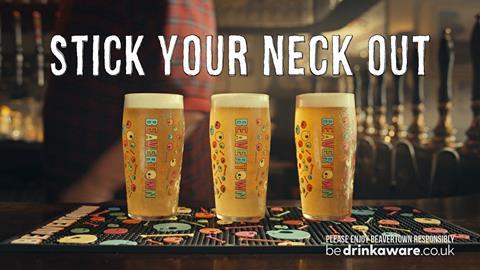
Beavertown’s growth has accelerated. “We’re increasingly establishing ourselves as a leading force in the IPA space,” says marketing manager Natasha Graydon. “Innovation has been a key driver.”
73 (73)
Whitley Neill
Sales: £41.1m
Growth: –3.4%
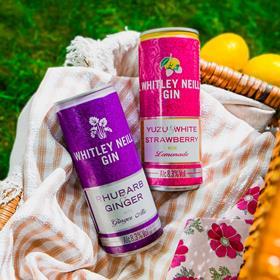
Whitley Neill has shifted 24,900 more litres of gin after price per litre dropped 5.1%. This spring, the brand moved into canned RTDs with a duo of 250ml cocktails made with 50ml of flavoured gin.

74 (76)
The Ned
Sales: £40.9m
Growth: +0.0%
The Ned’s flat value sales are quite an achievement given the poor state of the wine market. The New Zealand brand managed to grow volumes 0.4% on an average price decrease of the same amount per litre.
75 (72)
Jim Beam
Sales: £40.8m
Growth: –6.2%
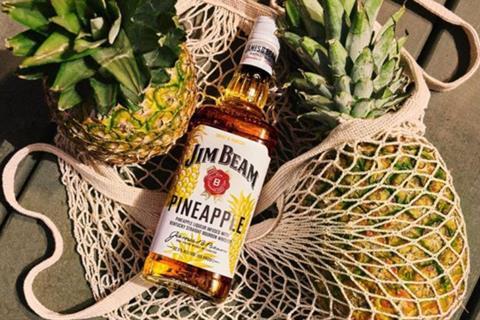
Culturally relevant partnerships and flavour-led innovation have attracted more shoppers to Jim Beam, claims KK Hall, its global brand VP. October saw the launch of a Pineapple variant and a revamp of its Black line.
76 (70)
Johnnie Walker
Sales: £40.0m
Growth: –10.8%
Nearly one fifth of Scotland’s distilleries are in financial distress amid a storm of lower demand, higher production costs and tariffs, according to a February report from restructuring firm BTG. So, it’s of little surprise the world’s biggest blended scotch is feeling the pinch.
Perhaps the biggest blow to sales in the past year or so came from Diageo’s decision to delist the one-litre bottle of Johnnie Walker’s affordable Red Label, which wiped £7.7m off the balance sheet. The more premium Black Label has fared better but still lost £1.7m, as shoppers shied away from splashing out.
It’s been a challenging year, Diageo admits. The brand’s performance was affected by softer consumer demand and ongoing pressure across the wider spirits category. But the supplier insists Johnnie Walker has taken steps to successfully grow awareness and recruit new audiences.
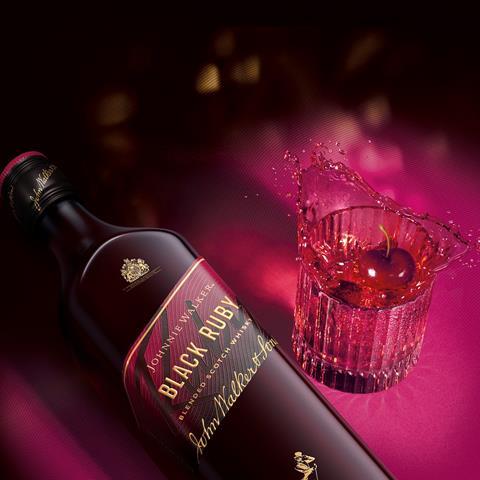
That included the September 2025 launch of the sweeter Black Ruby blend, which made £3.3m in just two months.
In March, the “sweeter, smoother” Johnnie Walker Red Soul debuted, designed to tempt shoppers to “take their first step into the whisky category”, says Diageo.
NPD has been accompanied by a string of high-profile campaigns, including a partnership with pop star Sabrina Carpenter.
77 (79)
Chekov
Sales: £39.6m
Growth: +1.9%
Chekov’s value gain is far behind that of rival brands Absolut (39) and JJ Vodka (55) – both of which are cheaper per litre. A 3.2% rise in price helped to keep Chekov in growth, though volumes are down 1.2%.
78 (71)
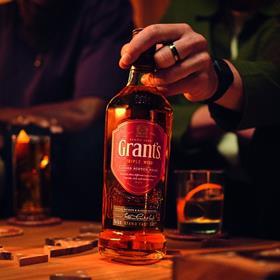
Grant’s
Sales: £38.5m
Growth: –12.1%
Volumes having fallen 14.6%, Grant’s is looking to a strategic partnership for growth. It has hinted at an “exciting collaboration” later this year, which will “prove Grant’s can be counted on for great quality”.
79 (78)
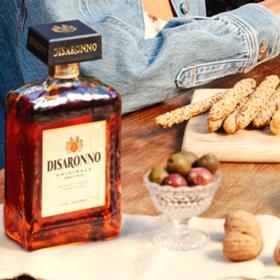
Disaronno
Sales: £37.3m
Growth: –5.4%
Disaronno has benefited from “growing consumer interest in versatile serves and more sociable drinking occasions”, says its UK marketing director, Peter Dries. The brand launched Disaronno Spritz in April.
80 (82)
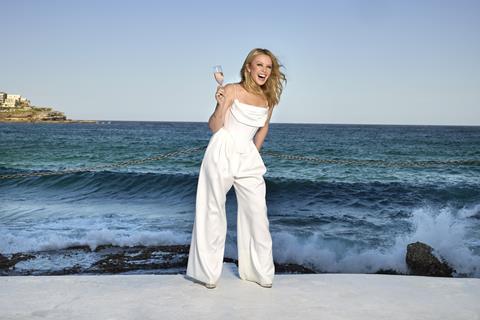
Kylie Minogue
Sales: £37.2m
Growth: +1.6%
On 28 May, Kylie celebrated both her 58th birthday and six years of her wine. Alex Lynch, senior brand manager at supplier Benchmark, points to the popularity of the Prosecco Rosé and low & no lines.
81 (77)
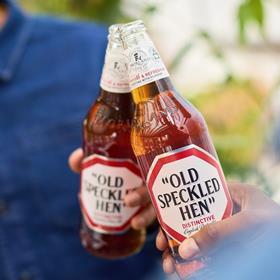
Old Speckled Hen
Sales: £37.0m
Growth: –7.6%
After a tough year for Hen, much change is ahead. Sold by Greene King in May, it is to move production to Eagle Brewery in Bedford under new owner Damm UK, which says the brand is an “icon” of British ale.
82 (81)
Southern Comfort
Sales: £36.9m
Growth: –2.7%
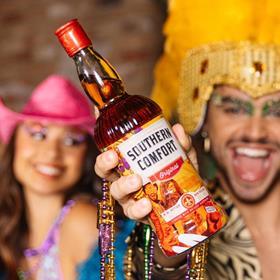
The self-styled Spirit of New Orleans held its ground amid a difficult year for hard liquor. Value sales of Southern Comfort dipped relatively little, albeit due to higher prices. Its volume sales fell 5.1%.
83 (146)
Birrificio Angelo Poretti
Sales: £36.4m
Growth: +114.7%
The brand can trace its origins back to 1877, when Angelo Poretti first set up his eponymous brewery in the foothills of an Italian mountain range, but it was well over a century before Birrificio Angelo Poretti captured Brits’ attention.
A decade ago, Carlsberg Britvic opted to make the lager one of the focal points of its portfolio, pumping significant investment into a national sampling campaign. Sales rocketed and have continued to do so in the years since, buoyed by Brits’ growing love of world lagers.
That gave Carlsberg Britvic the confidence to stump up a further few million to push the brand in 2025 – a decision that helped to turbocharge gains. Poretti is now worth an extra £19.5m after shifting 7.7 million more litres.
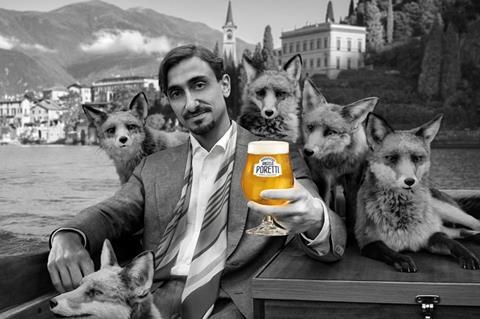
It follows the brand’s ‘Welcome to the Lake’ campaign, which kicked off in April 2025 with a black-and-white aesthetic designed to reinforce the lager’s class, credibility and Italian roots.
“World beer advertising has devolved into a sea of sameness,” said the brand’s head of marketing, Sam Johnson, at the time.
“We wanted to inject something new and distinctive into the category.”
May 2026 marked the UK debut of Birrificio Angelo Poretti Alcohol Free, offering the “chance to enjoy the distinctive character of the brand in a new way”.
84 (80)
WKD
Sales: £36.0m
Growth: -5.6%
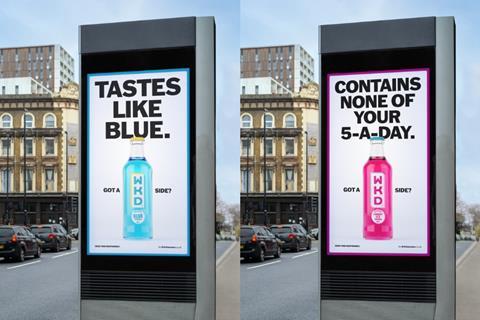
WKD’s lost £2.1m, but litres sold are up 6.3% on the back of an 11.2% fall in price. Its focus has been on “protecting relevance, recruitment, value for the shopper and participation”, the brand says.
85 (67)
Wolf Blass
Sales: £36.0m
Growth: –23.1%
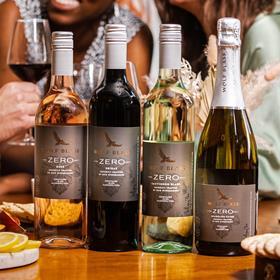
Wolf Blass has seen volumes dive 23.6%. In February, Treasury Wine Estates abandoned plans to sell a raft of its wine brands, including Wolf Blass – which still faces an uncertain future with its owner.
86 (105)
Andrew Peace
Sales: £34.9m
Growth: +36.2%
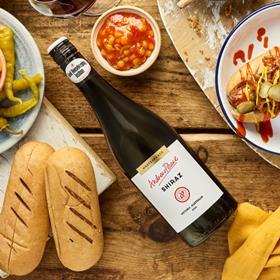
Value sales at Australian challenger Andrew Peace have skyrocketed on the back of new varietals like Pinot Grigio and Cabernet Sauvignon, as well as new formats such as 1.5-litre bag-in-a-box and 187ml bottle.
87 (84)
Tyskie
Sales: £34.7m
Growth: –4.0%
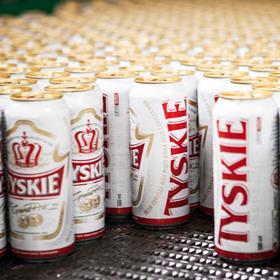
Tyskie remains the nation’s number one Polish beer. Still a fixture in corner shops, it has kept its lineup fresh with a 8x500ml pack and a 4x500ml PMP. But volumes are down 7.1% as its price rose 3.3%.
88 (85)
Magners
Sales: £32.3m
Growth: –6.1%
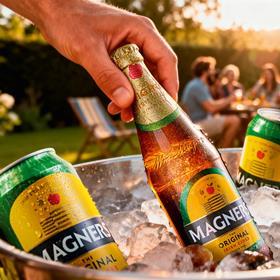
Magners volumes are up 2.3% as the brand benefits from interest in traditional apple ciders. But taste for tradition hasn’t stopped the brand from being trendy, relaunching alcohol-free Magners 0.0 in early 2025.
89 (99)
St Austell
Sales: £30.9m
Growth: +9.2%
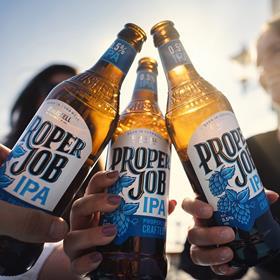
St Austell puts its growth primarily down to Proper Job 0.5%, its first low & no IPA. Launched in a 500ml bottle in September 2024, it added a 4x440ml pack of cans in March 2025, in time for its Tesco debut.

90 (93)
Jura
Sales: £30.0m
Growth: +1.5%
Jura has attempted to boost sales by demystifying whisky, after finding two-thirds of Brits were too confused to choose one. As of last August, bottles across the core range list their three most prominent flavours.
91 (91)
Old Mout Cider
Sales: £30.0m
Growth: –0.9%
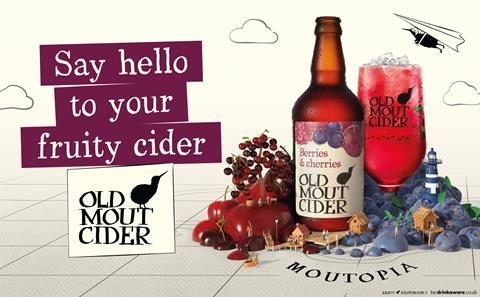
Old Mout rolled out 4x440ml can packs in impulse and convenience channels in March to tap “drinking occasions such as festivals and BBQs”. In May, it axed Strawberry & Apple Cider after sales plummeted.
![Porta 6 marketing[62]](https://dmrqkbkq8el9i.cloudfront.net/Pictures/280xAny/7/2/2/398722_porta6marketing62_624031_crop.jpg)
92 (94)
Porta 6
Sales: £28.9m
Growth: –1.8%
Porta 6 importer Guy Anderson Wines began to offer duty paid delivery stock in January, in a bid to extend distribution. Sales have started strongly through Booker Group, Home Bargains and AF Blakemore, GAW says.
93 (98)
McEwan’s
Sales: £28.7m
Growth: +1.2%
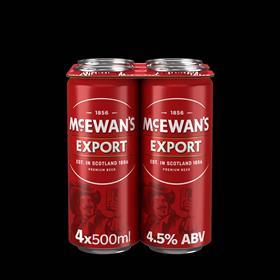
McEwan’s value growth has stemmed from a 6% rise in average price, though volumes of its ale are down 4.5%. Its Champion 4x440ml bagged a listing in Waitrose in April 2025 but was delisted a year later.
94 (89)
Greene King
Sales: £28.3m
Growth: –9.7%
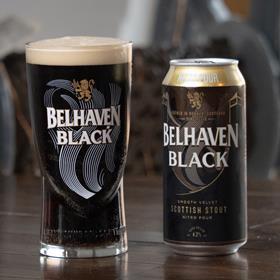
Factors including EPR and higher alcohol duty have increased Greene King’s prices, “shaping category performance, with shoppers purchasing in smaller quantities”, says manager Mark Dawson.
95 (96)
Glenfiddich
Sales: £27.9m
Growth: –2.7%
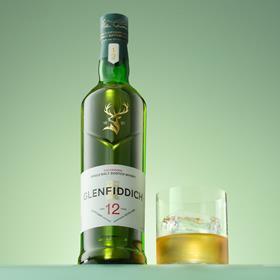
Glenfiddich ended a tough year with a £769k loss and a 3.6% dent in litres sold – but it’s retained its title as Britain’s bestselling single malt. In April, it underwent a swish rebrand inspired by its 1960s heyday.
96 (90)
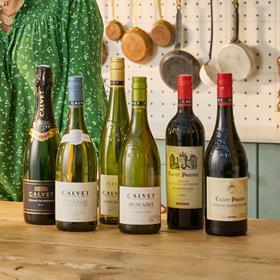
Calvet
Sales: £27.6m
Growth: –11.0%
Calvet has been hit by double-digit declines in volume and value. The brand has faced many of the same pressures as other wine producers, with inflation and wine duty pushing up prices, it explains.
97 (87)
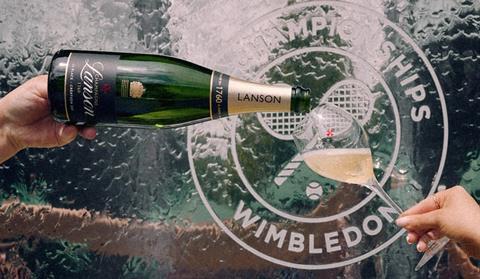
Lanson
Sales: £27.5m
Growth: –15.3%
The UK’s second-biggest champagne brand has little to celebrate about the past year’s off-trade sales. Retailers have sold 114,000 fewer litres of Lanson – a decline of 15.1%. Its Black Label variant contributed most losses: 14.2% in value and 14.4% in volumes.
This is chiefly because Lanson is shipping less product to the UK. The champagne house attributes a 6.7% fall in export revenues in 2025 to a marked decline in shipments to the UK and US.
That and a 10.7% decline in domestic revenues, driven by a slowdown in sales through French supermarkets, contributed to an 8.7% fall in group revenue for the full year. “This evolution is the result of three main factors: lower volumes, higher production costs – particularly grapes – and increased inventory financing costs,” read a company statement in March.
The business planned to pursue a “premiumisation strategy” and strengthen its brand portfolio following its acquisition of rival champagne house Heidsieck & Co in October last year, it added.
In the UK, Lanson is pursuing growth in travel retail and cruises. Plus, for the second year running, the brand is offering special-edition packs of Le Black Creation and Le Rose Creation to mark its long-standing partnership with the Wimbledon Championships.
98 (116)
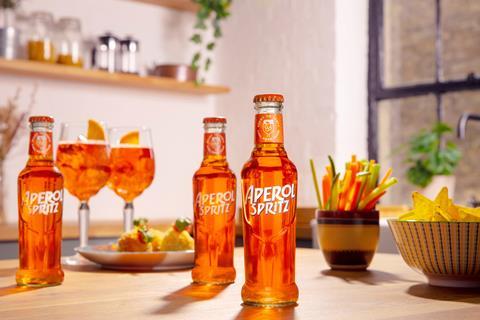
Aperol
Sales: £26.9m
Growth: +18.2%
In April, Aperol expanded its RTD lineup with a 5% abv canned version of its signature cocktail. It followed the successful launch of 9% abv pre-mixed Spritz in March 2025, which has added £3.9m.
99 (106)
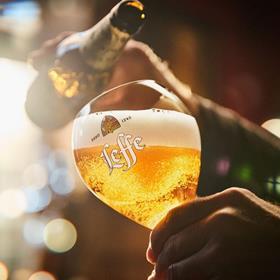
Leffe
Sales: £26.2m
Growth: +3.7%
Leffe has burst into the top 100, having benefited from “strong demand for world beer, supported by standout retail activations and expanded distribution”, says Jess McGeorge-Stevens at BBG.
100 (104)
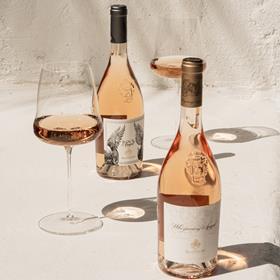
Whispering Angel
Sales: £26.2m
Growth: +1.3%
“Whispering Angel has become a global symbol of refined, contemporary living, and a driving force behind the rise of the rosé renaissance,” it says. The brand released its 20th vintage in January.


No comments yet