Challenges abound for Britain’s booze brands, but green shoots are appearing – from Gen Z’s increasing take-up to the runaway success of fruit beers and ready-to-drink cans
Booze brands have had a difficult year. Almost two-thirds (63%) of Britain’s 100 biggest alcohol brands sold less volume over the past year, with combined value losses just shy of £100m [NIQ 52 w/e 18 April 2026]. From soaring input costs to a growing regulatory burden, the threats remain grave.
But among the turmoil, there are green shoots of optimism. From the standout performance of fruit beers and canned cocktails to growing evidence that Gen Z may not be as abstemious as thought, suppliers and retailers have genuine reasons to be cheerful.
“There’s no point pretending there isn’t real pressure facing suppliers right now, but it absolutely isn’t all doom and gloom,” says Shauna Clark Fitzpatrick, Ocado beer & cider buyer.
So, what does the sector have to celebrate? What trends give most cause for optimism? And how can brands and retailers set themselves up for success?
While the big picture is gloomy, there are pockets of growth. RTD cocktails surged 12% in volume and 17% in value last year [NIQ 52 w/e 27 December 2025], amid launches from established brands and newcomers such as BuzzBallz (48), Au Vodka (50) and Moth (102).
Offering convenience and an exciting array of flavours at a wallet-friendly price, ready-to-drink options act as “a great gateway for getting people to trial and then go on to buy a full bottle”, says John Vine, spirits buyer at Waitrose.
Nick Temperley, UK & Ireland MD at Suntory Global Spirits, is similarly encouraged by momentum in canned cocktails. He points to a rise in consumers “socialising before they go out and having house parties at home”, where premixes can come to the fore.
Who’s up?
-
48 (241)
BuzzBallz ↑ 826.8% -
83 (146)
Birrificio Angelo Poretti ↑ 114.7% -
26 (38)
Cruzcampo ↑ 63.8% -
22 (29)
La Vieille Ferme ↑ 43.8% -
86 (105)
Andrew Peace ↑ 36.2%
Also in growth are lower-abv drinks like spritzes and fruity lagers. Value sales of the latter are up more than a fifth year on year [NIQ 52 w/e 18 April 2026], driven by the introduction of dedicated fruit beer bays in over 300 Tesco stores this spring.
The segment feels like a “genuine opportunity” for consumer-facing innovation, says Liam Fidler, Damm UK head of off-trade. “There’s a genuine demand for it, rather than brands just forcing stuff on the market and hoping it takes off.”
As such, the supplier is exploring how it can expand its current Damm Lemon offer “in a way that feels authentic” next year, he adds.
Mid-strength drinking on the rise
That many fruit beers come in at a weaker strength than regular lagers is telling. After all, much of the negativity around booze stems from people drinking less than they used to. Consumers are undoubtedly “becoming a little bit more switched on to their health and what they’re drinking”, confirms Fidler.
But not everyone is abstaining entirely. In April, Ocado reported “booming” demand for mid-strength alcohol, with sales rising by 71% in the space of two years. The emergence of this market represents “a huge opportunity that brands should be leaning into”, insists Clark Fitzpatrick.
“We saw this trend coming from a mile away,” she says. “As a consumer myself, I noticed people ‘zebra-striping’ by mixing full-strength and 0% abv products in our Ocado multibuys, and mixing full-strength Guinness with 0.0 in pubs. There was this massive pocket of the market that grocers weren’t necessarily doubling down on.
“We launched into it, and the growth has been phenomenal with brands like Quarter Proof, 6Percent, and Small Beer. It proved the future is already out there in consumer behaviour. You just have to spot the potential and grab it.”
This summer’s men’s World Cup is a case in point. Clark Fitzpatrick believes offering a wide range of ‘sessionable’ and mid-strength drinks is “critical” to winning over shoppers during the five-week tournament, since many games kick off late into the evening.
“We can’t expect people to drink full-strength alcohol all day before a 10pm kick-off, especially when they have to be in the office the next morning,” she says. “People still want to participate, so giving them a wealth of choice so they can drink differently is a massive growth driver.”

Who’s down?
-
65 (52)
Blossom Hill ↓ 24.4% -
85 (67)
Wolf Blass ↓ 23.1% -
12 (9)
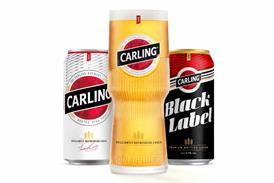
Carling ↓ 15.6% -
97 (87)
Lanson ↓ 15.3% -
15 (11)
Foster’s ↓ 14.8%
That wealth of choice extends, of course, to alcohol-free line extensions, which continue to deliver growth for leading beer and cider brands like Guinness (8) and Thatchers (16). Thatchers Zero became the fastest-growing product in the top 10 bestselling low & no beers and ciders last year, prompting the cidermaker to double its alcohol-free lineup with 0.0 Blood Orange in April this year.
“Having a really good quality, credible alternative is extremely important,” says Martin Thatcher, fourth-generation cidermaker at Thatchers. “Gen Z aren’t drinking so much in one go, and they’re not drinking so often. But we’re certainly seeing them drink zero or low-alcohol products.”
Some young adults are even turning to the hard stuff – a further boost for booze-makers. In March, a study of 100,000 UK Gen Z adults found regular alcohol drinking sessions among the group had tripled since they were in their late teens. It followed a global IWSR survey last year, which found that Gen Z drinking habits were “no longer significantly different from the behaviour of other generations”.
Temperley is unconvinced the moderation narrative holds up. “The moderation trend among Gen Z has been overplayed,” he asserts. “They may be drinking marginally less than their parents or grandparents, but that’s mainly down to economics. They have less disposable income and everything around them – including going out – is expensive. That means, instead of buying full bottles of spirits, they are buying more fractionals and smaller, convenient RTDs.”
To win over this new generation of cash-conscious drinkers, brands are having to demonstrate their value – either through superior liquid quality or by distinguishing themselves from the competition at shelf.

“Product and pack differentiation are super important,” says Temperley. “What the likes of BuzzBallz do well is that they’ve managed to differentiate themselves meaningfully. It’s colourful and it’s a different shape. It screams at you from the shelf that there is something fun about it. Likewise, Au Vodka is bright gold. It immediately arrests you.”
The numbers for both brands back up the hype. No other name in the top 100 has increased its value by more than BuzzBallz’s £73m, while Au Vodka has grown volumes 29.7%.
Authenticity wins over younger drinkers
Beyond product and pack quality, the most important thing for brands is to show up in a way that feels authentic. “Resonance is king,” says Tom Khan-Lavin, CEO of drinks marketing agency YesMore. “If you aren’t meeting your audience exactly where they are, you’re just throwing money into the wind.”
He points to Guinness, which has won over a younger audience by “tailoring its tone to the specific [social media] platform it is using”. Likewise, La Vieille Ferme (22) has cultivated strong brand loyalty by leaning into the ‘chicken wine’ moniker given to it by social media.

“Had brand managers held steadfast to strict corporate guidelines, they would have completely shut down a massive, organic consumer movement,” Khan-Lavin adds. “Instead, they loosened the reins, went with the flow and doubled down by releasing bottle labels with ‘The Chicken Wine’ on them. I guarantee that wasn’t in their original five-year brand plan, but they were adaptable enough to let go and ride the wave of cultural resonance.”
With myriad challenges facing suppliers unlikely to dissipate any time soon, Clark Fitzpatrick agrees those able to pivot quickest are most likely to thrive.
“Good businesses naturally adapt to change,” she says. “Those that are actively investing in the specific areas most affected by these shifts are finding new opportunities incredibly fast.
“Whether that means adjusting abv to navigate the new duty structures or getting ahead of the curve on EPR packaging regulations, forward-thinking suppliers are turning compliance into a competitive advantage. Evolving with the changing market is the only way forward.”


No comments yet