





After the 1990s heyday of regional food groups, such local champions have faded out. What – if anything – has taken their place?
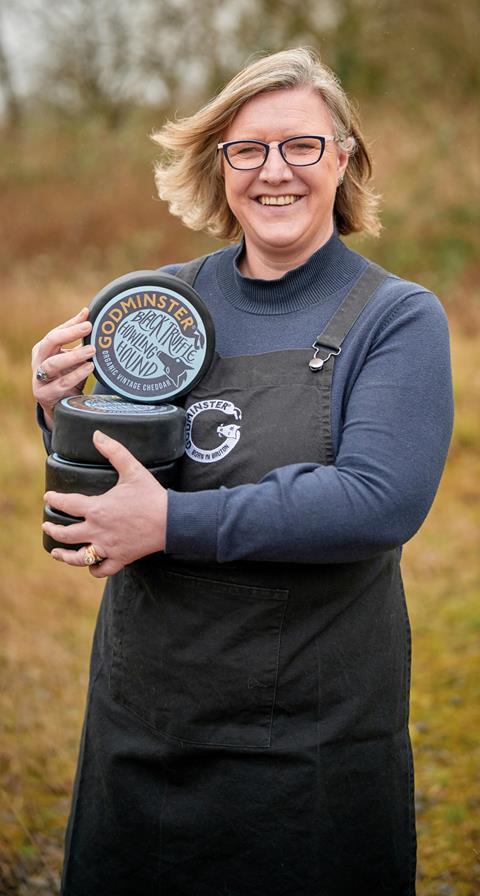
For much of the late 1990s, Charles Baughan spent his time in a lock-up garage, full of passion and vigour, making sausages he truly believed were something unique. Yet for all his enthusiasm, Baughan had not yet established his produce as a notable fixture on Devon’s vibrant food scene.
It was Taste of the West, a regional food group designed to champion local produce, that ultimately gave Baughan the kick-start he needed. At one of the group’s ‘meet the buyer’ events with Sainsbury’s, Baughan landed himself a trial at five local supermarkets and, from there, his Westaway Sausages brand worked its way up to a listing with every supermarket in the south west.
“Taste of the West was what lit the fire and made things happen,” he recalls. “We’ll be indebted to them forever.”
Today, however, such help is often not available to businesses like Baughan’s. Across the country, regional food groups are folding under the pressures of inadequate funding and dwindling membership. Taste of the West was the latest, collapsing into administration last year with debts of more than £400k.
It’s a huge concern across Britain’s artisanal food scene, whose members widely credit the groups for helping create today’s flourishing sector. “There’s no doubt the current good health of our artisanal, local food and drink scene can be attributed in part to the seed funding and nurturing that those funds allowed,” says John Farrand, MD of the Guild of Fine Food.
From the embers, however, small signs of a turnaround may be emerging. Taste of the West has resurfaced under new leadership – led by Baughan himself – while other groups are reinventing themselves to be nimbler and more self-reliant in the modern world.
And with the UK’s new prime minister putting localism as one of his top priorities, there are hopes regional food groups could be ready-made tools for delivering the exact sort of decentralised growth agenda Andy Burnham is keen to enact.
The golden years
The late 1990s and early 2000s are commonly seen as the golden age for regional food groups. The idea initially took hold in Wales after Ron Davies, who was then secretary of state for Wales, recognised domestic produce held little broad recognition beyond lamb. He set up the Food Directorate in 1998 to champion local goods like Caerphilly cheese, Glamorgan sausage and Welsh rarebit.
In the wake of the foot and mouth crisis in 2001, the concept spread across the UK. Some small regional food groups already existed but they were brought under the wing of central government, which gave Food From Britain, an agency set up to boost exports in the early 1980s, an extra £3m and a whole new remit to support the regional food industry both at home and abroad.
The funding helped run ‘meet the buyer’ events, and trade and consumer shows, plus partnerships between producers, restaurants and retailers across each group’s designated region.
For small food businesses struggling to find a foothold, these often proved transformational. While strong at food production, many were less skilled in finding a route to market. This was where regional food groups could leverage their influence to best effect.
In doing so, they helped transform Britain’s food reputation from soggy chips and overcooked meats to high-end specialty produce like Scotland’s salmon and whisky, Cornwall’s seafood and ice cream, and Kent’s fruit and wine.
Charlotte Lawson, a director of Food From Britain, told The Guardian in 2005 about the previous year’s Salone del Gusto festival, one of the most prestigious food festivals in the world, where British food producers had recently become the stars of the show.
“We were the second-largest presence and there was tremendous press interest – the Italians were absolutely fascinated,” she said. “The old perceptions of Britain being a place with uninteresting and unpalatable food really have disappeared.”
Just around this time, however, regional food groups were beginning to falter. While some areas were clearly putting plentiful government support to good use, others were seemingly unable to adapt to the changing times as funding became tight and a more commercial outlook was needed.
“There was some frivolous spending,” says Farrand. “Some would suggest those funds were wasted.”
It wasn’t long before Whitehall caught on and, in March 2009, funding for Food From Britain and its regional food groups was withdrawn. Hilary Benn, then Defra secretary, recognised the groups needed the money but said they were a “lower priority” than dealing with animal diseases, scientific research and payments to farmers.
As Benn seemingly foresaw, without this funding regional food groups quickly fell into decline, with many unable to exist on membership fees alone. The groups in more populous regions like the south west and Yorkshire survived, yet almost universally their role in championing produce was curtailed.
“Not all the regional food groups were doing well, let’s be honest. And I don’t think the format has stood the test of time. But not replacing it with something better was not really the answer,” says Ruth Huxley, founder of Cornwall Food & Drink.
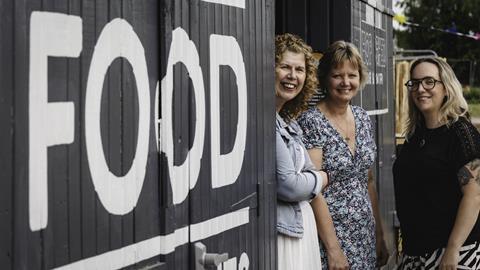
Huxley argues food groups need a new framing, with genuinely robust targets and monitoring from Westminster. But she laments the decision of successive governments to deprioritise the food sector as less exciting and productive than other manufacturing industries.
“The fact our food industry is the envy of many other countries and responsible for a huge chunk of the nation’s jobs – oh, and feeding people – seems to have got lost along the way,” she says.
Reinvention and independence
Today, after years spent fighting to survive without government funding, some food groups are finally finding themselves on firmer footing. The key difference is that without central direction to bring cohesion and an overarching strategy, a scattergun approach has emerged, with no consistent formula for how to bring money in or deliver services out.
This is not entirely a bad thing. Many, including Food Drink Devon and Food and Drink North East, have become independent bodies, operating outside public sector control with membership fees and sponsorship the biggest income drivers. A few operate as part of a council, but it’s rare.
The big plus side is that without government oversight, each group has been forced to reinvent itself and, in many cases, ended up providing a more specialised service tailored to the unique needs of their local region – whether that’s rural and artisan or industrial and manufacturing.
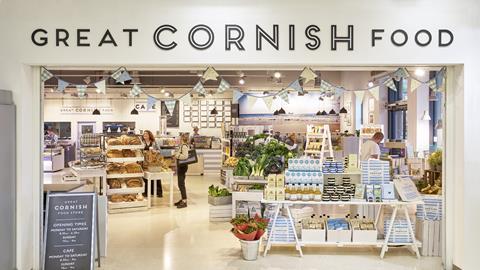
For example, in Cornwall – very much in the rural-artisanal camp – Huxley set up a specialist store as a hub for the best Cornish produce. It sells about 2,500 lines from more than 200 local suppliers and, uniquely, shares its premises with a Waitrose, allowing shoppers to move between stores with just one trolley.
Huxley estimates the store has contributed about £70m to the local economy and proved an invaluable way to support and champion local food and drink. “The Great Cornish Food Store is the reason I’m in business,” Penny Williams, founder of Helston-based Penny’s Pies, told local press back in June. “[It’s] been consistently my best customer over the past 10 years.”
Somewhere like Kent, by contrast, which is dominated by large-scale fruit production, is taking a different tact. Its regional food group, Produced in Kent, recently started a pilot to understand what barriers prevent regional food producers supplying into the big supermarkets, hoping this will enable more businesses to expand to a national level.
“We wanted to know what good would look like from a willing producer-supplier, as opposed to looking at it, as everyone does, in terms of willing procurers,” explains executive chair Carol Ford. “It’s not about changing everything. We’ve got the system we’ve got. It’s about turning the lens and understanding what people need to get involved.”
Projects like these are giving some regional food groups a renewed purpose and vitality, reaffirming them as important players on the local food scene.
The big difficulty, though, is trying to make an impact on a shoestring budget. After Taste of the West went bankrupt, it was revived by Baughan and “a consortium of people who care” – but without the sort of money required to fund such an organisation. This reincarnation is “a very tight ship”, Baughan explains, volunteer-run and without any overheads like offices. “There are no coffee machines,” he adds.
Still, with almost a dozen voluntary experts at the helm, Baughan explains that Taste of the West still offers round-the-clock help to small businesses potentially mystified by things like exporting to Europe, new packaging rules or food safety precautions. This comes in addition to having a presence at food shows, putting on events and awards ceremonies, and more.
“We’re pretty unique in that we offer a 24/7 helpline and act as a primary authority,” he says. “We’ve got 11 managers that represent a wide range of skills and knowledge, so if we don’t know the answer to something, we probably know somebody that does.”
And while it’d be easy to bemoan a state of affairs that leaves valuable commercial organisations reliant on volunteers to stay afloat, Baughan takes a more nuanced approach. “We can’t go cap in hand to government the whole time. If we do, we get a crutch and that crutch can be kicked away just as easily as it’s given.”
The innovation of some groups is enabling them to survive even without external support, but the likes of Taste of the West and Produced in Kent are the exception rather than the rule. Many others – including West Midlands-based Heart of England Fine Foods as well as Food From Fife – have already gone bust, while many more are teetering dangerously close to the edge.
Food and tourism: a perfect pairing
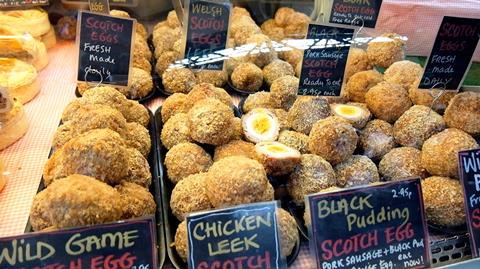
The trail starts in London, through the crowded stalls of Borough Market, on to the Bermondsey beer mile and closing out in an old-school pie and mash shop.
It then moves north, first to the Peak District to try a traditional bakewell pudding, and then onto Yorkshire where a crumbly wensleydale is washed down with a few local bitters. It ends in Scotland, on the whisky trail and in search of haggis.
It’s not too hard to construct a food trail that traverses Britain that could attract people from all over the world. For that reason, a closer link between food and tourism is one many in the industry are keen to exploit.
Food and drink can undoubtedly drive regional tourism in a way few industries are able to. It can, and already is, helping lure people both to major cities like London and Edinburgh, as well as regions where tourism is not ordinarily strong. In places that are already reliant on tourism for much of their income, it can also help fuel visits outside conventional times.
But at present Britain is arguably not making the most of what it’s got. Unlike in France or the US, there is no policy or strategy driving food tourism. It is simply left to small regional food groups to do the best they can.
When there is some semblance of food and tourism working hand in hand, the existing regional food groups are often at the heart of it, having linked up with neighbouring tourist organisations to promote local produce.
The problem is that many tourism groups are also under the familiar strain of lack of funding, with several now going to the wall.
But supporters say money need not be an obstacle. “None of this needs heavy subsidy,” says food consultant Rob Kidd. “Rates relief for visitor centres on production sites, planning rules that don’t treat a factory shop as an afterthought, food trails built into tourism marketing the way Scotland does whisky. It’s really about co-ordination more than spend.”
The Irish example
Even for those still going, there are common concerns that without the return of government funding, they’re not sustainable for the long term. Many consist of just one person – with looming concerns over succession. In groups overwhelmingly reliant on volunteers, that concern is even greater.
One common suggestion – including from members of the UK’s Food Strategy Advisory Board – is to try and carry on promoting British food and drink through an equivalent of Ireland’s Bord Bia, a national body charged with taking Irish food and drink to the world.
Like Food From Britain 20 years ago, Bord Bia has transformed Ireland’s food reputation to great benefit for domestic producers. In the UK, some industry figures now want their governments to do the same, arguing it could not only fuel the growth of food businesses but also help simplify the plethora of organisations directing food policy and come up with more clearly defined goals and objectives.
How exactly this is structured, however, would be controversial. Bord Bia is directed by boards for key industry sectors such as meat and dairy, rather than by geography, and it’s these that drive policy and standards for producers across the whole country.
According to some regional food groups, this approach would lose something. Rachel Mallows of Northamptonshire Food and Drink says localised groups allow tailored promotion of regional businesses in a way a national organisation would find difficult.
Furthermore, many small businesses are not interested in the type of grand international expansion that might be supported by a British Bord Bia; they simply want to put down deep roots and better serve their local community.
“Many of our smaller businesses aren’t looking to sell nationally,” Mallows says. “It doesn’t always follow that you start small and then want to be a large business that sells into supermarkets.”
Mallows and others hope their voices will ring a little louder with No 10’s latest inhabitant showing a clear penchant for localism and decentralising power away from Westminster and into regional centres.
One compromise is a national strategy that pumps money into regional groups in return for conscription to a guiding principle and accountability to hit certain targets. But with budgets tight, if money is to go into food promotion it’s likely the groups involved will need to demonstrate some level of economic return.
That seems entirely doable. Food and drink makes up close to a fifth of the UK’s total manufacturing sector. It’s home to half a million jobs and 12,000 businesses. And crucially, it often constitutes the last major employer in many regions of the country. Tying their mission into a national priority could therefore be regional food groups’ best way forward in 2026 and beyond – making the argument that Britain’s economic growth will not just come from cars and aerospace but the factories of Kettering, the distilleries of Cumbria and the creameries of Somerset. These businesses could really do with a champion, whatever form it takes.




No comments yet