




A British Nutrition Foundation report sets out a blueprint for action on obesity, urging retailers and suppliers to take the lead
The government sparked uproar from the food industry last week over calls from No 10 for supermarkets to cap the price of food, amid fears of an inflation crisis caused by the conflict in the Middle East.
But a new report urges the sector to cut prices for another cause – tackling the nation’s obesity crisis – rather than wait for scientists to come up with a battle plan.
The landmark report, by the British Nutrition Foundation (BNF), set out what it called the “first ever” blueprint for action on obesity, based on evidence-led interventions.
With a bucketload of more scientific research coming down the track on ultra-processed foods (UPFs), and a revolution in obesity drug treatments underway, can the food industry really carve out its own agenda, and do retailers and suppliers have the appetite?
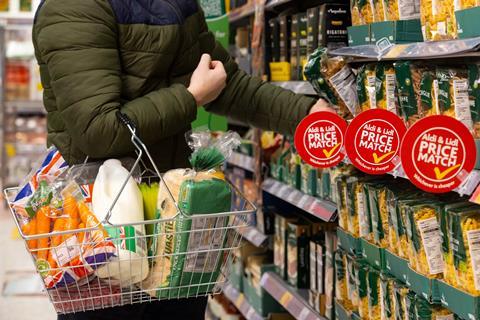
As The Grocer revealed last week, the BNF’s 30-page report, ‘Beyond Ultra-Processed Foods: A Review of Evidence-Based Interventions for the UK Food Environment’, is calling for a structural shift towards healthier everyday low pricing (or HELP, as it should be called).
The report claims moves such as the clampdown on promotions for products high in fat, sugar or salt, which banned displays in prominent locations such as aisle ends in 2022 and was tightened last year to rule out multibuys, have not gone far enough.
The BNF cites University of Leeds research last year, backed by the IGD, which found the clampdown resulted in a 0.63% reduction in HFSS sales, albeit meaning two million fewer junk food items sold every day.
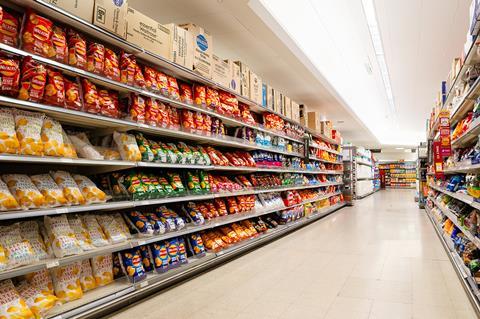
The industry, argues the BNF, has failed to effectively fill the void left by banned HFSS promotions on aisle ends, with the space instead dominated by promotions of products such as alcohol and baked goods, which are out of scope.
The BNF blueprint for action
Everyday low prices: Prioritise low prices on healthy products, including placement, availability and reformulation.
Mandatory reporting and front of pack labelling: Report on healthy sales and reformulation and implement front of pack nutrition labelling.
Make healthy affordable: Implement price parity for staples such as wholegrain bread, pasta and rice.
Portion control: Normalise 5%-10% downsizing across less healthy categories without penalising value-sensitive consumers.
Leverage digital platforms: Bake in healthy defaults and prominent positioning online and ensure mobile offerings optimise health nudges.
Whole setting approach: Industry to help promote healthy eating in schools, universities, and workplaces.
Evaluation: Create an evidence base for what works and what doesn’t through trials.
Source: BNF ‘Beyond Ultra-Processed Foods: A Review of Evidence-Based Interventions for the UK Food Environment’
What promotions there have been of healthier products, such as fresh fruit, have been patchy and delivered only “short-lived” spikes in sales.
Given the body’s research has been funded by prominent food companies such as Tesco, Coca-Cola, Associated British Foods, Co-op and Danone, it is damning stuff, though the BNF stresses its findings are independent.
Among key recommendations, the report says the industry needs to “use structural levers first” to reset the price of healthier food, rather than temporary promotions.
It means prioritising everyday low pricing of healthier products, so that “make heathy affordable” becomes a routine practice. The BNF points to wholegrain versions of pasta, bread and rice regularly being more expensive than their non-wholegrain equivalents as examples of how this principle is not currently applied.
Missed opportunities
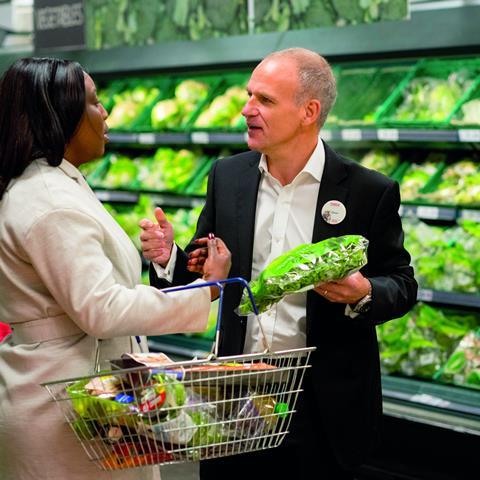
For some, the call may underline missed opportunities such as former Tesco chief Dave Lewis’s 2018 call for suppliers to do more to make healthier products cheaper. Backed by Tesco’s powerful health charity partners, Lewis accused suppliers of keeping the price of some products artificially high, and asked: “Are they really being consistent over their own social responsibility and health commitments if there is a price difference when we know that is a barrier?”
The BNF’s scientists argue that, despite the government’s moves since then on promotions and advertising restrictions, and hundreds of millions spent on reformulation, the industry has shied away from that necessary fundamental shift to make healthier diets the most affordable.
BNF CEO Elaine Hindal warns that amid economic challenges and debates over possible government regulation and UPF, the vacuum that has been allowed to develop is all the more damaging.
While research on UPFs continues to grow, action is needed now, from grocers, manufacturers and, importantly, the out-of-home sector, she says.
“The purpose of coming up with this blueprint is to move beyond polarised debates about UPFs and to look at what we can do now to improve the nation’s diet,” Hindal says.
“We are scientists at heart but the danger is we wait for all the science to tell us all the answers until we do anything.
“When it comes to the obesity crisis we really can’t wait. We have enough evidence that UPFs displace healthier foods and we have all the evidence we need about what is healthy.
“We also have a lot of evidence-based science about what interventions actually work.
“What we really need now is a partnership between industry and government. We need collaboration and we need data.”
Much depends on how the food industry reacts to the call, but it could be more persuasive coming from the BNF rather than the usual-suspect health campaign groups.
The BNF portrays itself as the “bridge between nutrition science, government and industry”. It has been heavily involved in other major public health programmes such as the EatWell Plate, as well as the industry’s shift towards support for mandatory healthier food sales reporting.
But anyone hoping for an overnight shift to healthy EDLP could be in for disappointment given the backdrop of political and economic upheaval.
Why wait?
A senior food industry source welcomes elements of the report and agrees there are opportunities for the industry and the government to act without waiting for a consensus on UPFs.
The source says supermarkets could rally more behind schemes like Healthy Start, which offers top-up vouchers to expectant mothers and those with children under four.
But on the question of retailers and suppliers embarking on a wholesale process to make healthy food cheaper, the source points to massive regulatory challenges facing the industry, including the EU SPS realignment, and suggests any such move is highly unlikely.

As for the government, after the departure of health secretary Wes Streeting, its obesity strategy is in limbo amid a fierce debate on whether to push ahead with an updated nutrient profiling model or shelve the plans to cushion the threat of looming food inflation. Similarly, we are yet to see any sign of the government’s food strategy, the first firm policies of which were due to have been announced by spring this year.
“A comprehensive food strategy is off the table and it’s hard to see when it will be coming back in a meaningful way,” a leading retail source claims.
It is understood the strategy, when it does emerge from the shadows, will include a series of “hyper-local” interventions, with money injected by the government into the nation’s most deprived towns to work with the food industry on initiatives.
But the plan for local interventions already faces criticism, with sources claiming the government has no plans to tell authorities how to spend the money or to carry out evidence-based reviews of whether interventions prove effective.
In contrast, a key demand of the BNF blueprint is that all new health trials must be evaluated by scientists to see if they actually get the desired results.
Meanwhile, the original food strategy is now fast approaching its fifth anniversary and author Henry Dimbleby, once the man working with industry leaders on his own blueprint to fix the “broken food cycle”, clearly believes the horse has bolted.
Delivering a keynote speech for the BNF, Dimbleby declared major changes in diet were now much more likely to be driven by the huge uptake of weight-loss drugs than industry action or regulation. As for consumers, argues Dimbleby, they will get their health ideas from Al chatbots and Google, rather than look to pack labelling or promotions.
To find out more about the Health Summit and book your ticket, visit the event website here.






No comments yet