


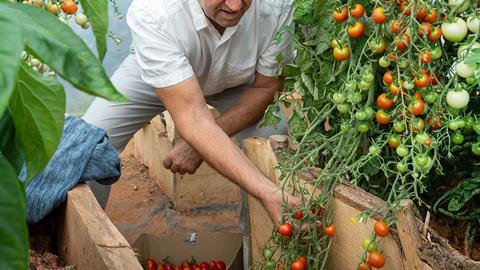
Organic is on a high, buoyed by soaring sales and interest – but challenges remain. We spotlight five producers who believe the best is yet to come
Organic September is upon us. So it was no surprise to see a number of fmcg’s biggest hitters come out swinging for organic produce this month. Sainsbury’s proudly announced it was rolling out half-price Nectar deals on organic produce from 10 to 13 September. M&S went even further, lowering the price of more than 50 organic products to make them “more accessible”, as part of a £4m investment into lower prices across everyday food items.
These and other commitments are undoubtedly welcome boosts for the sector, which was already on a high after organic sales outpaced the rest of the market by 400% in 2025, according to the Soil Association Certification’s Organic Market Report.
Volume sales of organic grew by 1.2% last year compared with just 0.3% for non-organic. That means the market is now worth £3.9bn, having doubled in the past decade. And that’s not the only reason to be positive about the outlook for organic food and drink, according to Alex Cullen, commercial and marketing director at Soil Association Certification.
“The good news is for the first time since 2002, an Organic Action Plan for England is imminent,” she says. “The targets set out in the last Organic Action Plan, which was also under a Labour government, led to a peak in organic farmland in England in 2008. A co-ordinated approach to growing organic production in the UK will unlock new market opportunities for British farmers and boost the resilience of the UK’s food production against ongoing climate shocks.”
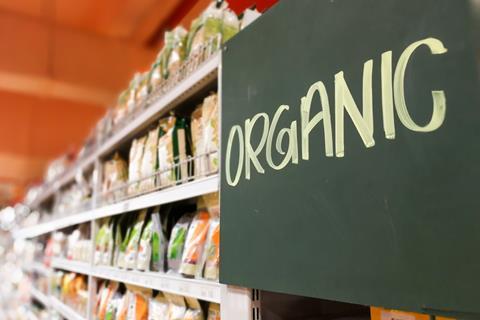
Organic stalwart Karen O’Flaherty has been in the organic food and drink space for more than 20 years, and the co-founder of Pip Organic is also bullish, having observed much positive change.
“Consumers are beginning to understand the value of organic and the impact their purchasing decisions can have on the future of food – and their bodies,” she says. “As a result, more people are making small, everyday swaps to organic products, which is helping drive awareness and demand across the industry.”
However, even as consumers embrace the benefits of organic food, one long-standing challenge remains: labelling. A recent Soil Association Certification survey found that fewer than half (44%) of British consumers trust the information on food labels.
Although the organic logo is better respected than most, with 51% of respondents saying it would make them trust a product more, organic brands are still fighting against a wealth of misinformation and dubious health claims, according to Noel McDonald, founder of Biona.
“There’s still a fair amount of confusion around what constitutes a natural, non-UPF product versus an organic product,” he says. “The word ‘natural’ lacks legal definition, and consumers often don’t understand that it doesn’t require third-party certification or adherence to strict growing protocols, as organic does. However, the overall direction of travel is positive.”
All this means that Organic September is a “really valuable campaign”, he adds, as it “gives brands like Biona a platform to connect with conscious consumers and amplify our mission”.
To mark the occasion, we celebrate five ‘organic heroes’, old and new, who are helping to shape the future of the industry.
Valerio Simonetti
Managing director, Mr Organic
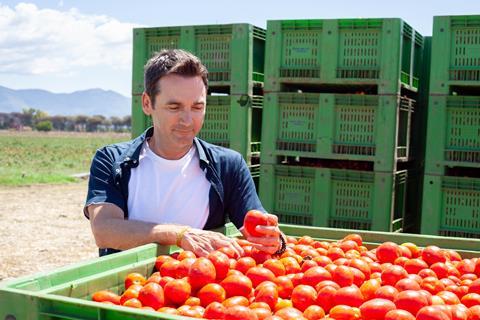
A love of tomatoes runs in the family for Valerio Simonetti, a third-generation tomato farmer who came to believe that “combining organic principles with Italian traditions was the perfect recipe for quality food that respects both our health and the planet”.
Mr Organic started life as a range of tomato products produced on Simonetti’s farm in Pontinia, south of Rome, but it has since expanded to 120 SKUs including pasta sauces, pasta, beans, pesto and much more.
“Combining organic principles with Italian traditions was the perfect recipe for quality food”
“We’ve got so many USPs. We’re fully organic. We’re fully vegan. We’re fully Italian. Some other brands, they know nothing about Italy but call themselves Italian,” Simonetti says in his unmistakably thick accent.
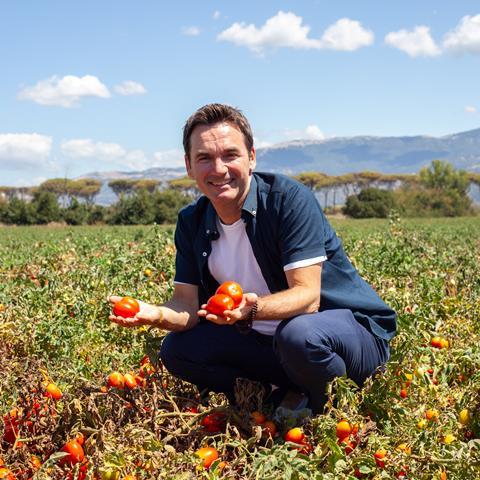
“It’s a third-generation farm, but I decided to convert everything into organic. I believe in the values – for me, it’s a moral commitment to respecting the soil, respecting the ecosystem, and respecting your own body.”
Those morals come at a business cost, though, and Simonetti admits that while things are improving, organic remains “a niche market”. Mr Organic is stocked in Waitrose, Ocado, Abel & Cole, Amazon and many independents, but he thinks “the benefits of organic are not that clear yet, because the value of a product is a mix between price and benefit. So if the price is high, but the benefits are high, then the value is good.”
He cites other countries such as Germany where consumer awareness of organic benefits is much higher, but points out that it requires action from government rather than just organic associations and brands.
“Unfortunately, the process is quicker in other countries, but there’s a saying: ‘health is the new wealth’. People are more aware of their health. So it’s slowly, slowly in the UK, but we see a trend among the young generation with not much drinking, with being healthy. We’ve got hope for the future.”
Alex Smith
Founder, Alara
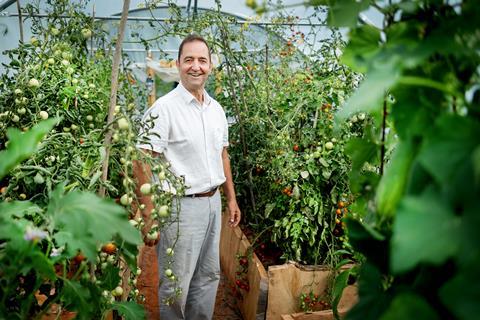
“I’d say our USP is that we’re the most sustainable food manufacturer on Earth,” says Alex Smith, straight-faced, no hint of hyperbole.
He goes on to point out how the two major systems companies use for their sustainability credentials – triple bottom line and ESG – miss out crucial elements. Alara, however, uses four key foundations: environmental, economic, governance, and social.
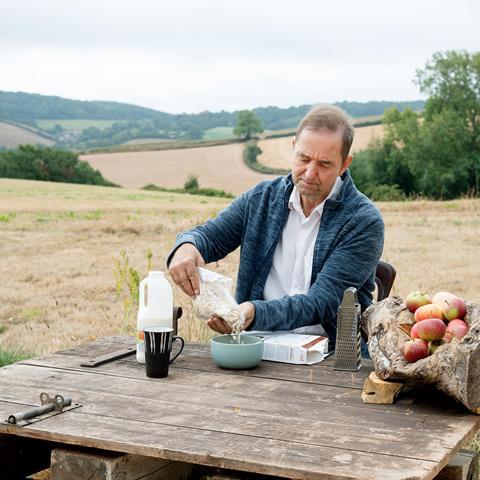
Smith has built this system slowly and carefully, with sustainability firmly at the heart of Alara since he founded the organic cereal company in 1975. Smith was a committed hippie who had just spent a year living without spending any money. But his partner “got a bit fed up” with his penny-pinching ways, and the next day Smith found £2 on the street. He used it to get into New Covent Garden Market, raided the bins for unwanted fruit & veg, squatted in a shop near Euston and started selling the discarded produce.
Alara was born that day, but the business has changed a lot over the years. Supplying brands and own label with muesli, granola and porridge accounts for about 85%; the other 15% is Alara-branded cereals. It now produces about half the UK’s organic muesli. “We’re the longest organic-certified cereal manufacturer in the world,” he says proudly.
“I’d say our USP is that we’re the most sustainable food manufacturer on Earth”
After “eating organic for 50 years now”, Smith espouses organic as “the only food Supply chain that has a global governance system enshrined in law”. However, he feels the odds are stacked against organic brands by typical supermarket practices.
“The most difficult thing is the fact supermarket buyers are bonused in terms of how much money their fixture brings into the company. There’s nothing to do with quality of food, sustainability or ethics. Nothing other than how much money that fixture brings in. I suppose I believe there are other values that should be applied to food supply chains.”
Jodie Pell
Co-founder, Junk
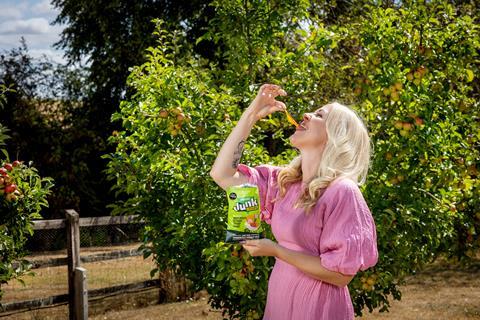
Jodie Pell and her co-founder Kamal Chauhan started Junk vegetable crisps due to their “frustration” with the snack aisle. “You either get products that are joyless and healthy, or you get the naughty and nice. But that doesn’t necessarily reflect how people want to eat.”
The brand only launched in April 2025 at the Farm Shop & Deli Show, where its mixed vegetable crisp won a gold award. Junk’s four-strong range is made from sustainably farmed or ‘wonky’ organic veg and is currently stocked in 300 independents, and recently won listings with Brakes and Sysco.
“In the snack aisle you either get products that are joyless and healthy, or you get the naughty and nice”
“More people are looking at the back of pack these days,” says Pell. “They want to know what they’re putting into their bodies, and they care more about sustainability credentials. There’s hardly any organic crisps on the market, and we use surplus and wonky veg, so we have some unique selling points. We wanted to create a delicious, lip-smacking crisp that has better-for-you credentials.”
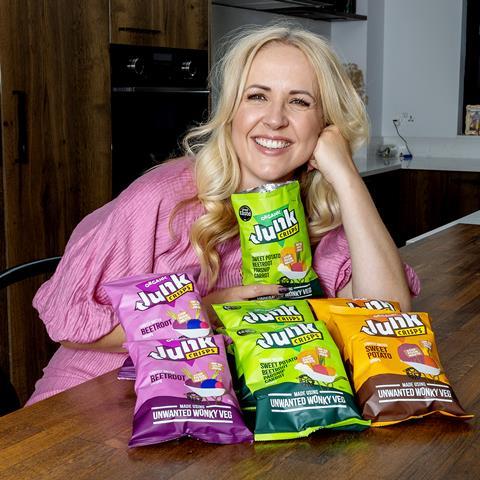
Those credentials stem largely from the brand’s innovative vacuum-frying technique. “It’s like a huge air fryer, you could say,” explains Pell. “It means the vegetables are cooked at a lower temperature, so they retain more of the nutrients and vibrancy, and they’re 20% less fat too. Veg crisps can be a bit oily, a bit soft or sometimes taste overcooked because all the veg has to cook at different temperatures. But we hear time and again that you can actually taste the vegetable in Junk. The organic produce plays a big part.”
The choice to make Junk organic does mean ingredients are more expensive, admits Essex born-and-bred Pell, who previously worked as a chartered accountant. But she hopes the brand will help organic “feel relevant and modern, because it can be a bit stuffy”.
“We’re not trying to be preachy. I’m no Greta Thunberg. We’re just trying to be that tiny bit better for you and for the environment.”
Axel & Sophie Steenberg
Founders, Steenbergs
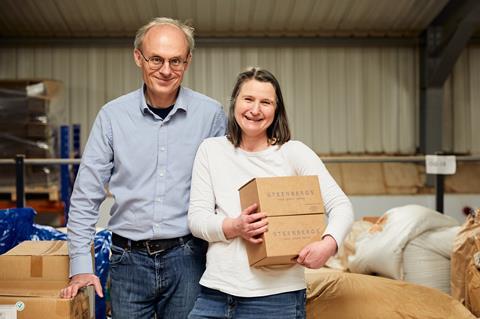
The husband-and-wife team behind Steenbergs recently carried out an audit to ascertain just how many organic spices they have in their huge range. It came out at about 300 – a number that’s grown steadily since Axel and Sophie Steenberg founded the business 23 years ago.
“We haven’t done much travelling since we were younger, but what we realised was that if you go into a supermarket there’s 30 to 40 spices tops,” says Axel. “But if you go somewhere like Indonesia, there’s a whole bunch of other spices that nobody has. So our USP was: You’ve got the core range, and that’s obviously where the volume is, but there’s many other things you won’t get on the high street that people do want to cook with.”
“The biggest issue for organic is convincing the marketplace that the product is better”
As such, Steenbergs’ organic spices are largely found in “the bigger farm shops like Darts Farm” near Exeter, according to Sophie, as well as the likes of Whole Foods Market, Abel & Cole, Bayley & Sage and Fenwick.
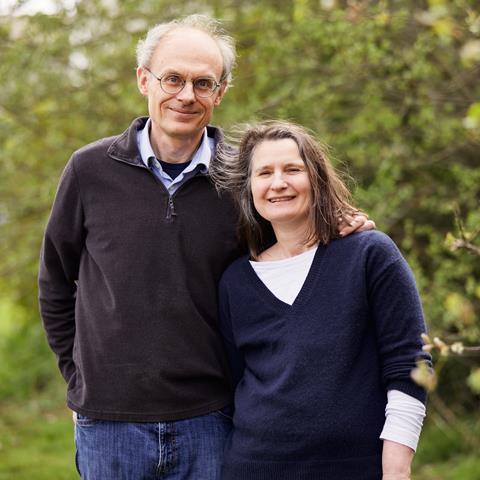
There are two key difficulties with being an organic spice company in the UK, according to Axel. The first is the impression from consumers that spices are usually organic anyway, “which is just rubbish”, he says. And the second, which is “probably the biggest issue for organic generally”, is convincing the marketplace that the product is better.
“A classic example is we supplied a mixed spice to a mincemeat producer who had real problems trying to figure out why our product didn’t work. Eventually they realised they needed to reduce the amount of our spice because the flavour was much stronger than the previous one. You’ve just got to keep badgering away. People do eventually believe you.
“It’s a thing that’s coming through generationally. People are becoming more aware of the planet and organic has become more mainstream than when we started. We have much hope in today’s youth.”
Clare Marriage
Co-founder, Doves Farm
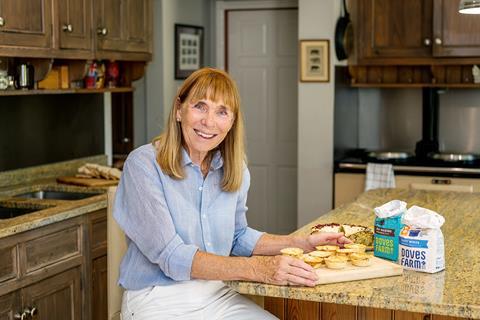
Clare Marriage has seen a few things since she started Doves Farm with her husband Michael in 1977. The brand was driven by the pair’s “passion for growing wheat without chemical inputs”, but to say they were ahead of their time is an understatement.
“We were one of the first organic brands in the UK. People thought it was very unusual. When we tried to explain organic farming, it was a concept people had difficulty grasping, because they were often unaware what was happening on farms,” she says. “It’s great that today many people are beginning to understand and ask questions about farms.”
“A food product is set apart if it’s got an organic label attached to it. It’s kind of a gold standard”
Such consumers have an array of Doves Farm products to choose from, including numerous flours, baking essentials, biscuits and cereals. Marriage laments the relative demise of independent grocers, where Doves Farm started out, but says the brand is also “lucky” to be in demand and stocked by most of the major mults these days.
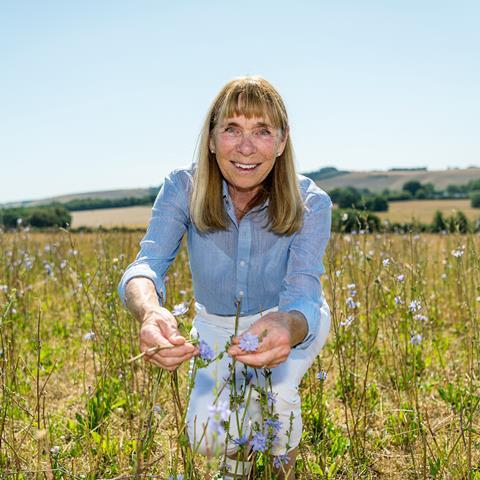
The duo decided to go organic all those years ago after being inspired by Rachel Carson’s ground-breaking 1962 book Silent Spring, which exposed the dangers of chemical pesticides.
“We thought it was possible to grow quality food without pesticides and fertilisers. Some of our neighbours laughed because they could see weeds in our fields. At that time, that was unacceptable. Nowadays, of course, our neighbours really enjoy the biodiversity they can see on our organic farm.”
It’s not just farmers. Marriage is cheered by the fact “more and more consumers are beginning to understand the organic proposition”.
“It’s a proposition which is defined by law, and is the only standard that completely bans artificial pesticides and fertilisers. A food product is set apart if it’s got an organic label attached to it. It’s a kind of gold standard, I think.”


No comments yet