



Powered entirely by renewable energy, Unilever’s new personal and household care site on the Wirral uses the latest robotic tech on a massive scale to ‘futureproof’ the business
The story of Port Sunlight’s upgrade involves a lot of serious numbers. For a start, work on the Unilever household and personal care manufacturing site in Liverpool City Region cost £150m and took six years from initial planning to completion.
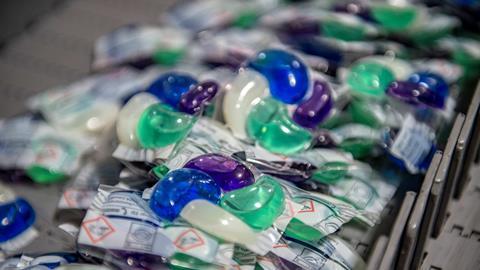
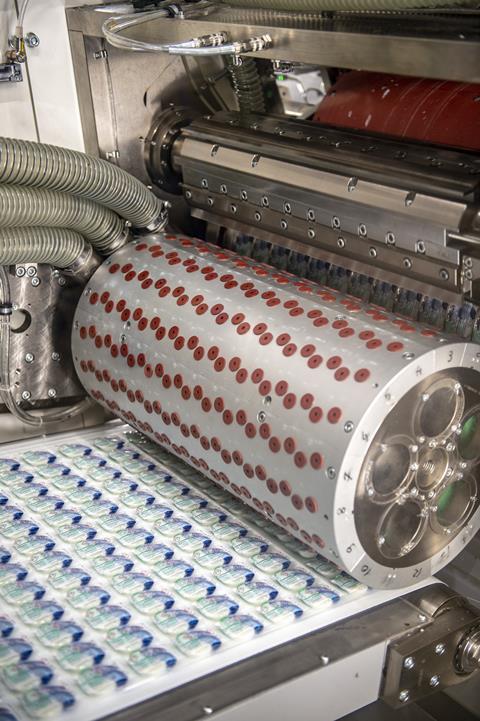
The work has greatly improved the efficiency of five out of 17 manufacturing lines and increased output of laundry capsules threefold – from 660 per minute to about 2,000 – while also saving 827 tonnes of CO2 emissions per year.
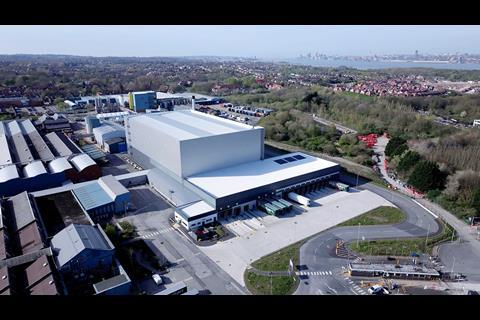
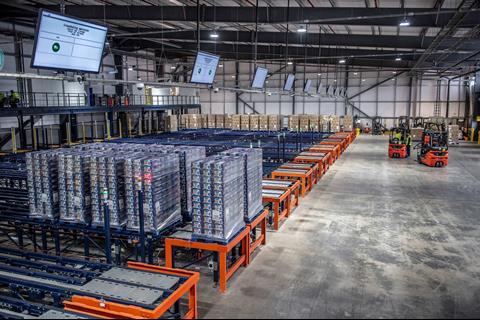
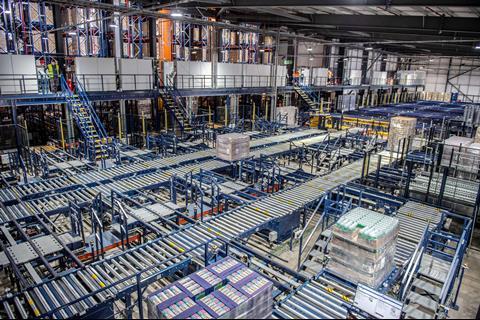
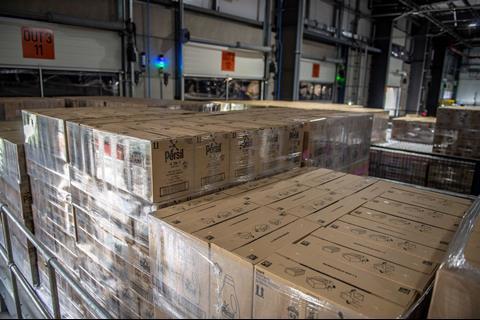
That final achievement is thanks to Port Sunlight’s new automated distribution centre – the headliner of the site’s revamp and the subject of three years’ development and building. Spanning 10,000 sq m, it’s connected to the site’s three factories, reducing primary logistics by 27% as hundreds fewer lorries are required to shuttle products between buildings.
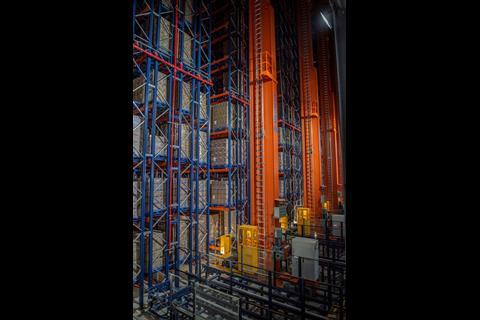
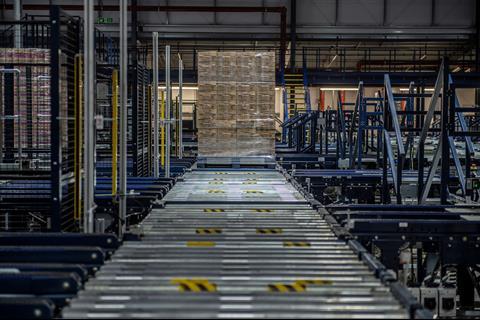
Powered by 100% renewable energy through solar panels, heat pumps and solar reflective painting, the DC features 2,000 metres of automated conveyors. Eight 30m-high stacking cranes handle up to 17,000 pallets each week – equating to 13,600 tonnes of product, or one million units. No human interaction is necessary in any stage of the distribution process – which serves the UK, France and Benelux with brands including Persil, Cif, Tresemmé, Domestos, Skip and Robijn.
Observed from the building’s walkways, the imposing cranes rapidly glide back and forth among the 20,000 pallet spaces with remarkably little sound and astonishing efficiency.
The state-of-the-art DC was built in a modular fashion to easily allow expansion. It marks a “once-in-a-lifetime level of change”, says factory director Madeleine McLeod. “We’ve done a lot on improving the technology to be leaner, more digital and more efficient.”
Not that the centre hasn’t presented challenges. For one, its robotic sensors frequently have to be reset as the new building settles. For another, the digging of the foundations was halted briefly in May 2024 when an unexploded Second World War bomb was discovered. Port Sunlight was evacuated as an army explosive ordnance disposal team was called in.
A storied history
Port Sunlight has stood on the Wirral Peninsula since 1888. It was the brainchild of Bolton’s William Hesketh Lever, who four years prior had founded the Sunlight soap brand with his brother James D’Arcy Lever.
By 1887, Lever Brothers’ original factory in Warrington was at full capacity, forcing the business to look for larger premises. It initially bought 56 acres of marshy land south of the River Mersey, out of reach of Liverpool Dock & Harbour Authority – meaning no dock or harbour dues were incurred.
On 3 March 1888, work began on a factory and a workers’ village when Elizabeth Lever, wife of William, cut the first sod in a modest opening ceremony.
As Lever Brothers grew, so did Port Sunlight. Today, it covers 500,000 sq m, and employs about 2,000 people – 40% of Unilever’s UK workforce.
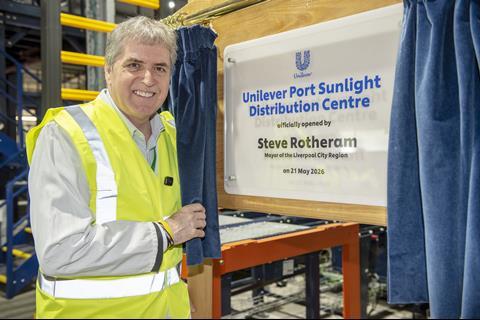
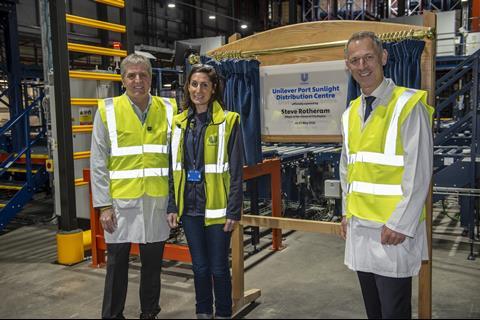
Declared a conservation area in 1978, Port Sunlight boasts 900 Grade II listed buildings, including Gladstone Hall, the first public building to open in the village, and the commanding Lever House with its ornamental stone facade. Its newest building, the automated distribution centre, began operation in March and was officially opened in May by Steve Rotheram, mayor of Liverpool City Region. “This is the latest leg in the very storied history of Unilever,” he said at the time.
That story will run and run, promises Marc Woodward, head of Unilever UK&I. “We’re always looking for ways to grow our business,” he says. The site’s upgrade “futureproofs us and allows us to grow in the sectors that are growing”.
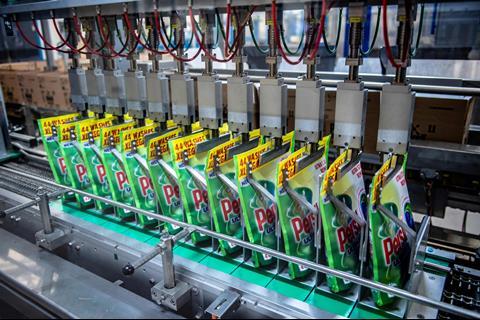
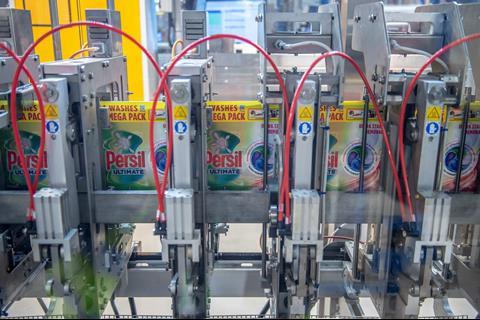
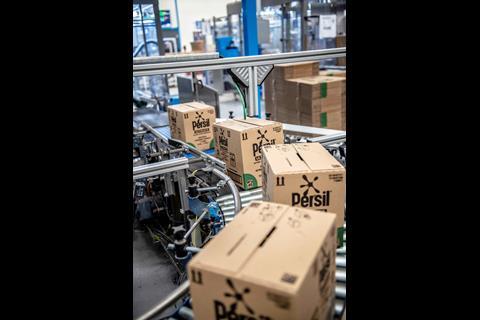
Right now in household and personal care, that means liquids and capsules. “We’ve got new technology keeping up with what consumers want, and we’re able to produce it more efficiently and more quickly,” Woodward says.
Covid taking hold during early planning had no impact on Unilever’s initial ambition. There were no second thoughts, Woodward stresses. “We had strong conviction that this was the right thing to do.”




No comments yet