



The first independent report on the HFSS promo ban is out, and after slamming ‘botched’ plan, its authors want the ban to target all HFSS products
Their damning report has just torn into the implementation of the landmark HFSS promotions ban. Now the two women behind the first independent evaluation of the ban are calling for the Labour government to go further, with proposals that would bring thousands more products into scope.
So what exactly do the proposals entail? And will ministers listen or, faced with a food inflation crisis, will they back down just like the Tories?
‘A force for good’
Last week’s report, led by Professor Michelle Morris of the Nutrition & Lifestyle Analytics team at the University of Leeds and Professor Alexandra Johnstone, lead for nutrition, obesity and disease at the Rowett Institute, Aberdeen, was the result of academics getting unparalleled access to sales figures from top supermarkets, with funding from the IGD. It assessed the effectiveness of the government’s HFSS ban on promotions in prominent locations, which came into force in October 2022.
After ploughing through millions of transactions at Tesco, Morrisons, Sainsbury’s and Asda, the scientists concluded the government’s measures had been a “force for good”, achieving a “significant reduction” to the tune of two million unhealthy product sales a day.
It also slammed the almost non-existent enforcement of the ban by cash-strapped local authorities, which infuriated compliant retailers who had spent millions adapting their stores.
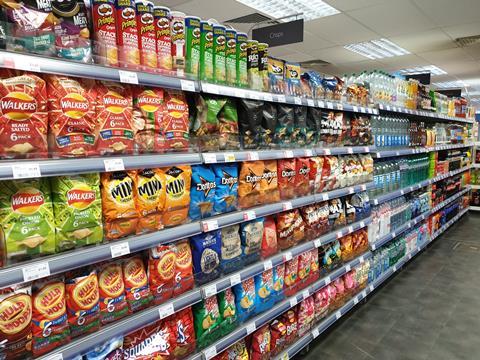
A second phase – a ban on HFSS multibuy and bogof promotions – will come into force in October, even though health secretary Wes Streeting signalled Labour plans to do away with the promotions ban altogether and replace it with “smarter regulation”.
The researchers, however, want ministers to tighten the ban rather than scrap it.
“The main takeaway for me is that this legislation was a force for good – a really positive step towards improving our food environments – but it could have been even better,” Morris tells The Grocer.
“We hope the government will act on our recommendations [see box below]. There is a lot of potential to build on all the good work already done by the DHSC in developing the legislation and retailers implementing it.
“Given the momentum of the NHS 10-year health plan and the new food strategy, I think we can be optimistic.”
Morris also claims there is support from the industry, as demonstrated by the IGD’s major role and the participation of leading supermarkets – giving ministers a mandate to take action. “In our research interviews, retailers told us they would like the government to close the loopholes in the legislation, to level the playing field and avoid discrepancies arising from some retailers following the ‘letter of the law’, versus ‘the spirit of the law’,” she says.
Promotions ban 2.0: the report’s recommendations
- Supermarkets to provide evidence for further HFSS restrictions with duty to openly share results from trials
- Policymakers to work with sector organisations rather than individual companies
- Open, live (or at least quarterly updated) food composition database using nutrient profiling model, with supermarkets and suppliers providing mandatory data
- More resources for enforcement, including adequate training and interactive HFSS mobile tools
- Government approach joined up across 16 departments, making tackling obesity a mission on a par with tobacco or alcohol
- Formal mechanism introduced pre-implementation including public forum to push response to queries
- Legislation mandating the promotion of healthier alternatives in place of banned HFSS promotions.
- The legislation should require prominent in-store and online locations to be used to promote nutritious, affordable food and drinks
Source: School of Food Science & Nutrition, Leeds University
In the 13 categories covered by the legislation, the report found HFSS products went from making up 20% of sales to 19%.
But progress was not equal across retailers. While two, believed to be Tesco and Sainsbury’s, had seen a “significant step-change” reduction in HFSS sales, a third saw no meaningful change in healthier sales. Sales figures from the fourth were discounted after the deadline for submission was missed.
Though some believe the spirit of the law was not applied in some cases, the researchers claim there was also “incredible frustration” among retailers over the insufficient guidance given by the DHSC.
“It was very, very rushed,” the report quotes one retail source as saying. “If you’re going to do a piece of legislation, you need guidelines first and it needs to be absolutely comprehensive and worked through. It just wasn’t.”

Eventually the BRC issued its own guidance on how retailers should comply with the ban. But while some supermarkets had already gone to great lengths to comply, much of it was occupied in effect with circumventing the ban via changes to store layout and square footage, rather than trying to replace unhealthy promotions with healthier products.
Meanwhile, local authority enforcement, which was at first “minimal”, found the report, tailed off completely after a few months, with none of the retailers involved in the study receiving notification of breaches, warnings or fines for non-compliance.
The authors of the study are calling for the ban to be extended, which they claim will make it more effective and less confusing.
“One way of strengthening the legislation, without creating confusion, is to reduce the number of exempt products,” says Morris. That would include in-store bakery products, loose confectionery and pick ‘n’ mix selections.
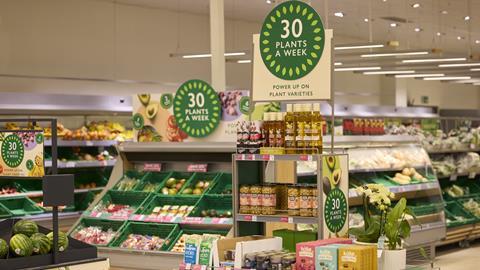
Still more contentious is the proposal that the government brings further legislation to force supermarkets and other retailers to use prominent locations in store, as well as online, to promote “nutritious and affordable” food and drink such as fruit and veg. “In order for all retailers to consistently make healthier food more visible, this needs to mandated in legislation,” says Professor Morris.
Read more:
-
Investors call for Wes Streeting to publish mandatory health targets plan
-
Promo study academics meet government to call for extension of HFSS ban
-
Morrisons’ Christmas chocolate tubs deal angers health campaigners ahead of bogof ban
-
Why the HFSS promotions ban was never going to work
The study points to strong public backing for such a hard line, claiming 90% of shoppers think making healthier foods affordable is just as important as legislating against less healthy food.
“The customers we surveyed were overwhelmingly in favour,” says Morris. “The combination of legislation and customer demand can drive important change.”
Johnstone adds: “The findings from our research are important as they highlight the types of strategies retailers used in response to the legislation.
“One pitfall of the legislation was that it did not specify alternative products to promote in the prime locations.
“Unhealthy foods and alcohol hold a higher profit margin compared to healthier foods. Therefore, retailers are unlikely to promote these healthier products in prime locations or restrict unhealthy products, unless legislation enforces it.
“A key recommendation from our research is for future policy to increase the affordability and accessibility of healthier foods. This could be done through legislation to not only restrict promotion of unhealthy foods but to promote healthier alternative products in their place.”

Asked if she believes supermarkets will continue to support her work, she adds: “My opinion on this is that we have to take steps to introduce regulation to change the food environment to make it easier for healthy and environmentally sustainable food choices, rather than focus on blame/stigma for people living with overweight and obesity.
“Our research reflects the retail food sector’s desire for an ‘even playing field’ where reporting is mandatory for all. We need systems where data can be shared in a secure environment.
“Another important finding from this research is that most shoppers surveyed believed that the affordability of healthy foods was key to making healthy choices and stated they would like to see fruits and vegetables in prominent locations or subject to price promotions.
“Future policy should aim to not only restrict promotion of unhealthy foods but to promote healthier alternative products in their place. “
The academics’ intervention will not stop at this report. Next up, Johnstone is planning to carry out a study on the role of ultra-processed food in obesity, with “emphasis on mechanistic evidence for policy”.
Will industry get spooked?
While the industry has backed the study until now, some of the more radical recommendations have spooked sources, who warn the government risks getting bogged down in years of delays and fighting, at a time when concern over food prices is back at the top of the political agenda.
“It’s fantastic that thanks to the IGD we now have some evidence as to the effectiveness of these measures,” says one retail source. Until now that has been absolutely lacking.
“But for this study to be seen as the basis for a whole raft of further regulation, when retailers have already been subject to huge expense and huge amount of time ensuring they can comply to these moves, is another matter.

“The industry has already spent many millions of pounds and had to cope with an implementation strategy that was chaotic to put it kindly. And this has reduced HFSS sales by two million, but you have to ask, what could the industry have achieved instead if it had been free to use that investment in other ways to improve diets, including reformulation?
“Whilst there is a strong desire within the industry to do the right thing in making diets healthier, this is not about signing up to a whole host of more mandatory regulation and targets which will take many years to introduce and are the opposite of a level playing field.
“And it is all very well talking about retailers providing sales data but some of them are still using excel spreadsheets.”
The health lobby, however, says the report is proof regulation is key to tackling obesity.
“This first independent evaluation confirms that regulation is effective and it delivers fairly,” says Katharine Jenner, director of the Obesity Health Alliance. “The research shows clear reductions in the sale of HFSS products, demonstrating that well-designed policies can support healthier choices.
“The evidence is clear [that] mandatory rules, not relying on voluntary measures or asking individuals to change their behaviour, is the way forward.”
As for Streeting, having already signalled his intention to bring in mandatory reporting and targets, the question of whether he thinks it’s smart to go further with promotions regulation remains moot.






1 Readers' comment