


It could ease pressure on staff, but riders may need convincing
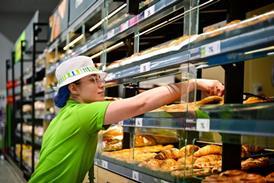
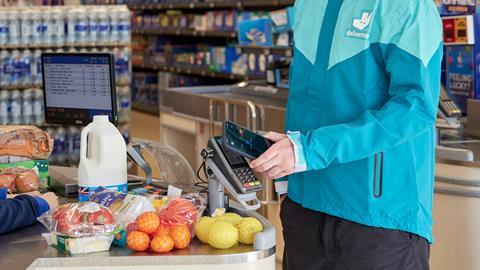
The pilot of Deliveroo’s new model, involving riders picking and packing orders in store, has gone live in eight Aldi stores – with plans to roll out widely across the discounter’s estate early next year.
Aside from being a strategic shift for Aldi, it’s a major step for the aggregator app, once focused only on providing a marketplace and deliveries.
The courier-pick model means retail staff can “focus on keeping stores running smoothly”, Deliveroo says.
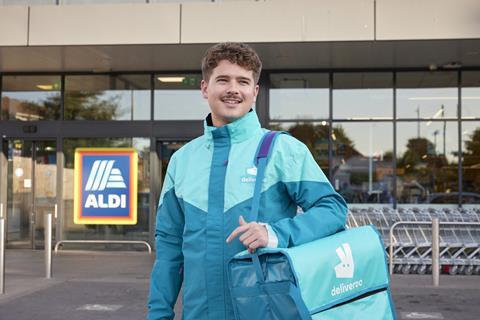
That has obvious attractions for Aldi’s ultra-efficient operation, which its CEO Giles Hurley has extolled.
But there is also potential for the model to appeal to supermarkets with well-established online and quick commerce operations, many of which are feeling the strain as demand in the channel soars.
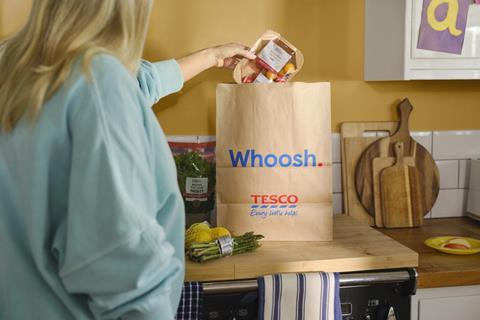
Tesco’s Whoosh service is on track to deliver sales of more than £500m this year. But staff have since complained that the workload has become a “nightmare” that is “genuinely ruining” stores after the supermarket also launched on Uber Eats and Deliveroo over the summer.
Some help from couriers to pick and pack, at least during peak periods, could appeal.
However, it is the same pitch Uber Eats gave in 2024 when its own service was primed for an imminent launch in the UK. It was perfect, it said, for “when there’s spikes [and retailers] want to be able to lean on that flexible workforce”. But it found no partners for the service. And while its rider-picking offer has been made available in the UK this month, it “is not currently active”, it says.
Neither is the model new in practice, having been pioneered at scale by Instacart in the US more than a decade ago. There have been UK iterations too: Tesco partnered with startup Quiqup in 2017 to launch Tesco Now, a one-hour delivery service in central London.
Instacart has not brought the model here, focusing instead on smart carts and software for its UK launch this year. And Tesco’s Quiqup partnership lasted less than a year.
Experts have doubts Deliveroo and Aldi’s partnership will last, let alone the courier-picking model.
“Grocery shops often don’t know what stock they have on the shop floor,” says quick commerce expert Quaid Combstock. “Do you trust your Deliveroo driver to find a substitution? Or will customers be ordering five items and getting two?”

Rider doubts
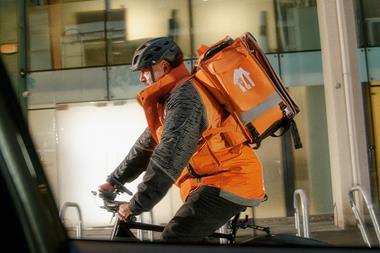
With account renting (where riders rent their accounts to others) reasonably common, “I just don’t see the standard of the couriers working for this”, Combstock adds.
Couriers will need convincing, too. Deliveroo tells The Grocer rider earnings are “calculated based on the size of the order and the estimated time it will take to shop in-store”.
“It also factors in time for queueing, paying and packing the order, along with the delivery time … additional time is also factored in for parking,” a spokesperson adds.
Those earnings – according to several riders The Grocer spoke to who have completed Aldi orders – have limited appeal. As one puts it: “This will drop like a lead balloon.”
“It’s a weird world,” says Combstock, who points out the quick commerce sector has raised $37.5bn in venture capital and private equity investment in the past decade (according to Tracxn analysis) only to revert to the Instacart model with which it started.
“As always, it will be fun to watch quick commerce lose more money,” he concludes.



No comments yet