



The NFU lobbed a perfectly timed hand grenade at the Brazilian meat industry yesterday (5 August).
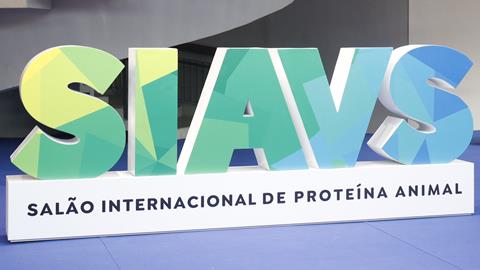
A clarion call from the farming lobby for the UK to ban the import of animal products from the Latin American giant landed right as the full weight of Brazil’s agricultural sector gathered in São Paulo for the latest edition of its massive SIAVS trade fair to showcase the wonders of Brazilian meat.
Whether the statement from NFU president Tom Bradshaw was knowingly issued to coincide with the celebration of all things animal protein in Brazil or not, it was clearly designed to pile the pressure on Defra and the UK government. Bradshaw wants ministers to follow the EU’s lead ahead of a European trading ban due to come into force on 3 September.
But strip away the theatre and the case for a UK bans looks considerably weaker than Bradshaw suggests.
Brazil has a little less than four weeks to regain its status as an approved exporter and satisfy the European bloc’s concerns over the country’s use of antibiotics, particularly when it comes to growth promotion in chicken and beef. It’s a tough ask to demonstrate compliance with the EU rules given a lack of a joined-up surveillance and monitoring system for antimicrobial use in Brazil.
The UK’s thinking
The UK has so far kept its powder dry following the EU decision in May. Defra is conducting an independent, evidenced-based assessment of Brazil’s use of antimicrobials controls and will continue to allow Imports from Brazil after 3 September until it reaches a decision, with no date yet set.
Bradshaw and the NFU decided this week was the right time to make its own move, urging the UK government to “take the same precautionary approach as the EU and ban the import of Brazilian products”.
Given the numbers below, Defra’s refusal to panic looks less like dithering and more like the right call.
Brazil is a major exporter of beef to the EU, sending around 200,000 tonnes a year to the bloc, equivalent to a quarter of European imports. However, this only accounts for about 3.5% of Brazil’s total beef output, with 70% consumed domestically and the biggest proportion of exports going to China. The UK imports relatively small amounts of beef, mainly for use in manufactured products such as burgers and lasagnes.
It’s a similar story in chicken. Around 65% of the 15 million tonnes produced in Brazil stay at home, while 7% are exported to the EU. For the UK, however, Brazilian poultry is more significant than Brazilian beef. The UK was the 14th biggest importer of chicken meat from Brazil last year, taking about 127,000 tonnes.
The export volumes are meaningful but they aren’t large enough to justify the blunt instrument of a ban, especially given what Brazil’s own producers are saying about compliance.
Brazil’s side of the story
Ricardo Santin, president of the Brazilian Association of Animal Protein (ABPA), which looks out for the interests of the pork and poultry sector, told The Grocer he sympathises with the worries of local producers in the UK. “But this is just a lack of information, and I understand the thinking that Brazil needs to obey the same rules the UK farmers obey, but maybe they don’t know we already obey this,” he said.
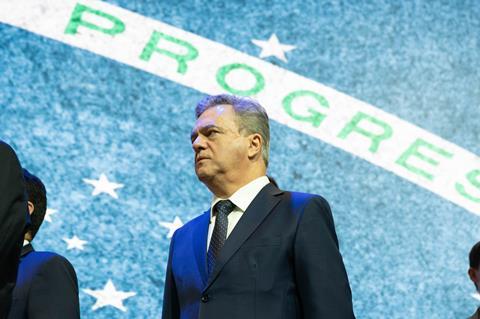
“It’s important to say that the problem between Brazil and the EU is not that we don’t apply the rules for this. We already segregate [keeping animals destined for export to the EU separate from ones for local consumption]. We already don’t use antimicrobials as growth promoters in our production that is exported to UK and EU. The EU is asking for more layers of supervision to just check what we already do.”
Santin was optimistic Brazil would be back on the EU list following a scheduled visit from bloc officials at the end of August.
“I’m hopeful they will bring us back to the list because we fulfil all the rules. Brazil is doing what the EU have asked on another layer of supervision, I hope they understand this,” he added.
Roberto Perosa, president of the Brazilian Beef Exporters Association (ABIEC), bemoaned European protectionism and “diplomatic extortion” while speaking at SIAVS. He also asked the UK to think carefully before mirroring the EU.
He has a point. It reflects the conflicting challenges facing beef producers and chicken farmers. Chickens have a life cycle of around 45 days, making it easier to demonstrate progress on antimicrobial compliance, whereas it takes two years to raise cattle from birth to slaughter.
What happens next
AHDB, the levy board representing UK farmers and growers, reckons if EU access is restricted then some beef products could be diverted to the UK. However, it expects Brazilian exporters to spread sales across a range of alternative markets such as China, the Middle East and south east Asia.
Even so, it warned that the UK’s relatively small import market means even a modest rise in Brazilian imports could add to competitive pressure on domestic producers.
That is a real risk, but we’re unlikely to see a flood entering the UK market.
Rabobank says Brazil will likely try to sell bigger volumes of poultry in the UK, Mexico, the Middle East and some Asian markets, but with significant price concessions. This is something Santin disputes: he claims there are no plans for prices to be lowered.
There is no doubt Brazil has been given a rough ride by the EU, fairly or unfairly depending on your point of view. It has had to contend with deforestation legislation and a temporary trade suspension following last year’s isolated avian flu outbreak. The decision to impose the upcoming ban also came less than two weeks after new EU tariff quotas linked to the landmark Mercosur free trade deal for Argentina, Brazil, Paraguay and Uruguay came into force.
Bradshaw’s fight will play well in the farming press, but whether it should lead to a change in UK policy is another matter. The evidence so far doesn’t suggest so.
Nevertheless, time is now running out for Brazil to avoid the European restrictions. If the ban goes ahead, it will become politically difficult for the UK to maintain the current trading stance in opposition to its European neighbours. And now the NFU has made its position clear, the noise will only grow louder from here on out.





No comments yet