




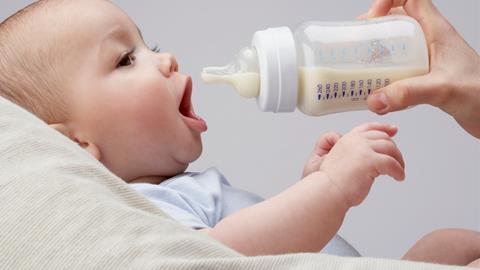
Danone’s PR team must be working overtime. In addition to handling the fallout of its recent recall of various Aptamil and Cow & Gate formula products, the French multinational must now answer for a swathe of price increases across the portfolio.
As reported by The Grocer, the pre-promotional prices of 132 Danone SKUs available in the traditional big four have increased in price by as much as 45% since the start of 2026.
While Danone has stressed retailers were informed about the price increases last year (ahead of the recalls), the timing of them trickling through to supermarket shelves couldn’t be worse.
Frustrated families
Last month, the UK Health Security Agency confirmed it had been made aware of 36 cases of children developing symptoms consistent with cereulide toxin poisoning after consuming baby formula from recalled batches. Meanwhile, the French health authorities are aware of three reports of infant deaths relating to children who had consumed formula products impacted by the recalls.
To date, no causal link has been scientifically established between the contaminated formulas and infant deaths. But even before cases of illnesses were confirmed, Danone’s share price had plummeted. In early February, frustrated parents complained they were struggling to find their preferred formula. “I’ve just been to a local Asda and can’t find any Cow & Gate,” one shopper posted to X. Another posted: “We went into six shops yesterday just to find Aptamil for the little one.”
While availability of baby formula across the big four improved quickly, from 71.6% products on shelf on 11 February to 84.8% available on 16 February [Assosia], out-of-stocks clearly caused distress and confusion for parents.
“We weren’t planning to move little one onto stage 2 milk but we might have to,” one parent posted to X. Their experience wasn’t unique, according to First Steps Nutrition Trust (FSNT). It says the parent of a six-month-old baby sought their advice on whether to buy stage 2 (follow-on) formula or change brands after struggling to find their usual choice.
According to NHS advice, stage 1 or first infant formula is the only formula a bottle-fed baby needs unless a midwife, health visitor or GP suggests otherwise. However, there is still clearly confusion among parents, more than a year after the CMA recommended parents were informed about the nutritional sufficiency of stage 1 infant formula.
Affordable formula
Furthermore, FSNT points out that most stage 1 infant formulas available in a standard 800g pack cost more than the weekly NHS Healthy Start allowance for families on low incomes (£8.50 for babies under one) – even after the CMA’s investigation into pricing.
In the big four, only one 800g product – Bonya First Infant Milk – comes in under budget. It is £7.50 in Morrisons, and £8.45 in Tesco and Sainsbury’s. Parents can get a better deal if they’re able to shop around; Aldi’s Mamia and Lidl’s Lupilu first infant milks are the most affordable, at £6.99 for 800g. However, Danone and Nestlé’s infant formulas have an 85% market share, and none of their 800g packs are priced under £8.50 – so affordable options remain limited.
“Many low-income families who use formula to feed their babies simply cannot afford it and the struggle to feed their babies is damaging the wellbeing of mothers and babies,” says Vicky Sibson, director at First Steps Nutrition Trust.
“Last year’s watchdog investigation into the formula market revealed huge profit margins for manufacturers and sizeable profits for retailers. Businesses continue to protect their profits and in doing so they will be harming families.”
Even for families that can afford to buy Aptamil or Cow & Gate, the combination of high-profile recalls and price hikes risk seriously eroding brand trust. Parents ultimately want what’s best for their baby, and Danone’s contaminated formula recalls have demonstrated their products do not necessarily come at a premium.


No comments yet