



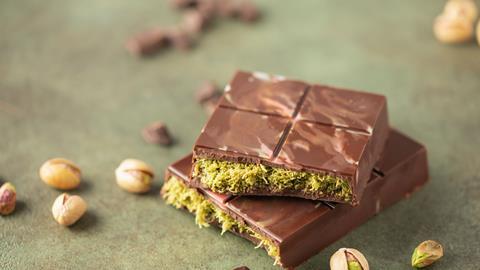
There’s arguably never been a viral food trend quite like Dubai chocolate. When the original pistachio and kunafa-filled bar first exploded on TikTok in 2023, it was so popular it only went on sale for two hours a day to ensure its Emirati makers could fulfil their orders.
It was a global sensation and so as the craze grew, the likes of Lindt, Ritter Sport, and Hotel Chocolat predictably all jumped on board, launching their own versions that similarly flew off the shelves.
But in the race to fill their boots, could some chocolatiers have made an almost fatal mistake? The Food Standards Agency revealed last week that only one of 45 Dubai chocolate bars it tested passed all the necessary safety checks. Most worryingly, eight exceeded the legal limits for mycotoxins while 18 contained undeclared allergens. In reality, it was down to sheer luck that no-one died.
Murky supply chains
“This is what happens when food behaves like fashion,” says Hamish Renton, CEO of HRA Global, a food and drink consultancy. “Demand spikes overnight, retailers scramble for supply, and the only product you can get on shelf fast is branded, not own label.”
That matters, he says, because the standards for a branded supplier are much lower than a supermarket own-label product. It often means no site visit, no BRC audit, and no certificate of analysis for every ingredient.
“A viral product bypasses most of the checks own label would trigger,” Renton says. “I’m not surprised things slipped through. What surprises me is the quantum of it. That points to murky supply chains.”
Rachel Lyne, a regulatory expert at law firm Browne Jacobson, is also surprised by the scale of failure. “Ordinarily the food and drink sector is pretty cautious because they appreciate what they’re doing is high risk,” she says.
“This isn’t just technical non-compliance. The consequences of getting it wrong are very serious indeed.”
Lyne blames the huge commercial pressure to jump on a viral trend before the herd moves on. Allergen mapping, supplier verification, label sign-off, and cross-contamination assessment typically take months to work through and can rarely be done at speed.
“When you rush that process, corners get cut and the allergen risk is often a significant one that falls through the gap.”
The pistachio problem
Global supply issues heightened the risk further. In 2024, as Dubai chocolate triggered a soaring demand for pistachios around the world, California – the world’s primary producer – was seeing a 20% supply drop due to a poor harvest.
This should have raised alarm bells for manufacturers that, with pistachios in short supply, the risk of fraud would surge, says Heidi Gough from risk consultants RQA.
However, just as heightened vigilance was necessary, it seems many brands were stripping back controls – unwittingly or not – in an effort to capitalise on a short-term trend.
Fraudulent substitution or cross-contamination could certainly explain the undeclared allergens, says Gough. The elevated mycotoxin levels may also be a suggestion of quality and provenance issues, adds Connor Sharkey, a regulatory expert at Food Nutrition Partners.
But Dubai chocolate is not just a one-off, and there will be more viral trends in the future. So what lessons can be taken from this? After all, food companies will always want to move fast, meaning the time for proper due diligence will be short.
If brands want to jump on viral trends, the correct resources must be put into it, says Renton. This should include genuine expertise and full test labs, whether that’s for an own-label product backed by a retailer’s standards, or a branded supplier that knows what it’s doing. “A lot of what ultimately reached shelf was from small players,” he says.
Most of us would agree that a dangerous driver careering over the roads and putting others at risk should be dealt a severe penalty.
There is of course a legal difference between that driver and these chocolate bars. But can the manufacturers behind them argue there’s an ethical one?



No comments yet