




Astonished. That was my first reaction when I received an email letting me know that my attempt to buy Mounjaro from MedExpress had been approved – despite entering false details to meet their weight criteria.
I was curious to see if the additional safeguards the online pharmacy had said it put in place would hold up after its regulator, the General Pharmaceutical Council (GPhC), raised concerns that it had been too easy for people to fake their size to access weight-loss jabs.
To be clear, the GPhC expects private prescribers to independently verify the information provided by prospective customers. As well they should. Reports abound of people attempting to game the system by hiding water bottles and other weights in their clothes.
Mounjaro is licensed for private prescriptions to patients with an obese BMI of 30, or those who are overweight, with a BMI of 27 or above and have other weight-related health problems the drug can help. There have been no clinical trials in patients with a lower BMI.
But around six months ago, MedExpress expanded the pool of those it would consider prescribing to off-label, lowering the threshold to a BMI of 25, the lowest possible overweight reading. Indeed when I entered a fake weight to give a BMI of 24.9, MedExpress said it had nothing for me. Toggling back and adding just 1lb unlocked a carousel of GLP-1 medicines. Surely it wouldn’t be that easy?
‘Good news!’
I entered my real details, uploaded ID, and took photos in the app. I wore baggy clothes and slouched. I exaggerated my weight by 14lbs, taking my healthy BMI of 22.5 to 25.0. I said I had no underlying health conditions.
I was told to book a video call as additional checks were needed to verify my weight. I had expected that would be the end of it. After all, I’d tried the same thing with other providers. Asda Online Doctor, for instance, had cancelled my order and issued a refund when it was unable to complete its verification checks.
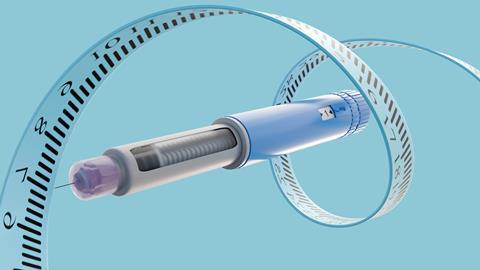
But six days later the MedExpress email arrived. “Good news. A clinician has reviewed your consultation and approved your treatment for Mounjaro® Injection 2.5mg.” Royal Mail delivered the package the next day.
MedExpress later sought to reassure The Grocer that it has “robust clinical and compliance processes in place” to ensure treatment decisions are made “safely and appropriately for each individual”. A spokeswoman said it would act if it found “any opportunity to strengthen our own processes further”.
The regulator is understandably concerned. Not least after MedExpress did not meet GPhC standards precisely because of weight verification issues at its last inspection.
The fact that the prescription was already off-label is likely to heighten those concerns, says Jonathon Enston, partner and healthcare regulatory specialist at JMW Solicitors.
“Off-label prescribing has an important and legitimate place in clinical practice. But the responsibility on the prescriber is greater,” he says.
“There needs to be a proper clinical justification for departing from the licensed indication, supported by sufficient evidence as to safety and efficacy, with appropriate consent, record keeping and follow-up.
“The regulatory question is whether prescribing in these circumstances is genuinely being driven by individual clinical need, or whether off-label prescribing is becoming part of a wider commercial model designed to expand the potential customer base.”
Risk, regulation and responsible providers
Dr Nicky Wilson, a private GP at The Female Health Doctor, spells out the risk-benefit analysis.
“When someone has a BMI over 30, the risk of developing pancreatitis and other conditions like high blood pressure, obesity-related cancers and diabetes are already elevated.
“GLP-1s have a rare but serious side effect of pancreatitis – but for obese patients it has to be acknowledged that not doing anything also carries a risk. When a BMI is 25 or less, this is not as clear cut, as their risk of other conditions is already lower,” she says.
The Female Health Doctor is “pretty strict” with how it prescribes off-label. “If the BMI is below 27 the patient needs to have another marker of poor metabolic health such as PMOS, high cholesterol, or an increased waist circumference,” says Wilson.
The clinic also insists on a video or in-person consultation to discuss the pros and cons of any prescription and agree targets in advance, as well as ongoing appointments to discuss nutrition and strength training, which Wilson says is crucial for healthy and sustainable weight loss.
“Focusing on protein, fibre and strength training protects lean muscle, supports the gut microbiome, and ensures we’re not creating a cohort of skinny frail men and women at risk of osteoporosis and falls.
“If patients don’t make nutrition and strength the priority, especially if they are starting with a lower BMI, the risk is that they will lose muscle rather than fat, slowing their metabolism and potentially worsening insulin resistance and long-term health.”
Asda Online Doctor’s approach has been to maintain a BMI cut-off of 27 for weight-loss prescriptions.
“Our job as responsible providers is to make sure that we provide a process and a system that is very hard to game,” explains Faisal Tuddy, head of pharmacy and superintendent pharmacist for Asda. “You can’t progress without completing all our checks and balances.”
Tuddy says GLP-1s are “transforming lives” for people who have “tried almost everything to lose weight” and can’t.
“It gives them opportunities that they just don’t have outside of using that medication. It’s a wonderful drug. But our driver has always been making sure that only the right patients get the right drug at the right dose.”
The contrast raises a wider question about whether off-label prescribing, coupled with lighter-touch checks, risks putting more cautious providers at a commercial disadvantage.
“Regulation needs to provide sufficient clarity and consistency to avoid creating a market in which businesses adhering closely to the terms of medicine’s licence are effectively penalised by taking the more cautious approach,” Enston says.
The huge benefits to those who really need GLP-1s are not in question. But the problem of healthy people lying to get their hands on medication to simply be thinner is not new either.
If a 1lb adjustment and some baggy clothes is enough to unlock an off-label prescription, the Mounjaro in my fridge suggests MedExpress’ work on new systems and independent verification is not done yet.










No comments yet