



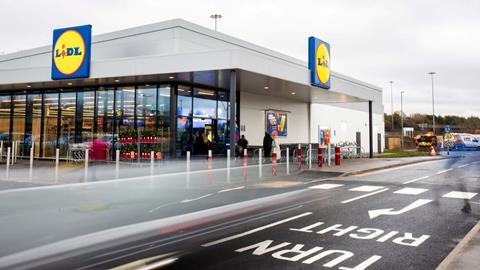
Lidl overtaking Morrisons as the UK’s fifth-biggest supermarket has long been a question of when, not if. As it turns out, the landmark has come around sooner than many predicted three or four years ago.
Lidl flew past Morrisons in new data from Worldpanel by Numerator this morning, accounting for 8.6% of the UK grocery market in the 12 weeks to 17 May 2026, versus Morrisons’ 8.3%.
Only M&S, which is back to its pre-cyberattack best, grew sales faster – by 9.3% year on year compared with Lidl’s 8.8% growth.
But the most interesting story in the figures isn’t Lidl passing Morrisons. It’s how quickly Lidl is gaining on Aldi.
Two years ago, Aldi was three percentage points ahead. That gap has shrunk to 2.2 in this morning’s new data, thanks in part to Aldi’s share declining.
Lidl has added three percentage points to its market share since launching its loyalty app, Lidl Plus, in 2020. In its past financial year, half of its sales growth came through increased loyalty, including the scheme prompting customers into new categories or to do a fuller shop, its chief customer officer Louise Weise recently told The Grocer.
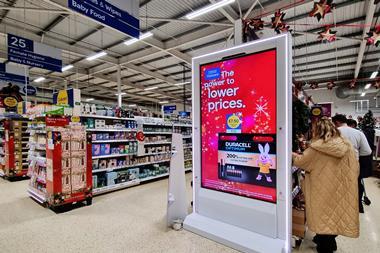
Aldi knows what the trouble is. We can infer this much from a major radio, billboard and newspaper advertising campaign it has been running this month, appealing to shoppers with the slogan ‘No cards, no points, no faff’. The second thing the campaign tells us, if it were not already clear, is that Aldi has no intention of launching a loyalty scheme of its own, and is instead doubling down on simplicity and everyday low pricing for all.
But the message isn’t cutting through. Aldi’s sales were up only 0.6% year on year in Worldpanel’s latest data, and its market share has dropped from 11% to 10.8%. Given it opened around 40 stores last year, that means like-for-like sales are down despite the campaign.
So it must expand to grow sales. Aldi UK & Ireland CEO Giles Hurley all but acknowledged this last year, when he admitted like-for-like sales had fallen and said: “Next year we will surpass 1,100 stores, that gives you an indication that our growth should mean that our share grows.”
It hasn’t opened many stores so far this year, but the UK is a mature market for the group, Aldi Süd, and there are places offering greater opportunities. In January, it revealed plans to open 180 stores across 31 US states this year, as part of a five-year, $9bn (£6.7bn) investment programme aimed at taking its estate in the country to 3,200 by 2028.
The US is the second-largest market for discount supermarkets after Germany, according to Statista, and is expected to continue growing as consumers face rising grocery prices under president Donald Trump.
Aldi maintains that its appetite for UK investment remains strong, shown by its plan to put £1.6bn into expansion here in 2026 and 2027, with new store openings usually weighted toward the end of the calendar year. It is confident it will open 40 in 2026 and another 40 next year.
What is it going to do to stop Lidl steadily creeping up on it? Stick to its guns – potentially giving us a new “when, not if” question to consider.

No comments yet