




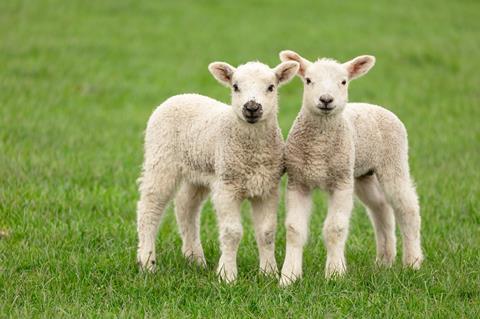
Every spring and summer, images of lambs bounding across green fields remind us why so many people cherish Britain’s countryside. Love Lambs Week, which takes place from 1 to 7 September, invites us to take a moment to celebrate these remarkable animals and to consider how we treat them and the environment.
Most people would be shocked to learn that the majority of lambs in the UK undergo painful mutilations within the first weeks of their lives. Tail docking and castration are commonplace and are mostly carried out for economic and animal management reasons, rather than for animal welfare.
These procedures cause severe pain, tissue damage and stress. Pain relief is not always administered, and even when it is, it’s not always administered correctly and can’t eliminate the injury itself or the discomfort of the prolonged healing process that follows. As the British Veterinary Association has made clear, pain mitigation does not mean pain-free.
That view has official backing. In 2024, after reviewing the latest scientific evidence, the government’s own independent Animal Welfare Committee concluded that the traditional justifications for routine castration and tail docking of lambs are not sufficient to justify the avoidable suffering inflicted.
Instead, it recommended that legislation across the UK be updated by 2028 to make these procedures exceptional rather than routine, permitted only where there is a clear welfare justification under veterinary oversight. The UK government has since committed to implement the committee’s recommendations. It must now set out a clear timetable for reform.
But for the reforms to work, farmers must be partners in any transition.
I represent the rural constituency of Waveney Valley and have the privilege to speak regularly with farmers who are working incredibly hard under difficult circumstances. They face rising costs, uncertain markets and increasingly extreme and unpredictable weather driven by climate breakdown and ecosystem collapse.
Despite all this, I have never met a farmer who doesn’t want better animal welfare. It’s the government’s responsibility to provide practical and financial assistance to farmers to help them improve welfare standards, while ensuring that they are not undercut by low welfare imports. But tinkering at the edges of our food system is simply not enough to help farmers, protect animals and tackle the climate crisis.
Agriculture contributes around an eighth of the UK’s greenhouse gas emissions, and rearing sheep remains one of the more emissions-intensive forms of farming. The government’s own Climate Change Committee has made it clear that reducing emissions from agriculture will require both changes in production and gradual shifts towards diets that include more plant-based foods. The government’s Land Use Framework also recognises that there will need to be more focus on nature restoration.
The reality is that British farming is entering a period of profound change. Agriculture is already among the first sectors to feel the effects of climate breakdown, from extreme weather disrupting harvests to shifting conditions that put huge pressures on traditional farming practices.
That is why the government cannot leave farmers to manage this transition alone. It has a responsibility to provide the support, investment and long-term certainty that will allow the sector to adapt.
Animal protection, climate action and food security are intrinsically interlinked. If we have farming systems that improve animal welfare, they are the same systems that restore biodiversity, improve soil health, protect rivers, build resilience to climate change, and support thriving rural communities.
Adrian Ramsay is the Green Party MP for Waveney Valley







No comments yet