






At first sight, the government’s proposed changes to the nutrient profiling model might look like a technical adjustment to a regulatory formula. In reality, they represent something much more significant: a fundamental challenge to the reformulation reflex that has characterised UK food policy for more than a decade.
The consultation on the revised model closes next week. Ministers probably regard it as a relatively obscure public health measure. Food manufacturers see something rather different – a proposal that could render hundreds of millions of pounds of investment in healthier products significantly less valuable and create profound uncertainty about the future direction of food policy.
That is why opposition to the proposal has become so widespread. For years, governments of all political colours have encouraged food and drink manufacturers to reformulate their products. The message was clear: reduce sugar, cut salt, lower calories, invest in healthier alternatives. Work with public health objectives and you will be commended, or at least spared the close attention of regulators.
The food and drink industry responded.
A decade of investment
According to new data commissioned by the Food & Drink Federation, the industry’s products now contribute around 20% less salt, less sugar and fewer calories than five years ago. Overall nutrient profile scores of participating manufacturers have improved by 13%. That is more than a statistical improvement. It is underpinned by more than a decade-and-a-half of scientific development, reformulation programmes, factory changes, packaging redesigns and consumer research. Most large UK food manufacturers have invested tens of millions of pounds to make products healthier while retaining the taste, texture and quality shoppers demand and expect.
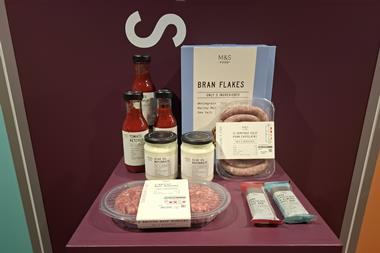
That has produced real change. Kellogg’s has reduced sugar in its flagship All-Bran products. Danone has cut sugar across its Actimel portfolio. Premier Foods created an entire ‘Delicious & Light’ Mr Kipling range with substantially lower sugar, fat and salt levels while increasing fibre content. It’s precisely the demand made by politicians and regulators – most recently by FSA chairman Professor Susan Jebb in her City Food Lecture.
Which is why so many manufacturers feel those same politicians and regulators have now betrayed their trust and ignored the enormous investment by management and shareholders. Businesses fear that the proposed NPM changes will provide a complete reset, demanding even higher levels of investment at a time when rising costs – many of them directly attributable to ever-increasing regulation – are already shredding industry profitability.
“For more than a decade, successive governments have encouraged food manufacturers to become partners in improving the nation’s diet. The industry has mostly responded positively”
Indeed, the government’s own officials rather naively sold the pass on this point three weeks ago, then tried to barter a temporary hold on many of the regulations in return for a temporary price freeze on shopping list staples. The suggestion didn’t survive contact with reality, but it demonstrated that the government knows its demands are pushing the industry to breaking point.
The central issue lies in the government’s decision to shift from measuring total sugars to measuring free sugars. The distinction sounds simple but carries significant consequences. Under this scheme, sugars naturally present in ingredients such as fruit purées, juices and smoothies will be treated differently. Products that currently comply with HFSS requirements may well find themselves reclassified, despite having undergone expensive investment and extensive reformulation.
The problem with constant change
The food industry can accommodate almost any regulatory framework if it is clear, stable and predictable. What businesses struggle with is constant change. Reformulation programmes take years to devise. Product development teams work to targets established by government. Capital investment decisions are made on the basis of anticipated returns over many years. Marketing strategies are built around regulatory assumptions.
When those assumptions change repeatedly, confidence inevitably drains away. The danger is particularly acute now, when the industry is already grappling with inflationary pressures, geopolitical uncertainty and labour market challenges. Many businesses are still adjusting to restrictions on volume and location-based promotions introduced in recent years. Others are adapting to the television and online advertising restrictions that came into force this year. Against that backdrop, manufacturers are not unreasonably asking whether this is the straw that breaks the camel’s back – where the merry-go-round stops. Does business receive credit for its heavy investment in better health outcomes?
The FDF is urging ministers to prioritise mandatory reporting of healthier food sales across the sector. Under such a system, companies would be required to disclose the proportion of their sales represented by healthier products. The approach has already attracted support from major retailers and would create transparency while rewarding businesses that successfully shift shopper purchasing patterns towards healthier choices.
There is also a compelling argument for consistency: if mandatory reporting is introduced, it should apply not only to supermarkets and manufacturers but also to hospitality and foodservice operators. Consumers increasingly eat across multiple channels, so public health policy should reflect that reality.
I don’t remotely suggest that concerns about obesity and diet-related illness are misplaced. They are not. Britain faces significant public health challenges and government should consider how regulation can contribute to addressing them. But politicians need to be honest with shoppers and voters. There is a substantial cost to this continuing festival of regulation – prices rise, choice is substantially eroded and the UK is increasingly seen as a poor place to invest or innovate.
For more than a decade, successive governments have encouraged food manufacturers to become partners in improving the nation’s diet. The industry has mostly responded positively. The challenge for the group of ministers very likely to arrive during or after the summer is to ensure that the next phase of food policy builds upon that progress rather than discouraging it. If they decide to do so, they may very well find that the subsequent group in office chose to take a radically different tack.
Ian Wright is a partner at Acuti Associates
The Grocer Health Summit 2026 is helping the industry turn healthy eating insight into action. Covering everything from regulation to reformulation and science to strategy, the one-day conference will be taking place on Tuesday 15 September 2026 at the QEII Centre in London.
Visit thegrocerhealthsummit.co.uk to book your tickets and find out more.










No comments yet