





With the embattled prime minister reportedly “holed up” ahead of crisis talks with Labour MPs and Cabinet colleagues, the contents of the Downing Street fridge might not be top of his agenda – short, perhaps, of climbing inside it to hide.
But putting the all-consuming chaos of the Peter Mandelson/Jeffrey Epstein saga to one side, should the government ever get back to the business of serious policymaking, Keir Starmer will at least have plenty of food for thought following his latest talks with food waste NGOs.
No 10 played host last week to a gathering of industry leaders and redistribution organisers, who came together to discuss what Defra bosses billed as an “ambitious” new food waste policy. The meeting followed increasing pressure for action to tackle the huge scale of household food waste in the UK, alongside criticism of “lagging” industry efforts to address waste in the agriculture and packaging supply chains.
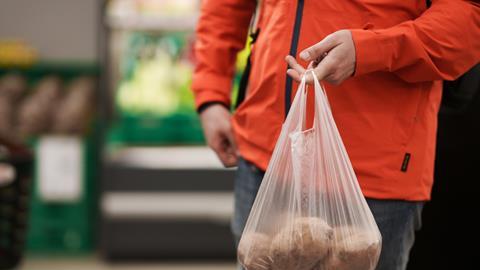
Seizing the opportunity to make her point, Wrap CEO Catherine David left a packet of potatoes in the PM’s fridge – a visual reminder of the scale of the issue.
“We know that for the average household of four, food waste costs £1,000 a year for edible food that ends up in the bin,” David told The Grocer. “I took a bag of potatoes marked half to ‘eat’ and half to ‘chuck’ to illustrate the scale of the household food waste challenge, and the size of the opportunity.”
Slow progress
Sadly, government initiatives to tackle the scandalous levels of food waste from both home and industry have been slow to materialise. Key policies appear to have been pushed aside by more pressing economic and geopolitical issues, plus of course the ongoing series of ministerial scandals currently dominating the global news cycle.
Yet anger over the lack of progress is growing. With circular economy minister Mary Creagh expected to revive plans for mandatory food waste reporting, calls for further action across both food waste and redistribution efforts are growing.
Writing in The Grocer last week, Wrap’s director of food system transformation Estelle Herszenhorn said actions to tackle food waste in agriculture and food packaging were “lagging”, and risked the UK’s chances of hitting its 2050 net zero goals.
While household food waste remains a major problem – and will be the focus of next month’s Food Waste Action Week (9-15 March) – it is particularly shocking that more than 75% of emissions come from food production, where levels have fallen by a mere 6% since 2015.
This all comes alongside the latest figures from the Food Foundation, which reveal that more than one in 10 people in the UK are living with food insecurity. Against that backdrop, the huge levels of food waste on farms are a scandal that cannot be allowed to continue.
If the food industry and government were really doing all they could to tackle both food waste and food poverty, the two problems simply would not exist at the same time.
Window of time
While industry efforts to tackle food poverty and reduce the environmental impact of waste have made their mark (notably through the launch of King Charles’ Coronation Food Project), far more still needs to be done.
In September the Coronation Food Project’s spin-off, the Alliance Food Sourcing initiative (AFS), revealed it had passed its original goal of providing the equivalent of 10 million meals a year by introducing new processes across the food supply chain.
A key challenge for both industry and ministers is how to unlock more of this surplus further down the supply chain, preventing food being ploughed back into fields simply because it doesn’t meet supermarket requirements or because of inaccurate forecasting.
Charlotte Hill, CEO of the Felix Project and FareShare, says she was encouraged to see key voices from government and the food industry attending the summit.
“It was encouraging to see such strong recognition of both the environmental and economic costs of food waste,” she said.
However, she warned there was now a limited “window of time” in which words needed to be turned into action.
“Collaboration between government, businesses and charities will be essential if the UK is to make meaningful progress. It is our collective responsibility.”
Certainly, there is plenty of food for thought for Starmer – that is, if he and his ministers are able to get back to business of government amid the extraordinary political soap opera that is currently dominating the news.






No comments yet