


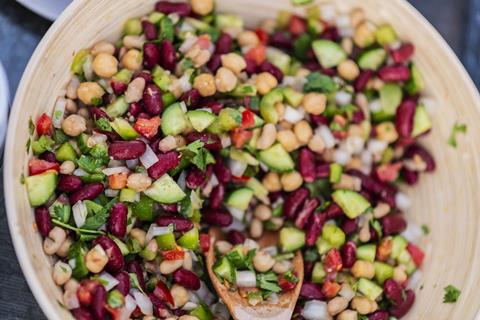
From #fibremaxxing to premium own-label jars on supermarket shelves, the health agenda is reshaping what shoppers want, and beans are well placed to benefit. The opportunity now is to turn the cultural shift into long-term commercial growth. If British retailers, manufacturers and growers can seize the opportunity together, the prize could be worth hundreds of millions of pounds for the UK economy, according to a new report from the Food Foundation.
We know consumer demand for fibre-rich, protein-dense foods is growing. Sales of branded canned pulses have grown 19.4% year on year, compared with 1.8% for canned vegetables. Meanwhile, premium and mid-tier brands like Bold Bean and Merchant Gourmet are proving shoppers will happily trade up when beans are presented in exciting, quality-led ways.
Making beans the easy choice
Over the past year, Bang In Some Beans, a campaign led by the Food Foundation and Veg Power, has created a coalition of more than 40 businesses around the shared ambition of doubling the consumption of beans in the UK by 2028. Our partners are already showing what that looks like. Some are taking a “health by stealth” approach, like Waitrose incorporating beans into familiar products. Others are making beans the hero ingredient; M&S has built a premium own-label bean offer.
To better understand where the next retail and brand opportunities lie, the Food Foundation published a new industry playbook drawing on a retail audit and an industry workshop with major retailers and manufacturers. Beans remain heavily concentrated in a handful of categories, particularly baked beans, hummus and peas, while barely featuring in high-footfall areas such as food to go, sandwiches, sauces, fresh pasta and pizza.
Real growth won’t come from simply selling more tins. It’ll come from creating more reasons to buy, cook and enjoy beans. Think jars shoppers are proud to put on the table. Meal deals. Chilled lunches and meal kits. Indian fakeaways. Mexican grain bowls. Grab-and-go snacks. Seasonal promotions around picnics and BBQs, Ramadan and back-to-school. Making beans easier to choose across more of the occasions that already shape how people shop means treating beans as a strategic ingredient across more shopping missions, meeting consumers where they already are.
That means bringing beans into new product development from the outset, strengthening good, better, best product architecture, improving secondary placement, and using loyalty schemes, retail media and seasonal promotions to turn growing interest into repeat purchases, and online interest into in-store purchases. None of these ideas are revolutionary. Together, though, they could help businesses capture a share of the category’s significant untapped potential.
The way we talk about beans matters too. Consumers increasingly discover them through recipes, world cuisines and food creators, not nutrition campaigns. Health, value and sustainability remain compelling reasons to buy, but they work best as supporting messages rather than the headline. Lead with flavour and enjoyment. Let value, protein and fibre close the deal. After all, 96% of UK adults don’t get enough fibre.
The commercial case for growing the bean category has never been stronger. As consumer interest continues to grow, the question is how the industry responds.Those that act now, rather than waiting for the category to mature around them, won’t just help unlock a £586m opportunity for the UK economy, they’ll help shape one of grocery’s most promising growth stories.
Ben Freedman is campaign lead for Bang In Some Beans at the Food Foundation





No comments yet