

After months of calls for a rethink of the government’s controversial extended producer responsibility (EPR) packaging tax, ministers have stepped in.
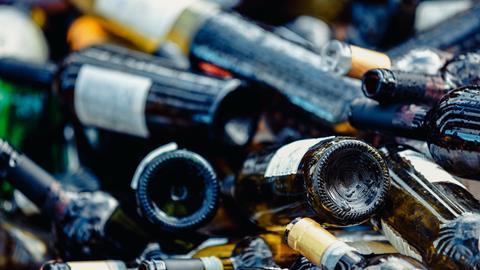
As revealed by The Grocer last week and confirmed by Defra after closed-door talks yesterday afternoon, changes are being made to protect the glass and hospitality sector from disastrous unintended consequences of EPR and quell a political storm.
But as the clink of glasses celebrating was being heard up and down the country – in some quarters at least – what does this second extraordinary bailout of the beleaguered system mean for the future of EPR? And is it actually good news for the food & drink sector?
It is important to separate what is undoubtedly a big win for the glass, hospitality and drinks industries, who have been pushing for intervention to tackle the perceived unfairness of the fees, from what it says about the wider state of EPR.
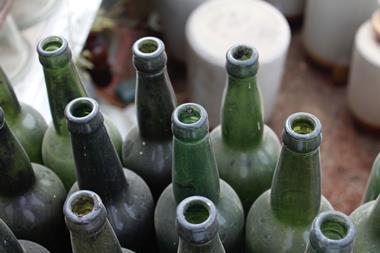
Nobody could criticise that section of businesses for cracking open the bubbly, with the measures set to slash the cost for glass producers by up to 40%. At the same time, the unfair “double counting” scandal faced by hospitality will come to an end, after ministers promised to protect under-threat businesses and, hopefully, bring down future prices for consumers at the same time.
“At last!” was the reaction from WSTA CEO Miles Beale, who praised the “Burnham-led government” for listening to UK businesses who had been campaigning for the last two years to no avail.
Trouble ahead
But anyone who thinks this is the end of the matter, and that the government has put a lid on EPR’s troubles, is kidding themselves.
Defra’s intervention not only smacks of a politically-driven decision aimed at winning positive headlines in the press (it was The Sun wot won it, declared the tabloid, while The Telegraph declared victory for its Save Our Pubs campaign) but is also an obvious attempt to stop job losses in Labour heartlands from becoming a vote-loser come the next election.
As has been the Andy Burnham hallmark since he came to power, Labour has stepped in to tackle an issue threatening to get out of control as an act of political expediency rather than any deep conviction or plan.
But it’s also easy to see why other sectors are so brassed off.
Whereas only a few months ago, PackUK was busy telling everyone it planned to hand over all but the actual purse strings in EPR to the new producer run-organisation (PRO) being brought in to handle the running, it is now very clear that politicians are back calling the shots. Unlike last year’s government bailout of the scheme, it will not be the Treasury that pays but other sectors within UK food & drink and packaging.
As Balwinder Dhoot, director of sustainability and industry growth at the FDF, says: “These proposed changes will help bring down the cost of glass, which will be welcome to manufacturers that have invested in glass packaging as a more sustainable choice.
“However, the very nature of the scheme means this change will simply push costs elsewhere. Fee modulation may lower charges for glass, but it won’t reduce the total cost to producers – it simply redistributes those costs to different packaging materials and at very short notice to businesses that hadn’t prepared for this extra fee.”
The acceleration of the so-called modulation process, under which hard-to-recycle ‘red’ products such as flexible plastic will pay far more in proportion than others such as glass, may seem like an environmentally sensible decision.
Billions at stake
But this, critics rightly point out, is the same government which has just delayed the introduction of kerbside collection of those materials for recycling, now telling industry it needs to move quicker and recalculate its sums.
“They will face higher EPR fees for infrastructure failings outside of their control,” says Dhoot.
“Our sector is investing billions in this scheme, in exchange for greater investment in recycling infrastructure to drive a circular economy for packaging.”
Evidence of that to date appears very thin on the ground, and it’s little wonder many in the industry are saying they have little faith in EPR succeeding in the long term, even those who had conceded the producer-pays principle in theory at least was a fair one.
It’s inevitable that ministers will now face a bombardment from other UK-based businesses that feel they have been left to pick up the pieces of the mess. Rather than settling down after its first couple of years, it appears EPR will continue reeling from one crisis to the next.
“EPR should be predictable and stable, and based on evidence of real recyclability,” says an source. “Constantly changing the rules of the game goes back on Defra’s stated aim that producers should lead EPR, as they do everywhere else in the world.”
PackUK, the body which was making promises about ceding power until recently, was deathly silent yesterday amid all the dramatic announcements, and we have heard very little of the promised handover of responsibilities to the industry PRO, or of how the huge sums raised from EPR are being ringfenced to ensure it is invested in recycling across local authorities.
Defra diaries full
The Grocer understands PackUK and Defra now have their diaries stacked with meetings from companies in sectors who face the flipside of the glass coin, and face paying more than expected.
What will they be offered? Will there be further backtracks and climbdowns, and who decides?
These are all big questions, but there is still hope EPR could succeed.
Beyond the attention-grabbing announcements on glass, a call for evidence is set to launch next month to explore ways more businesses can reuse packaging on a greater scale to help reduce waste and plastic,
That could open up positive discussions that bring more of a strategic direction to EPR. So, too, could a call for evidence that PackUK will be tasked with in early 2027, on the fees manufacturers pay for packaging waste. The aims is to ensure easy-to-recycle packaging costs less.
One thing is for sure: yesterday’s intervention will not be the last. And if EPR is to get over its troubles, it will need much more consistent and effective leadership.
Otherwise it will never achieve true buy-in to the producer-pays principle. Instead it will succeed only, as is the case this week, in turning different sectors against each other.



No comments yet