







For many decades the food and drink industry has provided the first steps on the ladder to a working career, but recent figures show that ladder is at serious risk of collapse.
Earlier this year, a report by former health secretary Alan Milburn warned the number of young people not in education, employment or training (NEETs) could hit 1.25 million within five years, creating a new “lost generation”. Official figures suggest there are 400,000 fewer jobs in the retail sector than 10 years ago.
So a sense of relief greeted today’s announcement of a major new partnership promising to create 100,000 new jobs by the end of this Parliament as both industry and government get to work on fixing those broken rungs.
Dubbed ’Opening Shift’, the landmark scheme is refreshingly both old-fashioned and common sense in its approach.
The Department of Work & Pensions, overseen by Pat McFadden, will directly refer unemployed young people to one of more than 40 retailers taking part in the strategy, including the likes of Aldi, Asda, John Lewis, Morrisons, Marks & Spencer and Tesco.
New skills for life
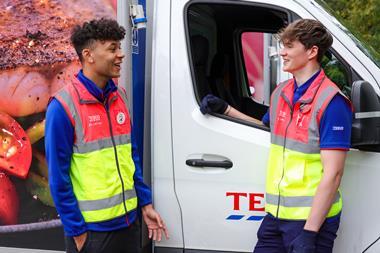
Under the new initiative, every one will be guaranteed an interview at the end of their placement. Then, thousands of new recruits will “buddy up” with other retailer workers to help them learn skills that will hopefully set them up for life – not just their work experience placements.
Tesco alone has pledged to provide almost half of the 11,000 initial jobs on offer.
“We want to help more young people not in employment, education or training to build their confidence, develop valuable skills and take their first steps towards a rewarding career at Tesco,” says CEO Ken Murphy.
One of the most encouraging things about today’s announcement is that in bringing together companies like Tesco, which has the scale and ambition to do something about the NEET crisis, the government is finally starting to make good on its pledge to work with industry to tackle the issue.
The calibre of people involved is also encouraging. These include McFadden, Milburn (his final report on the crisis is due out next month) and former M&S boss Marc Bolland, who was given the job of bringing business and government together as lead non exec at the DWP in the spring.
Not one to watch from the sidelines, prime minister Andy Burnham has promised the government will back “British businesses to invest, grow and create jobs, so they can open up more opportunities for young people and build the skilled workforce they need”.
A sign of intent
The move is the latest sign of intent by the food and drink industry to tackle the jobs crisis before it is too late.
Earlier this year, the IGD relaunched its Feeding Britain’s Future programme, with more than 90 organisations now involved in a co-ordinated industry approach to give young people local access to high-quality work experience, regardless of where they live.
That programme is moving fast, with a major PR campaign due to kick off this month – a so-called “thunderclap” awareness-driving moment across the industry to target young people through social media.
It’s also a sign that, as well as the more traditional job centre link-ups seen in today’s scheme, the industry realises it must adapt recruitment to a new generation of younger people.
But it is old-fashioned economics that will really make or break the government collaboration with industry.
While Milburn’s next report and recommendations will be eagerly anticipated, it is what is in new Chancellor John Healey’s red box that really matters.
In his first major speech in the role yesterday, Healey promised to create “partnerships with businesses to drive growth and productivity”, to provide “growth through more investment, more innovation, and more jobs”.
Taxing decisions
But will Healey get the go-ahead from Burnham, or the support of leading Labour stalwarts like McFadden, when it comes to starting to row back on the controversial decisions of his predecessor?
The retail bosses who signed up to today’s new jobs pledge are also those leading the protests over the impact of Rachel Reeves’ 2024 budget, which increased retailers’ employment costs by £6.5bn.
McFadden has consistently argued that the hike in NICs was justified, while also pouring doubt on industry’s claim that it is exactly those recent taxation decisions which had the most crunching impact on youth employment.
As one retail source puts it: “Today’s announcement shows retailers are stepping up to the challenge to tackle growing worklessness crisis among young people.
“We are determined to help solve the problem, which is why retailers are breaking the doom loop and handing experience to NEETs to give them the best possible shot at getting a retail job. But to convert experience into proper jobs, we need action from government too. The costs and risks of hiring have rocketed in the last two years and that must change if retail is to be able to achieve our ambition.”
It’s hard to see how industry and government, particularly retailers, can square this circle.










No comments yet