




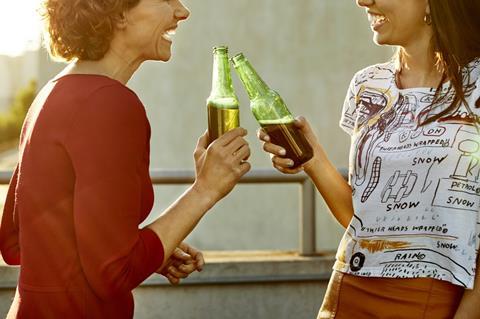
Not explicitly excluded, but rarely directly addressed, women have (finally) found themselves at the heart of a significant growth strategy for the beer market.
When BrewDog’s new chief executive spoke last week about wanting to see more women drinking beer, it landed less as a provocation and more as an acknowledgement of where the category is heading. Women offer a promising and available new audience for long-loved drinks. But to win us over, beer brands need a thoughtful strategy.
Historically, beer marketing hasn’t always reflected the diversity of its audience, including women. A 2024 report showed that beer advertising is typically targeted towards men, even though analysis of contemporary ads showed very little evidence of overtly masculine branding.
The perception is a hangover (pardon the pun) of decades of marketing campaigns geared towards men.
Overcoming this perception requires more than just making ads gender-neutral or creating alternative products that simply further alienate women from the core line. Brewers need to actively welcome women in, creating brand worlds in which women feel they can comfortably, and happily, exist.
The incredible success of stout among female drinkers is proof that women will drink the same pints as men, when given good reason to. It’s a conversation that starts with nailing the media strategy.
Culture over demographics
Beer is well established in British culture: sports, pubs, sunny days and social nights. None of these things are exclusive to male consumers. Pints don’t need to be served in flowery glasses to speak to women, nor do they have to disguise the taste of beer. But campaigns do need to feel authentically shaped for their audience.
The most effective approach isn’t to ask “how can my beer appeal to half the population?” but to identify the communities and subcultures that speak to a brand and show up there meaningfully.
Now, brands can move far beyond broad demographics to feed their campaigns. Millions of real-time signals, from social media conversations to retail data and content consumption, can help identify nuanced ‘taste communities’. This data-driven approach brings precision to help brands find – and reshape – their place in culture.
Asahi Super Dry showed how to do this when it sponsored last year’s Women’s Rugby World Cup. The brand realised that women’s rugby was surging in popularity but, with public perception slow to catch up, fans were a close-knit community. So instead of relying purely on traditional sponsorship assets, the brand built a campaign around the spaces where fans were actively engaging with the tournament.
This included pubs, fan zones and shared social settings, where it hosted ads and activations tailored to women’s rugby fans, making Asahi an authentic part of the wider matchday experience. It didn’t change the brand or the beer, but by championing a cultural moment that mattered to female fans, Asahi embraced a new audience.
Meet women where they already are
Understanding behaviour is as important as understanding attitudes. Beer is inherently social, centring on events at pubs or in restaurants and bars. Gen Z drinkers often discover beverage brands while enjoying food or drinks out of home, according to NIQ’s global On Premise user survey , which also revealed that 72% of Gen Z visit pubs, bars, restaurants and cafés weekly, compared with 56% for the average consumer.
For beer brands targeting younger women, presence in these environments is where brand relationships begin. On-premise environments are the perfect places to build rituals, aid discovery and embrace new markets.
This is also where community-led thinking pays dividends. In 2023, Strongbow relaunched as a cider for everyone – and it meant it. With activations at Pride and NaviLens packaging developed in partnership with blind and visually impaired communities, it showed brands how to genuinely design for and with audiences. It’s a masterclass in how to build new and loyal customers with under-engaged markets.
Go beyond the pint glass
Social channels are a natural space to share food and drink. So, how might beer brands show up, break the mould and put long-loved products in new situations?
The same NIQ report found a significant proportion of Gen Z would choose a cocktail over a beer. Could an ale or IPA work in a cocktail? Could a food creator use a bottled beer brand as a centrepiece or pair pints with recipes to take the brand to a different level altogether?
These aren’t radical reinventions and they aren’t explicitly geared to women. They’re creative reframings that expand the world around a core product. When combined with connected commerce, embedding a brand in social rituals and cultural moments creates more occasions for purchase. The beer brand at the centre of a foodie creator’s ’dinner at home’ series can link directly to a shopping basket and help brands close the loop from cultural presence to commercial action.
The key to winning over women is, ultimately, simple. Speak directly to us, understand us and show up in the spaces that matter most. We’ll drink to that.
Ruth Stubbs is EMEA CEO at Wavemaker




No comments yet