


Would you listen to me more if I was holding a pint and eating a pie? I’ve been reflecting recently on how important it is for politicians to be relatable – and the role food and drink can play.
When politicians are announcing new policies or trying to curry favour with the electorate, what they’re choosing to eat or drink in front of the camera matters. It signals the kinds of behaviours and food culture we collectively celebrate.
For politicians, relatability seems to mean a video of the political leader having a pint and a pie in a pub on the campaign trail. It’s also the prime minister quipping “if only I could make Freddos cheaper” in relation to the cost of living in a slick daily video. These are shorthands for being a ‘person of the people’ who understands everyday life. Are these harmless cultural references or do they undermine, or even conflict with, other more serious messages about food and farming?
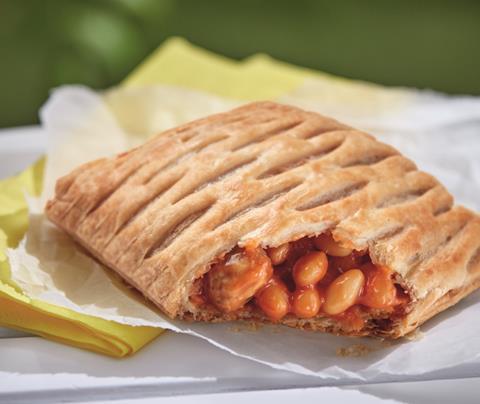
When Greggs advertised ‘The sausage, bean and cheese thing, as eaten by the prime minister’, Andy Burnham replied: “Thanks Greggs, that’s my order baked in for life now.” Many will dismiss that as harmless banter in support of a British business. Others will argue it reinforces the idea that high fat, sugar and salt (‘HFSS’) convenience food is central to UK identity.
Where should the line be drawn? Few people would object to politicians occasionally enjoying the food and drink millions consume. However, it raises two concerns.
First, modern British food culture is much more diverse than the pints and pasties that some politicians lean heavily on. For many communities in the UK, the foods that signal familiarity, comfort and identity look very different.
The second problem arises when the pursuit of being relatable boils over into more overtly promoting HFSS products that contribute to some of the nation’s major public health challenges when eaten too often. Take the recent example of climate minister Katie White visiting Nestlé’s York factory and enthusiastically promoting KitKats and Yorkies.
At the same time, the UK government is talking about stronger school food standards and support for UK farming. That’s welcome. Yet it raises a question of policy coherence. Can ministers advocate healthier diets while publicly embracing a different cultural narrative?
We know people don’t like being lectured to about what to eat. We also know politicians don’t want to come across as overly worthy for fear of seeming out of touch.
While pie-and-pint culture is deeply engrained in many places, food culture isn’t fixed. What symbolises ordinary Britain changes over time. Why do politicians default to a narrow set of beige foods when modern British food culture is far more diverse? In the UK, food and drink culture too often gets caricatured as a binary of relatable, traditional comfort food on the one hand versus supposedly worthy foods such as kale and quinoa on the other.
I get that politicians want moments of relatability and so my plea to them is simple: use your platform not just to reflect food culture, but to shape it for the better. The foods that define everyday Britain today extend far beyond a narrow set of traditional symbols. If the only way to look authentic is with a pie and a pint, politicians are limiting both their politics and their understanding of modern Britain. Let’s broaden our definition of what’s relatable.
Dan Crossley is executive director of the Food Ethics Council


No comments yet