




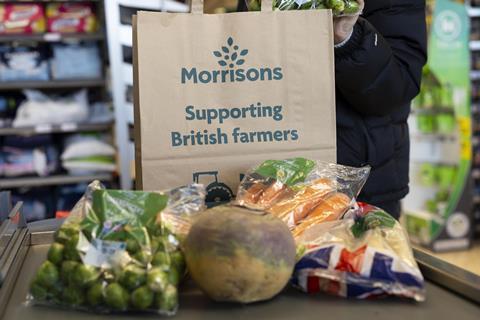
Morrisons should remember its USP: fresh food
Morrisons slipping behind Lidl in the grocery rankings is about more than Lidl expanding its footprint while Morrisons has not – it’s about brand.
I worked on the Morrisons brand 15 years ago. Back then, the business had a distinctive advantage in grocery retail: its vertically integrated model. That gave real substance to the brand promise we built around ‘Closer to Food’. It didn’t just know where the food came from but actually produced a great deal itself.
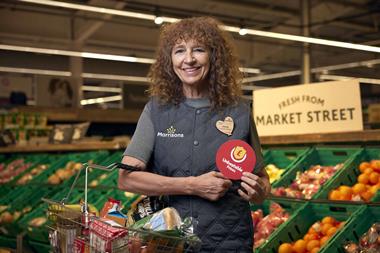
That promise was not just a line. It lived across the whole product offer, most viscerally in Market Street. Real fishmongers, butchers and bakers amplified freshness and made Morrisons feel different: closer to food and closer to the people who cared about it.
Much of that has been stripped away. Where there were people, there are now fridges and cabinets – and, too often, not full ones due to supply chain issues. The experience feels more sterile. The brand promise is less clear. As a shopper, I am no longer sure why I should choose Morrisons over its rivals.
The private equity debt burden has undoubtedly played its part. So has the strength of competitors such as Tesco, which has relentlessly built its brand.
But Morrisons still has a powerful asset hiding in plain sight. In a world seeking transparency and authenticity, its vertically integrated model gives it the clues it needs. The challenge now is to rediscover what made the brand distinctive and make shoppers feel it again.
Vicky Bullen, CEO, Coley Porter Bell
EPR needs more precision
The government’s decision not to abandon the EPR scheme is the right move. But the reaction from manufacturers, glass producers and supermarket chiefs isn’t just lobbying noise.
The problem is precision. Producer fees are based on material type and weight, not on how packaging performs inside a real UK sorting facility. Sortability is the metric that determines whether a material stays in the economy or falls out of it – and EPR fees don’t reflect it.
The data makes this clear. Certain clear PET containers achieve sorting efficiency of nearly 95%. Some coloured PET containers are as low as 15%. Under the current framework, their producers pay almost identical fees. British consumers are subsidising packaging the system cannot recover.
The evidence to fix this already exists. Last year, we analysed 43.5 billion packaging objects moving through recovery facilities. In Q1 this year, Biffa and FCC Environment were among the first waste management companies in the world to submit AI-derived waste composition data directly to the Environment Agency. The evidential standard is there. Defra doesn’t have to design the next iteration on assumptions.
Germany has iterated its EPR system nine times since 1991. Britain has the infrastructure, the ambition and the data to build the most precise and effective EPR system in the world. Get this right and the UK doesn’t just catch up – it leads.
Ambarish Mitra, co-founder, Greyparrot
FIFA’s dynamic pricing
FIFA has drawn scorn over its use of dynamic pricing for World Cup tickets. There is only one World Cup, so FIFA holds the cards – but in the retail space, competition means this kind of behaviour simply wouldn’t be tolerated.
Recent research of 2,000 UK consumers revealed 65% dislike dynamic pricing, with only 4% saying they “love” it. Yet far from being universally bad, dynamic pricing works when consumers perceive it as fair.
For supermarkets, dynamic pricing on essentials would risk major backlash as core staples are tied to customer needs and not demand elasticity – exploiting this would be a disaster for trust and loyalty.
That’s why, rather than surge pricing, the next battleground for supermarkets is personalised pricing and loyalty offers.
But this must be delivered with honesty and create trust: nine in 10 of the survey respondents prioritise clear and transparent pricing. This is where FIFA has gone so badly wrong, and what grocers must get so badly right.
Thomas Hill, co-founder, HyperFinity



No comments yet