




Lidl GB’s CEO Ryan McDonnell was today thrust to the fore in the row over supermarket loyalty schemes, as the discounter announced its annual results.
In one corner, Aldi’s UK chief Giles Hurley has said rivals’ loyalty schemes are “duping” customers with fake discounts. Only Aldi, which has no loyalty scheme, gave shoppers “certainty” of the best value on “every basket”, Hurley said.
In the other corner, Aldi’s most direct competitor is beating it on every metric of sales growth – value, volume and market share – and has grown active users of its loyalty app by 23%, according to its latest full financial year.
How could McDonnell resist answering Hurley?
“With three in five British households now shopping with us, it’s clear our model is working,” McDonnell said.
“Keeping things simple is important to us and delivering great quality products at prices people can rely on,” he made a point of stressing.
At the same time, “our real competitive edge is Lidl Plus. It has become one of our biggest success stories, giving us a unique way to reward customer loyalty directly.”
Lidl was simply “listening to our customers”, which was “the most important thing”, McDonnell added.
The numbers bear the logic out. Shore Capital’s Clive Black estimates, using revenue growth, inflation and estate expansion figures, that Lidl was in 5% like-for-like volume sales growth in its latest full year, while Aldi was in 5% like-for-like volume decline.
But it was only the timing of Lidl’s results, coming a week after Aldi’s, that handed the mantle to McDonnell in the debate over loyalty, which seems to be more about loyalty prices than the schemes themselves.
Lidl’s closest thing to loyalty prices is the Lidl Plus Offers in its app, which offers exclusive discounts on a weekly rotating selection of up to 100 products. That’s in addition to the points it gives members on every purchase, redeemable as discounts on future shops, and the ‘Coupon Plus’ discounts users get on an additional personalised selection of a handful of products.
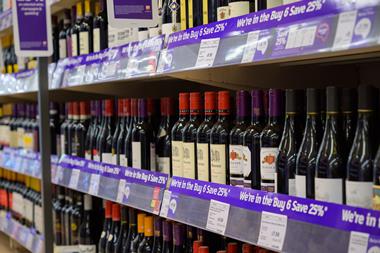
It is a small number compared with the thousands of products at exclusive loyalty prices in Tesco and Sainsbury’s. Sainsbury’s boasted in August that it was rolling out more than 7,000 Nectar Prices offers, while Tesco said it had about 8,000 Clubcard offers every week in 2024.
Among such offers, it is not hard to find examples of the kind of deals Hurley might have had in mind when he described loyalty discounts as “perceived rather than real”.
A 24-pack of Gaviscon double action tablets cost £7.30 at Sainbury’s in the week starting 6 July, or £5.80 with Nectar Prices. It’s an impressive discount, until you consider that the same product was only £5.49 at both Aldi and Lidl during the same week – and £5.50 at Sainsbury’s a few days earlier.
Similarly, Colgate Total Active Prevention Original Toothpaste (125ml) is currently listed at £7 on Tesco, or £3.50 with Clubcard Prices. But it’s also currently £3.50 at Asda, Amazon and Ocado.
Examples are easy to find beyond traditional grocery categories too, where the claimed savings grow larger. An Oral-B Vitality Pro electric toothbrush is currently listed at £50 on Tesco, or £25 with Clubcard Prices. But it’s also currently £25 from Argos or Holland & Barrett.
Then there’s the fact that more than 80% of both Tesco and Sainbury’s sales are made using their loyalty schemes, further raising the question – how many people are actually paying the full price?
Consumers shop around, so it’s a stretch to say loyalty discounts are duping them, though it’s easy to see why they would annoy Aldi with its strategy of low prices across the board. What’s the solution? It’s a huffy shrug from Aldi, which has so far made no constructive recommendations.
Solutions may be forthcoming though – and not just from Aldi. The government is set to launch a consultation this autumn on whether “fake ‘was’ prices, invented discounts and misleading RRPs” should be banned. It is not clear whether supermarket loyalty schemes will be in scope for any proposals – but if they are, some deals will be harder to defend than others.



No comments yet