As an otherwise healthy man in my early 30s, I have one embarrassing affliction. One more commonly associated with portly Tudor monarchs than millennial journalists, but one that has blighted me periodically over a near-10 year career writing about booze. The affliction in question is gout, usually manifesting itself in my big toe and – when it does – leaving me in agony and sometimes even struggling to walk.

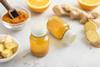
Happily, a few years ago I discovered this particularly painful ailment could be (for the most part) prevented by taking turmeric shots on a daily basis. Turmeric’s most active component, curcumin, is a known anti-inflammatory and I’ve found it most effective at reducing the frequency and intensity of gout flare-ups.

Unfortunately, The Turmeric Co wouldn’t be able to republish my testimony about the beneficial impact of turmeric. Indeed, this week the food supplements brand has found itself in hot water with the advertising watchdog for republishing redacted reviews from the platform Trustpilot to promote its turmeric juice shots online.

Rapping the brand over the knuckles, the ASA said food supplement brands must not make claims that products can “prevent, treat or cure a human disease or condition”, as stated by the CAP Code.

Blurred claims

The ruling feels harsh given the reviews in question were first published on a third-party platform over which The Turmeric Co has little-to-no control, and because the health claims in question were blurred by the brand, so as to avoid directly making the claim itself.

Explaining its reasoning, the ASA said blurring “did not remove the overall meaning of the testimonials”, adding customers were “effectively invited to fill in the omitted wording from the context of each statement”.

Therefore, despite no health conditions or diseases appearing on the page, the testimonies “were likely to be understood as claims that the Turmeric Co’s food supplements could prevent, treat or cure human disease”, it concluded.

“This is an interesting ruling because it shows that brands must be careful not just in their marketing claims but also in using testimonials, even from genuine customers,” says freelance nutritionist Claire Baseley. “While the testimonials were redacted, by publishing them, even with blurred key words, there is still the implication of treatment of disease, which is reinforced by the encouragement to visit Trustpilot to read the unredacted copy.

“So, while this ruling might seem harsh, it is in the spirit of the Nutrition and Health Claims legislation because the brand is implying that the product can treat disease.”

The Turmeric Co is far from the first brand to trip up while trying to strike the right balance between promoting its products and sticking within the CAP Code rules around health claims.

Take Nashi, a challenger pear juice brand that was recently forced to remove references to hangovers after being twice reported to the ASA in the space of 18 months.

Nashi used studies published in scientific journals that showed pear juice could help the body detoxify alcohol as the basis of its hangover-prevention claim, but with hangovers legally classified as a disease in the UK (who knew!?), the brand was deemed to be in breach of the CAP Code.

“We’ve had a steep learning curve by discovering that the ASA is really hot on this,” Jackson told The Grocer. “It’s frustrating for us because the science is out there.”

Defining disease

In 2024, women’s health brand Feel suffered a similar fate to The Turmeric Co after republishing customer reviews, including one that said a user of its menopause support products stopped experiencing “headaches, muscle aches [and] hot flushes”.

Unlike hangovers, the menopause isn’t seen by most health professionals as a disease, but instead a natural part of the ageing process. However, the ASA says claims to treat the symptoms of the menopause and perimenopause are “likely to be considered claims to treat ‘human disease’ (for the purposes of the Code)”.

“A number of conditions – including the menopause, ADHD and autism – fall under the umbrella label of ‘disease’,” an ASA spokesperson confirms. “However, we recognise that these conditions are not classed as diseases by medical professionals and that they are not curable.”

Brands wishing to stay within the rules, meanwhile, are cautioned by the ASA to avoid phrases such as “help with [heath condition]”, “support people with [health condition]” or “reduce the symptoms of [health condition]”.

“The rules are strict, but many of these reflect laws in this area,” the ASA spokesperson says. “As people often turn to supplements with the expectation they will improve their health or address specific concerns, it’s important ads don’t overstate what products can do, or blur the line between foods and medicines.”

Instead, marketers are advised by the watchdog to stick to disease risk reduction claims that are permitted in advertising – provided they are authorised on the Great Britain nutrition and health claims register. These claims will need to relate to the specific nutrient they are authorised for and the product in question must contain that nutrient in the required amount.

However, with the ASA using such a broad definition of disease and the number of health-focused brands on shelves exploding in recent years, the odds remain stacked against them.

It is no wonder so many are tripping up.

Interested in learning more about how brands can navigate the increasingly complex health landscape? Tickets for The Grocer’s Health Summit are on sale now.