




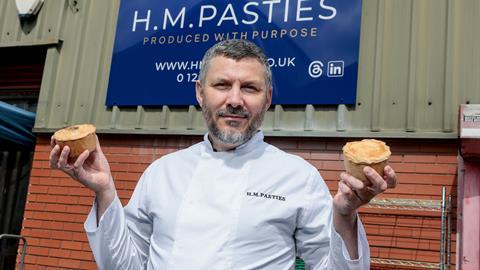
Lee Wakeham set up a thriving pie brand that helps other prison leavers earn an honest crust. He’s now encouraging fellow food brands to follow his lead
Lee Wakeham was 17 years old when he was set on fire in prison. After a childhood spent in and out of foster care, during which he experienced “every type of abuse you could subject a kid to” with one foster family, he found himself living in a flat on his own at 16.
Destitute and with “all sorts of stuff going on with my mental health that I didn’t understand”, he ended up “committing crime to survive”. Within nine months, he was in prison for a series of street robberies. “Young offenders’ prisons are just a battleground,” he says. “I got set on fire in the TV room by a scouse lad, and that was my first few weeks in prison.”

Wakeham moved from his hometown of Plymouth to Salford upon his release in a bid to get his life back on track, but a year later he was back in prison for assault. This time, an intervention from his barrister set Wakeham on a different course.
“He’s the first person who ever said: ‘Given your background, I get why you’re angry, but what you’re doing is not OK.’ And that led me to get counselling whilst in prison.”
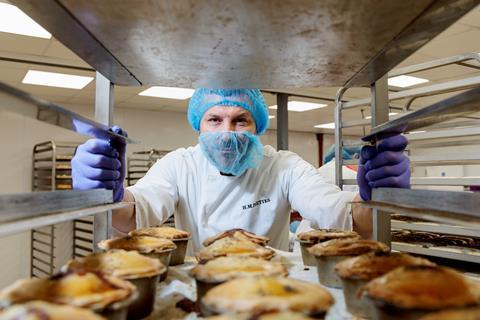
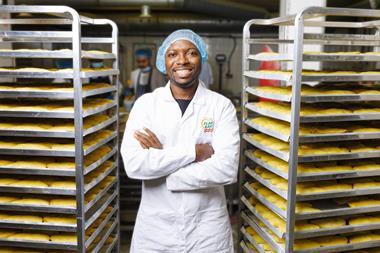
Once he left, the roots of an idea took hold. In 2011, Wakeham began working with prison leavers in various capacities. By 2019, he was ready to launch HM Pasties. The name stands for ‘handmade pasties’ but is, of course, a clever play on the prison system that Wakeham is so familiar with. As a social enterprise, HM Pasties aims to reduce reoffending by providing meaningful employment to prison leavers. There are two facets to its work: the baked goods business, which produces award-winning pasties and pies, and a foundation that provides support to offenders.
“There’s the profit and the purpose,” says Wakeham. “But which comes first? We’re all about the social purpose, supporting and creating jobs for people leaving prison – but if we don’t make a profit, there are no jobs.”
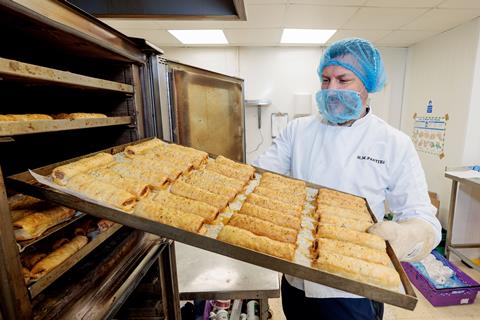
Thankfully, Wakeham says “business is good”. HM Pasties makes about 15,000 pies a week, up from 8,000 in 2025, and is on track to make a profit for the first time this year. foodservice is at the heart of the business, which supplies a chain of 46 pubs across the north west, numerous sports teams including Liverpool FC, and foodservice giant Sodexo. It also has talks ongoing with “a couple of other major foodservice groups”.
HM Pasties went into major retail late last year, too, having moved from The Co-op’s Apiary incubator to a listing in 80 stores across Greater Manchester. It was a perfect fit in terms of values, and HM Pasties was hitting its sales targets, says Wakeham, but he recently took the difficult decision to voluntarily delist.
“For a supermarket [listing] to work, you need to be supplying tens of thousands, otherwise the margin’s just not there,” he says. “The numbers didn’t add up, and we needed increased distribution that they couldn’t provide at the moment.”
Wakeham is “focusing on foodservice for now”, but he’s not ruling out a return to retail. The Co-op relationship remains strong, he says, and the door is “still open”.
“If we found a co-manufacturer who could do it at scale, I’d happily go back into the Co-op and look at other retail, because I think we’ve got a product and brand that would catch on nationally. I think the story stacks up,” he says.
Social support
Key to that story is the social side of the business. At any one time, about 25% of its employees are either still in prison – coming out on day release – or recently released and struggling to find work. Sitting alongside that is the HM Pasties Foundation, which is partly funded by profits from the pasty and pie business.
Prison leavers are referred to the foundation by HM Prisons or the probation service, and the foundation helps them sign up for courses in the likes of food hygiene and allergen awareness, as well as 12 months of fully funded one-to-one, trauma-focused therapy and support from an employment coach.
Following completion of the courses, graduates are given a two-week trial period and then a three-month contract. “The idea is that in those three months we broker them a job somewhere else – because the sooner we can move someone on, the sooner we can bring someone else in. But they’ve got to be ready,” says Wakeham, adding that the 12 months of therapy and support continues whether they stay at HM Pasties or not.
Name: Lee Wakeham
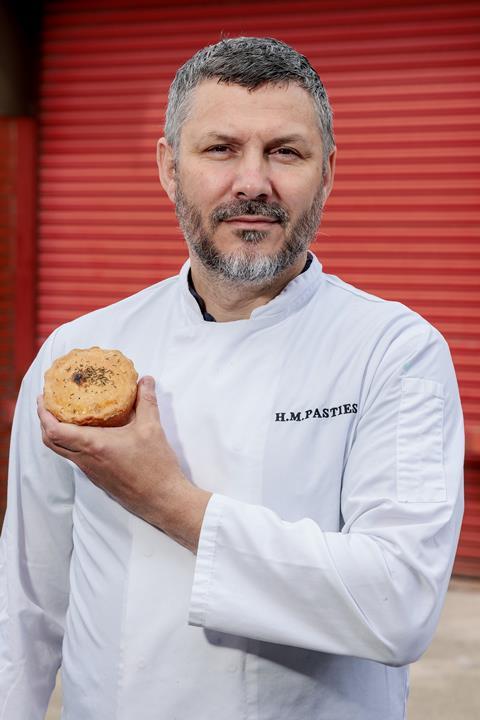
Born: Plymouth
Lives: Saddleworth, Greater Manchester
Age: 50
Family: Fiancée and a two-year-old daughter
Potted CV: Production operative; sales; recruitment; resettlement work with prison leavers; business owner
Career highlight: My pasty winning at The British Pie Awards
Business icon: James Timpson
Best advice received: It’s never too late to start again
Business motto: Produce with purpose
Hobbies: Sport and walking
Favourite film: The Shawshank Redemption
Favourite album: Wish You Were Here by Pink Floyd
Favourite pie filling: It’s got to be a classic pasty
Wakeham is adamant that “the vast majority of people leaving prison are not ready for work” and need support. It’s one of the few areas where the founder – who jokes about his “hands on” experience – disagrees with James Timpson, who resigned this week as prisons minister. A pioneer in prison recruitment, his Timpson Group employs hundreds of ex-offenders.
There are also practical challenges. “Recruitment in general fails about 50% of the time. Add in complex issues and just coming out of a prison wing, and your success rate’s going to be fairly low,” Wakeham says.
Still, Wakeham encourages businesses to recruit prison leavers. For him, “any opportunity created for them is a great thing”. He’s enthused by efforts from brands such as Iceland, which has its Second Chance scheme as well as an inmate-run supermarket in HMP Oakwood, or Greggs, whose Fresh Start programme has found permanent roles for hundreds of prison leavers. He has just a few words of advice for anyone looking to do the same: “Don’t go into it on your own. Reach out to the likes of Timpson. Or give us a call.”
Wakeham is the perfect man to offer that advice. He’s been there. And he believes his difficult background helps him get through to prison leavers. “That shared lived experience breaks down the initial barriers and helps build trust a lot earlier. They know you get it. My story hopefully gives people a little bit of hope that they can move on with their lives.”









1 Readers' comment